“It was love at first sight!”: Captain Games’ Cédrick Caumont and designer Ian Sebastian Bach talk Map Masters
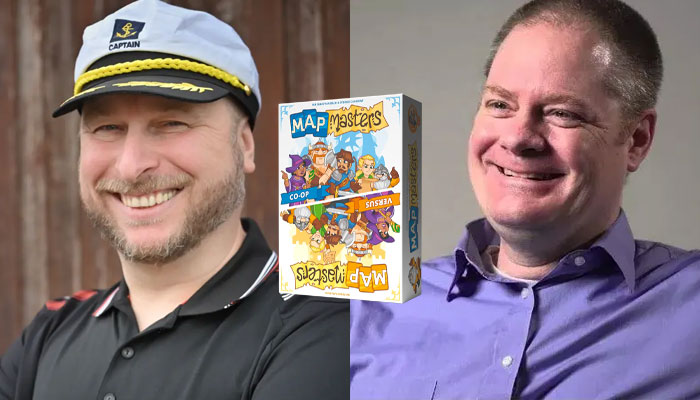
Ian and Cédrick, it’s great to connect. How did the idea for Map Masters come about?
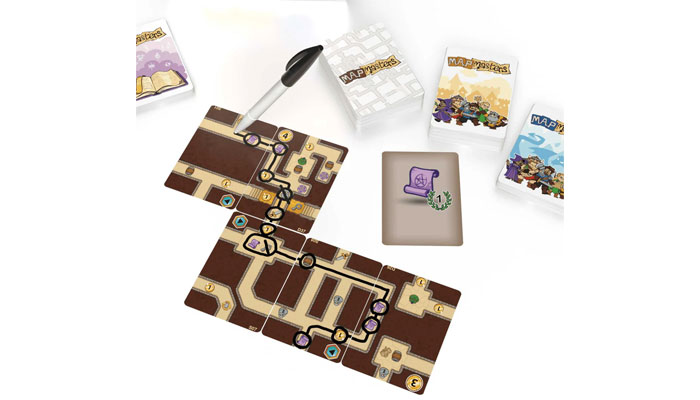
Ian Sebastian Bach, Co-Designer of Map Masters (Versus & Co-op): Many of my game design ideas start as dreams. One morning, I awoke with this image of two cards sitting side-by-side with paths connected to each other – each card with some abstract resources. When they were connected, players had access to resources on both cards. I scribbled down the idea in my design diary but as I quickly scribbled, the ideas started to flow. What started as two horizontal paths across two cards stretched to became sections of mazes on different cards.
The theme then seemed obvious as the mazes became dungeons… What would players want to find in dungeons? Typical items like swords, scrolls, treasure chests, monsters, keys and so on… With more rapid scribbling, the basics of the game came together: players would have a handful of cards representing portions of dungeons and race to traverse their mazes and pick up the most of different types of items.
What made Captain Games a good home for the concept?
Ian: I showed Map Masters to several other publishers and while there was interest, the folks at Captain Games seemed to see the potential of the game from my rough prototype. I showed it to Cedrick and it just seemed to fit the type of game that they were looking for.
Cédrick Caumont, Founder of Captain Games & Co-Designer of Map Masters (Co-op): At Captain Games, we publish games we truly love – and Map Masters was love at first sight. It was the perfect fit for us. We played it non-stop for a whole year, often multiple times in a single day, to make the best out of it. We kept developing this brilliant idea, even creating alternative ways to play, such as the co-operative version.
Ian: Yes, the dungeon building and route finding was very mature from the very beginning but the market was very primitive. Cedrick and his team developed this into a fully mature and intriguing part of the competitive game, really complimenting the rest of the game. The development of the co-operative game was a huge part of the design process.
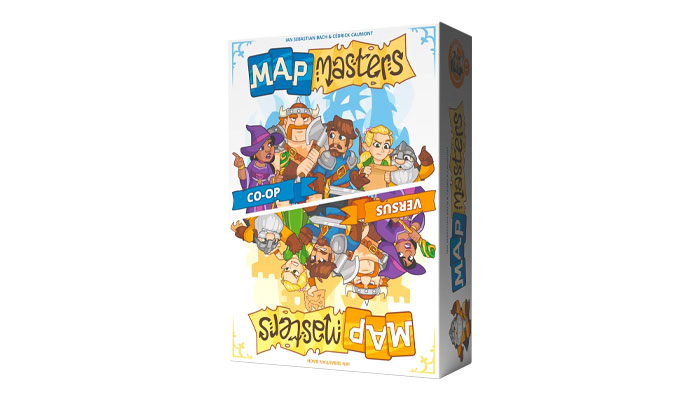
Both versions of the game – Versus and Co-op – share the spotlight on the box. How soon into development did you know there were two versions to explore?
Cédrick: We had been working on the versus mode when one morning I woke up with the idea for a co-op version. I tested it on my own, wrote some rules and sent it to Ian, who loved it. Then we had many players try both versions, and it ended up being a 50/50 split. So we decided to include both modes in the box and make it one game.
Ian: Yes, we went back and forth trying to decide which version to publish, then Cedrick had the great idea that we could publish both as two different game modes.
Were there any tricky design nuts here you’re especially proud to have cracked?
Cédrick: The game originally had chests instead of barrels, but we had to replace them because many players wanted to open them with a key!
Ian: It’s funny. I’ve worked on many other games that had really challenging parts to work out. My previous game Crunch Time – which I co-designed with two other designers – was a brutal process of designing and playtesting eight completely different games before we finally found the game we wanted to design.
With Map Masters, the game seemed to reveal itself as if it was simply a matter of turning the next page to see what to do next. The design process has been very intuitive. However, the closest to a tough nut to crack was when Cedrick shared the Co-operative mode.
He was in Belgium and I was in the US and he sent the idea via email. The first rule book for Co-op was two pages and a diagram, and it took a few tries before I could see what he had in mind. As we started exploring the ideas, we worked on developing a common language that we could use to describe each mission to the other designer on the other side of the Atlantic. This worked so well that the mission design sheet became the set-up instructions for each mission in the Mission Rulebook.
What fuels your creativity? What helps you have ideas for games?
Ian: Ideas for games come to me when I am thinking or doing something else. Oftentimes, I awaken with an idea and try to scribble down the idea in my design diary before it fades away. I have also come up with ideas in the shower or while driving somewhere. It seems like the ideas flow when the brain is thinking of other things.
Sometimes a fellow designer or publisher will say: “You can’t do that” and it challenges me to figure something out… Or I’ll be doing an activity that has nothing to do with games and say something like: “This would make an interesting game.” Once I designed a game from the frustration of trying to walk through a busy casino in Las Vegas! I guess I am not afraid to entertain a strange idea and see where it leads me.
Cédrick: For me, it’s my love for games, the desire to play often and the joy of sharing it with others and seeing people discover it. Many ideas come from playtesting, which we are very fond of.
Last question, what set you on a path into game design?
Cédrick: I’ve always been a fan of game design. I recently found my very first prototype at my parents’ place. I made it when I was nine years old – it wasn’t very good! Later on, I had the chance to become a publisher, which allowed me to get involved in development and occasionally even act as a co-designer.
Ian: I’ve enjoyed card and board games since I learned cribbage from my father as a child. I enjoyed DM’ing Dungeons & Dragons as a pre-teen and teenager, but fell off gaming during college, medical school and residency. A friend re-introduced me to strategy games when he showed me Seven Wonders. I instantly fell in love with the game and played it hundreds of times with friends and family. It was my gateway game back into the hobby.
A friend – Dan Schwaninger – and I worked on two fan expansions for 7 Wonders, believing that we could add something valuable to that universe. We went so far as to submit the expansions to Cédrick when he was with Repos and he very politely turned us down. When obstacles present themselves, I am not one to back down. I then designed a game called Centuries which I pitched to a few publishers as ‘7 Wonders on steroids’. I ended up self-publishing it and sold a small handful.
Guys, it’s great to chat. Thanks again and congrats on the launch of Map Masters.
–
To stay in the loop with the latest news, interviews and features from the world of toy and game design, sign up to our weekly newsletter here
More Recent Interview

Ken Scheel talks KEVA Planks, Foros and his journey from veterinarian to toy inventor
“Having blocks with this specific plank shape gives a lot more opportunity than if you’re using cubes”: Ken Scheel talks us through the origins of KEVA Planks.
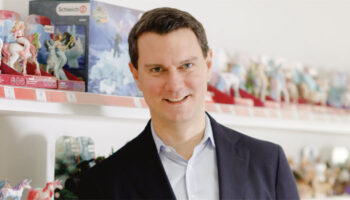
David Albert of schleich North America on design, US growth and the company’s 90th anniversary
“Research shows that more than 90% of schleich’s figurines are never thrown away”: In conversation with David Albert, President of schleich North America.

Jigsaws of distinction: Rewa Walters and Sophie Morrison on Piece House’s stunning puzzles
“We make a premium product that puzzlers love…” Piece House Co-Founders Rewa Walters and Sophie Morrison on Piece House’s stunning puzzles.

Creating chaos and designing destruction: James Yuen discusses development of HTI’s Robo Wreckerz
“It was about creating an entirely new play pattern within the vehicle category”: In conversation with Fab Design’s James Yuen.
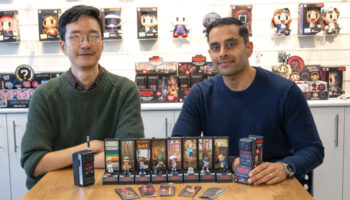
“Fans care about detail, so we care about detail”: Oliver Chang and Gurdeep Bains discuss development of YuMe Toys’ latest Stranger Things capsules
YuMe’s Global Creative Director Gurdeep Bains and Senior Art Director Oliver Chang talk poses, puzzles and pushing the boat out for this latest set of Stranger Things capsules.
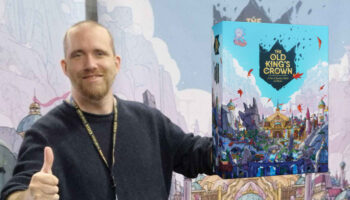
Pablo Clark discusses the six-year development journey behind the game design – and art – of The Old King’s Crown
“Don’t rush, don’t skip, don’t use AI”: Pablo Clark on the game’s origins – and his advice for new designers.


Popular Articles
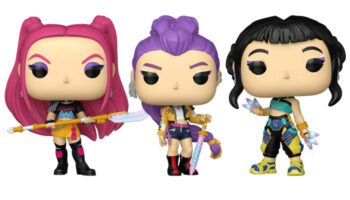
Funko readies KPop Demon Hunters Pop! vinyl figures
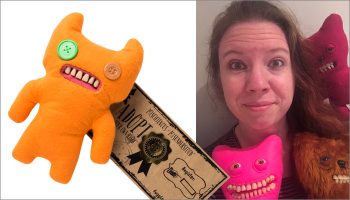
Fugglers creator Louise McGettrick on how an eBay listing for a bag of false teeth inspired her line of plush monsters
TOTY Awards 2026 finalists revealed

McMiLLER to appear on Shark Tank next month

Adam Ashley on developing Goodtimer, an interactive toy that promotes healthy habits and good choices

Upcoming Events
-
- 31st January 2025
- Spielwarenmesse, Nuremberg
International Game Inventors Convention
-

- 20th - 22nd May 2025
- Mandalay Bay Convention Center, Las Vegas
Las Vegas Licensing Expo
-

- 24th - 26th June 2025
- Stamford Bridge Stadium, Chelsea, London
Play Creators Festival
-

- Tuesday, June 24th, 2025
- Stamford Bridge Stadium, Chelsea, London
Play Creators Awards
-
- Wednesday, June 25th, 2025
- Stamford Bridge Stadium, Chelsea, London
Play Creators Conference
-

- Thursday, June 26th, 2025
- Stamford Bridge Stadium, Chelsea, London
Mojo Pitch
-

- 7th - 9th October 2025
- Excel London
Brand Licensing Europe