Designer Carlo A. Rossi discusses development of his unique depth-deciphering game, Das Schloss der 7 Schlösser
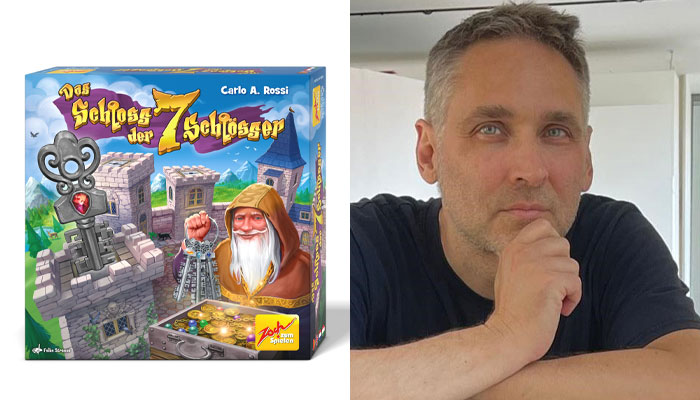
Carlo, it’s great to connect. I’ve been excited about Das Schloss der 7 Schlösser since playing it back at Essen. For anyone new to the game, how would you pitch it?
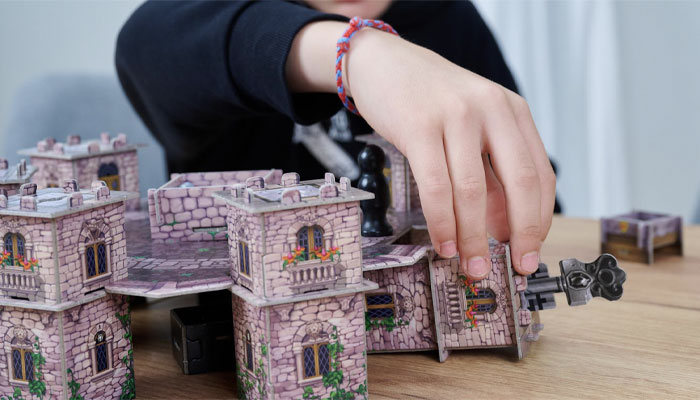
The game combines visual and auditory memory. There are seven keys, each opening a specific tower. By observing how each key fits into a tower, and by listening to the sound of the pearls falling inside it – which helps you assess their depth – you try to work out the correct matches as the game progresses.
What was the spark behind this idea?
It actually came from quite a serendipitous event. I was doing an exercise that I strongly recommend to my game design students: trying to understand how a game works just by looking at its components or pictures.
In my case, I was browsing a catalogue kindly sent to me by HABA, with whom I had already published several games. I came across a game featuring keys and thought: ‘Wow, that’s a brilliant idea – I wish I had come up with it’. Later, I checked the rules on BGG and realised I had completely misunderstood how the game worked! At that point I thought OK, maybe I actually had a different idea after all!
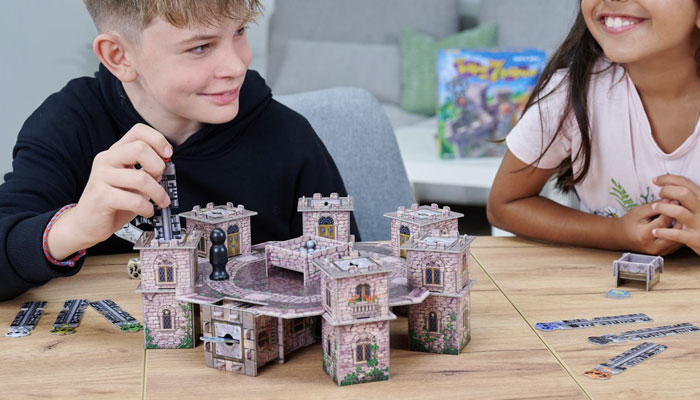
The core idea here – dropping a ball into a tower and listening to gauge different depths – could suit a range of different themes I imagine… Did you always envision it having this castle setting?
Not at all. The original setting was very different. My first prototype was about pirates. The board was an island, the towers were chests buried in the ground, and the dispenser in the middle represented the pirates’ tavern. The short story at the beginning of the rules went something like this: “You have found the island where all – literally all – pirates bury their loot. You’ve also found the keys that supposedly open the matching chests. What an opportunity to steal them! But… Which key opens which chest? A combination of visual and auditory memory will help you in your deceitful intent.”
The longer version involved pirates going to the tavern, getting drunk and then bringing their treasures back to their chests, while we – the players – were hidden in the forest, listening to the pearls fall inside. Needless to say, it wasn’t very child-friendly.
Ha! I like it all the same! And this central idea is a very novel one. I imagine unique games like this can sometimes be ‘too new’ and tricky to sell. Did you have any concerns this could be the case here?
My biggest concern was actually about feasibility. I’m used to working on ideas with 3D components and a strong table presence, but this was by far the most complex one to produce. I was genuinely afraid the game might never get published for that reason alone, regardless of its quality.
This is being published by Zoch – what made them a good home for this game?
Zoch is one of the very few publishers who can truly work on designs like this. What makes them unique is that they actually enjoy these kinds of challenges. When I presented the game, I started my pitch to Walter Scholz – Chief Editor of Zoch – by saying: “Walter, I should warn you, this game is a nightmare to produce!” He smiled and told me to go on.
I’m delighted he did! And what set you on a path into game design?
I think my story is very similar to that of many other designers: a passion for board games since childhood that never faded away. This also combined with my natural tendency to want to be ‘on the other side.’ As a student, for instance, I dreamed of becoming a teacher, which is why I took a degree in mathematics. Likewise, as an avid player, trying to design games of my own became a very natural consequence.
Was there an early success that helped set you up to become a full-time designer?
Yes, I had some early successes, mainly in contests for unpublished games. I should note that I started more than 20 years ago, and at that time many of the resources available today simply didn’t exist. Contests were pretty much the only way to both assess your real value and get noticed.
Long story short: I entered Premio Archimede in 2002 and won it with the very first game I ever designed. Then, in 2003, I took part in Lucca Comics & Games with two games and won first and second prize. I couldn’t ignore such a promising start.
And what would you say is your most ‘underrated’ game? We’ll give it some love here!
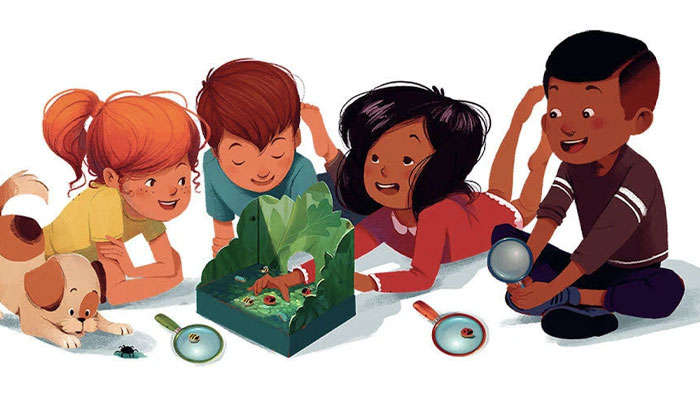
I’m glad you asked, because there’s one game I genuinely consider my finest design: Der Schatz von Castellina, released by Moses in 2013 and later by CMON in 2021 as Bug Hunt. Unfortunately, on both occasions it was more or less ‘born dead’ for reasons I won’t go into here. It’s a children’s game that adults can truly enjoy as well – myself included – with just a couple of rules that can be explained while playing, and a very strong table presence.
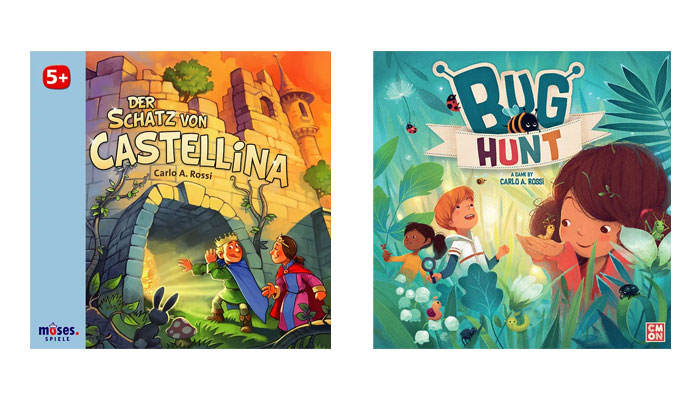
I don’t think I’ve ever reached that same level of elegance again in my later designs – and I suspect I may never reach that peak again. I still hope that one day it will be published once more and become a modern classic.
Fingers crossed for you. Last question! What helps you have ideas for games?
There are many different approaches, which I usually explain in my design classes, but the key one is learning how to translate emotions – both positive and negative – into something playable.
Thanks again for taking time out to chat Carlo. And congrats again on Das Schloss der 7 Schlösser.
–
To stay in the loop with the latest news, interviews and features from the world of toy and game design, sign up to our weekly newsletter here
More Recent News

Mattel Studios readies Masters of the Universe: Tales from Eternia
The new show – hosted on the Mattel Adventures YouTube channel – targets a ‘new generation of young fans’.
Playmobil lands at WHSmith stores across the UK
“Playmobil is a natural fit for our one stop shop offer,” said Niraj Virji, Head of Buying at WHSmith.
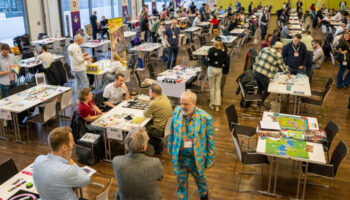
Registration now open for Spielwarenmesse 2027’s International Game Inventors Convention
Taking place on Friday February 5th 2027, the event will once again see game designers present their concepts to publishers at Spielwarenmesse.

The Toy Association launches the Toy Desk to connect members with resources, expertise and services
“The Toy Desk reflects our ongoing commitment to putting members first and continually improving how we serve the toy community,” said Greg Ahearn, President & CEO of The Toy Association.
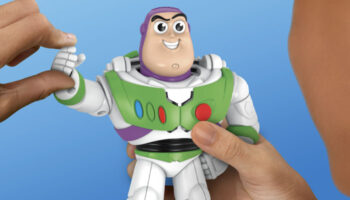
Hasbro launches Bop It Buzz Lightyear
The game sees players try to follow Buzz Lightyear’s commands as he tells them to bop his head, twist his arm, or pull his feet in different combinations.
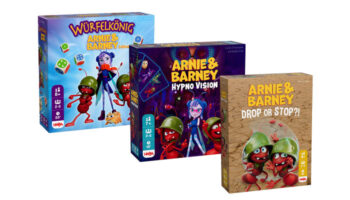
Studio 100 details Arnie & Barney – The Water Quest partners across games, magazines, plush and more
In August, HABA is launching three games inspired by the film: Dice King Arnie & Barney Edition, Hypno Vision and Drop or Stop.


Popular Articles

Bop It’s Dan Klitsner on creative techniques, his favourite inventions and more
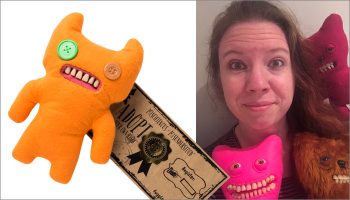
Fugglers creator Louise McGettrick on how an eBay listing for a bag of false teeth inspired her line of plush monsters
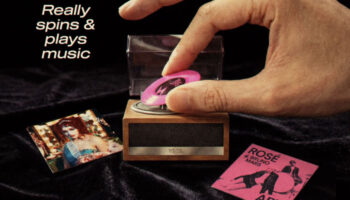
Mini Brands Really Works Vinyl represents "major step forward for the brand", says Zuru

Asmodee's Moodbox Games details debut slate of titles

Play Creators Awards 2026 finalists revealed

Upcoming Events
-

- 30th January 2026
- Spielwarenmesse, Nuremberg
International Game Inventors Convention
-

- 19th - 21st May 2026
- Mandalay Bay Convention Center, Las Vegas
Las Vegas Licensing Expo
-

- 23rd - 25th June 2026
- Stamford Bridge Stadium, Chelsea, London
Play Creators Festival
-

- Tuesday, June 23rd, 2026
- Stamford Bridge Stadium, Chelsea, London
Play Creators Awards
-

- Wednesday, June 24th, 2026
- Stamford Bridge Stadium, Chelsea, London
Play Creators Conference
-

- Thursday, June 25th, 2026
- Stamford Bridge Stadium, Chelsea, London
Mojo Pitch
-

- 6th - 8th October 2026
- Excel London
Brand Licensing Europe