Designers Adrien Pédron and Thomas Favrelière on the origins of Archeo – and why Gigamic proved the perfect publisher
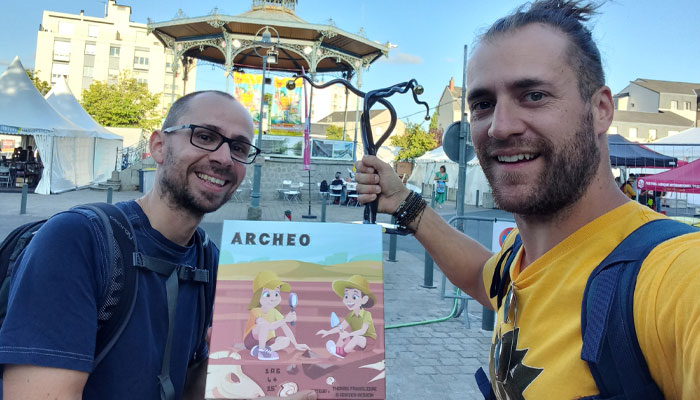
Guys, it’s great to connect. To kick us off, what you brought you together?
Adrien Pédron: We meet at an event for game designers called Bootcamp, run by the French publisher GRRRE Games. It’s a four-day event where designers, illustrators, and the publisher’s team gather to develop new board games and playtest prototypes. We met there in 2022 and one year later, Thomas had the idea for Archeo and he invited me to join in the development of the game.
And Thomas, what made you want to bring Adrien in?
Thomas Favrelière: I liked the game that Adrien proposed at the end of Bootcamp – and we had a friendship, so I knew we’d work well together.
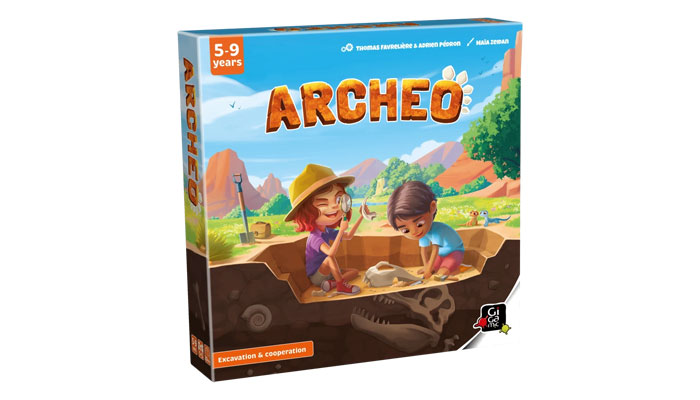
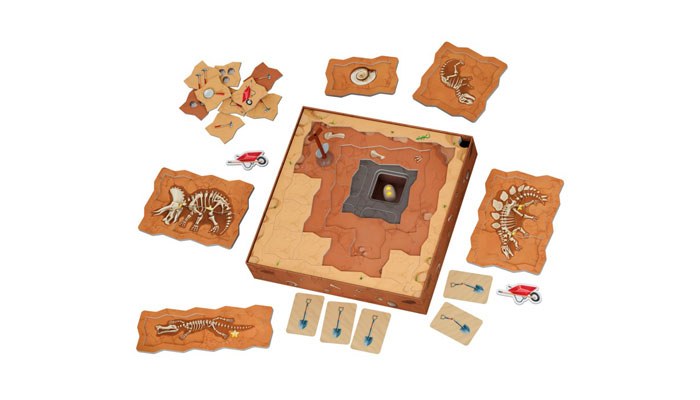
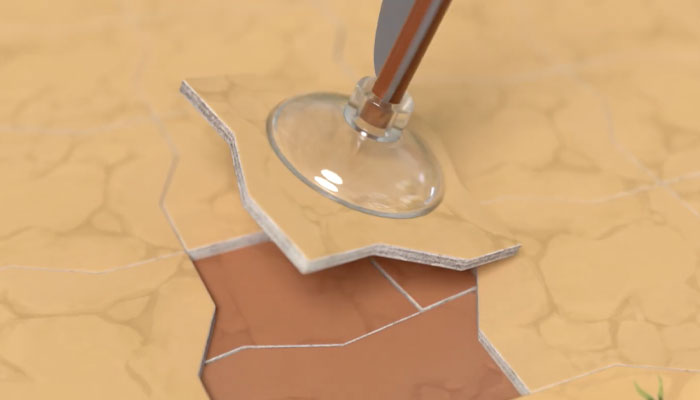
Terrific. And Archeo is a fantastic game. Kids work together, digging through four levels of the game to uncover and collect sets of dinosaur bones! And we should say, you are actually lifting pieces away and delving deeper into this multi-tiered board – all using a cute suction shovel. Where did the idea for this come from?
Thomas: The idea was to create a game where you play with the box – you have to dig and find something in the box. That was the idea, and the theme of archaeology and palaeontology evolved quite naturally from there as it’s a logical direction to go in with this kind of game.
And what did the development look like between you both?
Adrien: We are not in the same area of France, so we worked online with weekly meetings at the start. We’d exchange ideas about the design of the game, the mechanics – and we had parallel prototypes… One in Thomas’ house and one in my house. We worked in parallel with different people, and Thomas has access to children because he works in a game library, so he could playtest Archeo there too.
Gigamic has done a great job with the production here. What made them a good fit for the game?
Thomas: First of all, the prototype looks a lot like the final game. We knew which publishers would be able to execute a game like Archeo and Gigamic was one of them. Plus, we’d wanted to work with them for a long time.
Adrien: Gigamic is a huge publisher here so it’s great to have a game with them.
Thomas: We modified the game slightly with them. They challenged us to add the final layer – the areas with the eggs. It made it a better game. They also had the idea for the shovel, which is a great addition.
Archeo feels very mass market – and I think kids will love this game regardless of whether they’re in the US or Europe. Do you see a difference between the European mass market and US mass market?
Thomas: We’ve spoken to publishers all over the world, but I would say the response time from US mass market publishers is slower than the response time from French publishers. There seems to be a lot more steps involved – it’s harder than working with a French publisher. And we of course have to be careful not to make a game too text-heavy, so that it can travel well and suit the broader mass market.
Adrien: Archeo is a good example of that. Only the rules need translating. And our deal with Gigamic is a global deal, so hopefully Archeo will be launched around the world as I agree, I think it would be a great fit for the US market.
Is Archeo indicative of the types of games you like to design?
Thomas: For me, it’s a real mix – all my games are different. it’s a bit different and it completes. I’ve signed 11 games – four children’s games and the rest are family games.
Adrien: I also design games for children and families. I don’t play complicated games so I’m not an expert in designing them! I’ve signed two games, and they’re both games for children.
Yes, Adrien, your other game is Jeu de la galette, which translates as The Gallette Game, and is inspired by the French Epiphany tradition. For any new to that, could you tell us a bit about it?
Adrien: Yes, I don’t know if you have this tradition in the UK, but in January we have a special Gallette cake. Hidden inside the cake is a ceramic charm and whoever gets the slice with the ceramic is crowned king for the day.
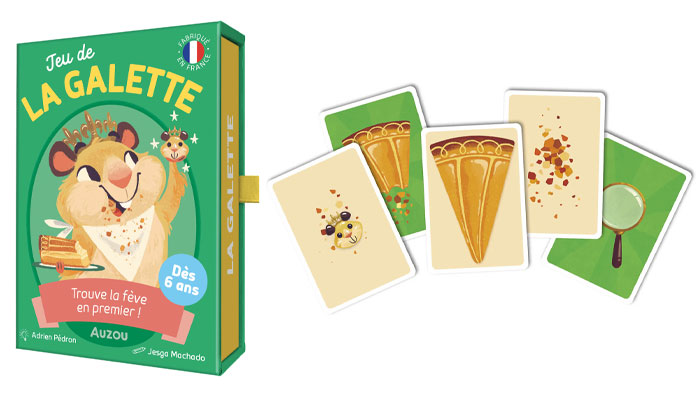
In Jeu de la galette, there are cards representing 16 slices of cake – and only one slice contains the lucky charm. During the game, players look at cards, take cards or steal opponents’ card. If a player manages to get the slice containing the lucky charm, they win the game.
Lovely! And Thomas, you have 11 games out, and your first launched in 2023. So you’ve been busy! What do you put that success down to?
Thomas: Well, I also create a lot of games, look at the market, what the publishers want, and what I want to create. And I’ve been doing game design full time for two years now, so being full-time helps too.
Absolutely. And what of your other games do you feel is perhaps the most underrated? We can shine a spotlight on it here!
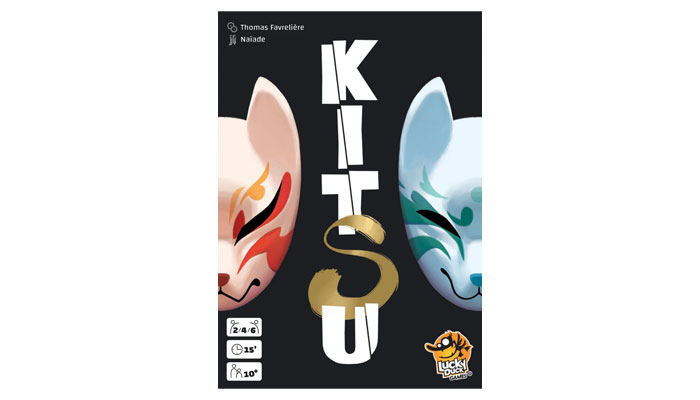
Thomas: I would say Kitsu – a trick-taking game that you play in teams, which is quite an original mechanic.
Looks great! Before we wrap up, I wanted to ask your about the French design scene. Why do you believe France produces so many top designers?
Thomas: That’s a very good question. Maybe it’s because we have a culture of playing board games?
Adrien: I think it’s partly because of some great designers that paved the way, like Bruno Cathala and Bruno Faidutti. They’ve done really well, shared insights about their journey, and so we grow up knowing that designing board games can be a job. There’s also some important game shows that take place here – like Festival International des Jeux in Cannes and Paris est Ludique. I think a combination of that has helped the community grow and thrive over the years.
Last question, what fuels your creativity? What helps you have ideas?
Thomas: I play a lot of games, to keep myself informed – but also for fun! I also go to game shops, to the library, to festivals too. Ideas also come from other media – a TV series, a manga, a film, a book…
Adrien: For me, a hike is a good solution. I have a three-kilometre trip to work and I used to bike, but with that you need to check for cars and so on, so it’s not good for creativity. Now I walk to work and it’s a good time to process ideas and find design solutions.
–
To stay in the loop with the latest news, interviews and features from the world of toy and game design, sign up to our weekly newsletter here
More Recent Interview


BOTI’s Nico Blauw talks Pembe the Pink Cat, innovation – and the International Toy Board
“The look, the design, the audience, the messaging… It all appealed”: Nico Blauw reveals what made Pembe the Pink Cat a winner for BOTI.
“This was the missing piece…”: Rubber Road’s Jack Fox on TUBBZ’s move into blind collectibles with Mystery Eggs
Jack Fox, Sales & Marketing Director at Rubber Road, talks TUBBZ Mystery Eggs – and why Minions were a perfect fit.

Educational Insights’ Lisa Guili on TikTok, 20 years of Kanoodle – and ten million units sold
Lisa Guili reveals how one addictive brain teaser found its audience and became a phenomenon.

“I want people to bet on themselves”: Spin Master Co-Founder Ronnen Harary discusses his new book, No Experience Necessary
Spin Master Co-Founder Ronnen Harary talks to us about his exciting new book, working with inventors – and Spin’s most underrated launch.

David Norman of Stormin’ Studios on inventors, Orchard Toys – and shaking things up!
“It’s not just a name, it’s our mission statement”: In conversation with Stormin’ Studios’ David Norman.

Carrera Revell’s Frank Tiessen on the slot-car set that buyers had to see to believe…
How Speed Arena: Race in a Case became an instant hit: in conversation with Carrera Revell’s Frank Tiessen.
Popular Articles
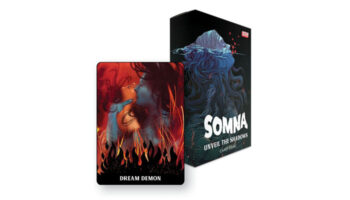
DSTLRY launches card game based on its award-winning Somna comic
BOTI’s Nico Blauw talks Pembe the Pink Cat, innovation – and the International Toy Board
A Prickly Plan for Playground Popularity...

Bop It’s Dan Klitsner on creative techniques, his favourite inventions and more

Wow! Stuff to launch Fuggler Puppetronics in 2026
Upcoming Events
-

- 30th January 2026
- Spielwarenmesse, Nuremberg
International Game Inventors Convention
-

- 19th - 21st May 2026
- Mandalay Bay Convention Center, Las Vegas
Las Vegas Licensing Expo
-

- 23rd - 25th June 2026
- Stamford Bridge Stadium, Chelsea, London
Play Creators Festival
-

- Tuesday, June 23rd, 2026
- Stamford Bridge Stadium, Chelsea, London
Play Creators Awards
-
- Wednesday, June 24th, 2026
- Stamford Bridge Stadium, Chelsea, London
Play Creators Conference
-

- Thursday, June 25th, 2026
- Stamford Bridge Stadium, Chelsea, London
Mojo Pitch
-

- 6th - 8th October 2026
- Excel London
Brand Licensing Europe