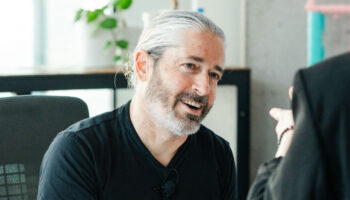
“I want people to bet on themselves”: Spin Master Co-Founder Ronnen Harary discusses his new book, No Experience Necessary
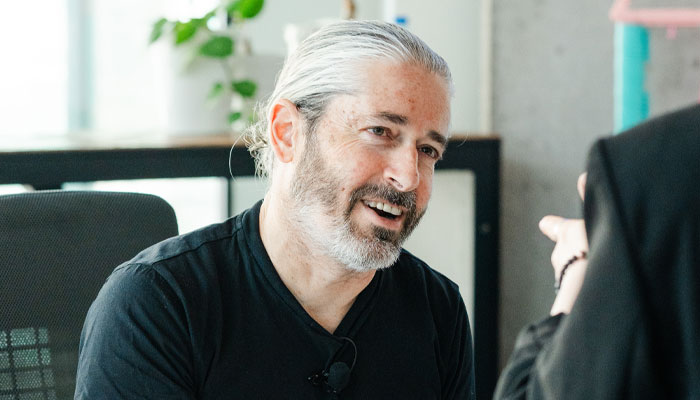
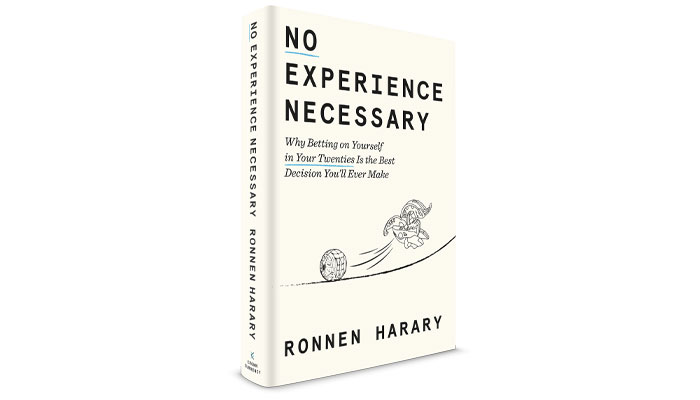
Ronnen, it’s great to connect. We’re here to talk about your terrific new book, No Experience Necessary: Why Betting on Yourself in Your Twenties is the Best Decision You’ll Ever Make. The book explores your journey into the industry and details some of the key business advantages of youth. What prompted you to write it?
The book was a bit of a give-back for me. I’m an entrepreneur at heart, I’ve put a lot of toys out into the world, and this is kind of like my solo record. I was thinking back to my 20s, remembering how special that decade was and all the things that are accrued to you in your 20s that you don’t necessarily have in your 30s and 40s… I felt that this was my opportunity to contribute something to the dialogue and discussion around the power of youth and the power of your 20s. It was really a thesis that I wanted to get out, and I used my story as the mechanism to do that.
And how did you find the process of writing a book?
It was a journey. It took me four years. I stepped down from being Co-CEO of Spin Master and took a sabbatical for a year and a half, so I had some time to put towards this.
I’m an avid reader and read a book called Bird by Bird by Anne Lamott. It’s a beautiful book about writing a book and it really connected with me. She said a few things that really landed – one is never wait for inspiration because inspiration is never going to come. What you need to do is sit yourself down at the same time every day and write – and write unfiltered. She also says that said if you’re going to write a book, make sure you’re vulnerable and authentic because if you’re not, you’re not going to connect with the reader.
So I took her advice! And the irony is that I actually have a learning disability centred around writing called dysgraphia. But I powered through it and gave it a try.
And what did that look like for you? Where did you go to write?
I would go to my rooftop in my apartment here in Tel Aviv – and I would talk to no one in the morning! No distractions. I’d do some yoga, some exercise, go up to my roof, open the laptop and write. And it was a strange thing… My first couple days doing it felt so weird. I kept on thinking in the back of my mind – unfiltered, unfiltered, unfiltered, right? No judgement, no judgement, just write! That gave me the ability to just let it all come out.
And then suddenly, two hours later, you’ve written 10 pages. And the most magical thing is that you actually feel high. Literally! It’s the most magical feeling when you write for a two-hour block. It’s better than running, it is better than yoga… It’s a strange sensation.
Amazing. And what came next?
Well, I did that for a few months, and I got about 60,000 words down. But I’m not a writer, so thought: ‘How do I put this into a readable format?’ A writer friend of mine helped me a little bit on it and then I commissioned an agent to help, but he kept pushing for a very different way of writing the book so I let him go.
And then I was on the podcast, How I Built This, by Guy Raz – it’s probably one of the best podcasts about people that start businesses in the world. He’s an incredible host. I called him up and said that I needed to find an agent to help sell my book. He introduced me to this gentleman by the name of Byrd Leavell. He runs the lit department at UTA. We met and it was love at first sight. I asked if he’d want to represent me and he said yes.
Then he told me the first thing we needed was a good ghostwriter to help expand what I’d already written, so I ended up working with a guy by the name of Tanner Colby – he’s a ghostwriter of many wonderful books. So we then went on this journey together for like a year and a half. He interviewed me and expanded my thoughts and theories, shaping the book into what it is today.
And then you had to find a publisher?
Yes, Byrd went out to try to sell it and he got turned down by 19 out of 20 publishers. Luckily one said yes and here we are. All in, it’s been a four-year arc.
And as well as being an incredible resource for young people looking to start their own businesses, it’s also a terrific story of how you got started in the industry – and some key twists and turns that helped shape Spin Master. Do you think the toy space is as good an industry as any for someone looking to start a business?
Well, we decided to go with toys because it worked for us – it was fun, enjoyable and we were decent at it. It matched our skill set and you didn’t need a lot of start-up capital. We didn’t have to go and get outside investors. We actually ran our business for 20 years with no outside capital until we took the company public – and that’s one of the things you can do in the toy industry that you can’t in that many other industries.
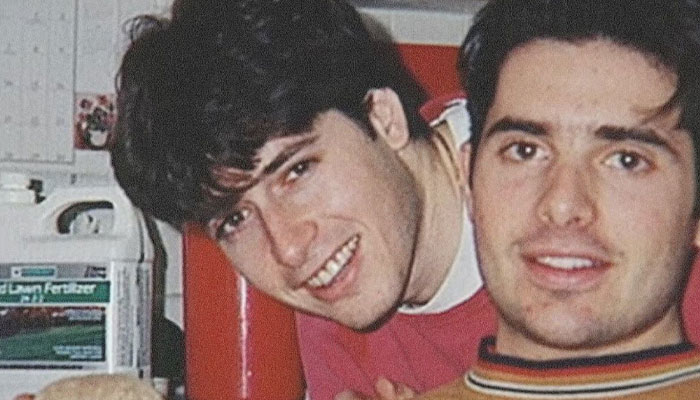
So that perspective, by going for toys we were able to build our own playground. And I think there was something about the physical nature of toys that matched who we were. We were kind of analogue guys and we were definitely stuck at age seven… We thought like kids, had a decent eye for design and a sense for what the consumer would want. It’s the same with our business partner, Ben Varadi. A real design person and a legend to the inventing community. He was terrific at developing relationships with inventors, so toys suited him too.
And it’s funny, 30 years later, I hope the book inspires people to get into the toy industry because it’s still so much fun and kids are kids. The things that inspire them and are aspirational are never going to change. The tools that we have to create toys will change – like the 3D printing farms and AI – but the play patterns are still the play patterns.
The other key consideration is about what success looks like to you – and what you enjoy doing with your day. I don’t care what industry you’re in, if what you’re doing becomes ‘work’, then that can be a bit of a grind, right? Sometimes we have to grind it out, but if you are going take the entrepreneurial path, make sure you have ‘half grind’ and half that’s really flowing for you, because if it’s all grind, then it’s not worth it at the end of the day.
So it does depend on the individual, but the toy industry is just so rich. It’s a beautiful, beautiful place. And there’s a lot of life left in the toy industry.
You mentioned some of the advancements in how we make toys today. Do you think twenty-somethings are better placed to start their own businesses today, than they would have been 10, 20, 30 years ago?
The barriers to entry are lower than they were before. We’ve spoken about the inventor community in toys, but you also now have the start-up community in toys. There’s plenty of people that have started companies very quickly in the toy industry and have gotten product to market. And they may not want to actually build a company, but they’ve gone from a prototype to a full functioning in-market product that you will potentially buy from them. So the ability to bring things to market today is there – the tools you have to do that are greater than they’ve ever been before… Your access to factories… Your ability to bypass retailers and go direct to consumer… Your ability to communicate through TikTok and Instagram and different live shopping platforms… There so many tools to pull on that we didn’t have 10, 15, 20 years ago.
There are some fascinating chapters in the book that cover some key moments of inventor engagement for you and Spin Master – including one on failure that looks at how some of your ‘misses’ actually helped solidify your positive reputation with inventors.
Yes, the key thing is to never bet the farm on one idea. Now we did exactly that with the Sky Shark, but later on, when we took on other products like Tickle Secrets Baby, Key Charm Cuties or Don’t Free Freddy, we had a decent base of business. That meant we could diversify and try different things – and that became something key to the company’s DNA. And even though they were a string of failures, we were able to manage the failures in a good way – and it gave us the ability to develop relationships with multiple different inventors.
Looking back now, the science part to the toy business is managing your inventory at retail and in your warehouse. If you do that right, you can break even, not lose money and keep on trying, right? We were able to do that part really well and not get emotionally attached to anything. We were able to read the POS super early and within four to six weeks, we could tell if the product was gonna go or not gonna go.
And we never had a blame culture. I would never blame anybody else for failure and neither would anybody else. In the creative industries, there’s so many elements that go to something becoming successful and there’s so much elements that come into failure – and it’s never one person, right? It’s a group. So that culture meant that we would always just move onto the next thing.
And that culture is something I imagine inventors respected too.
Absolutely! We didn’t blame the inventor, right? We were just like: “Okay, it didn’t work out, we gave it our best shot, what else can we do together?” And those early failures gave us credibility for not being afraid to try.
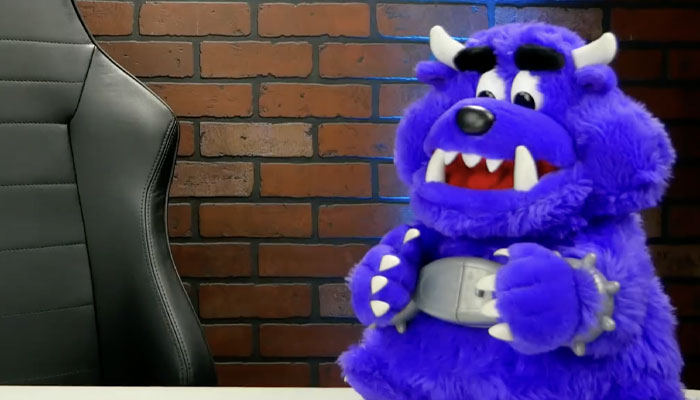
And failure in the toy industry is an interesting thing because some of those flops might still have ended up being a kid’s favourite toy… I like the look of Don’t Free Freddy!
You know Billy, I’ll give that to you in the macro, but for that particular toy, I don’t know if anybody liked it.
Ha!
I will never forget when we when we shot the commercial, we did a test and the kid’s face was just blank. I knew straight away… I didn’t even have to read the POS.
Oh dear… Maybe it’s time will come! And before we move on is there a product that you think is the most underrated thing Spin’s launched?
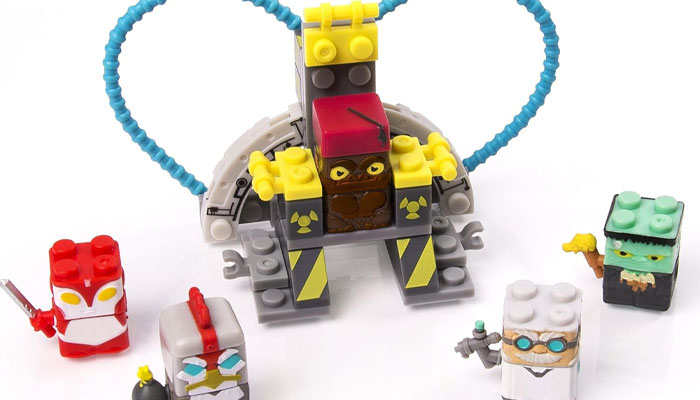
Sick Bricks. It was kind of like LEGO bricks, but with characters – and it was tied to a online game. But the form factors of Sick Bricks and the characters are amazing. And the fact that you could build them was a fun play pattern, and the fact that you could bring them to life in a digital format was great.
I don’t know why it didn’t take off… Maybe we didn’t execute the game as well as we could have, and it was the early days of our journey into digital games. But I sometimes think about bringing it back…
Let’s have another chat if and when you do! Now, there’s lots in the book about the importance of partnership, and why you, Anton and Ben work well together. How did you navigate that partnership as it evolved over the decades, because you’ve grown up in business and in life together.
How much time do you have?
Ha!
The key thing is that we had certain mechanisms in place to keep the communication high. We always met once a week, we had partner meetings and it was a clearing house to bring up any issues in the business – or any issues that we had with the three of us.
We each had a low enough ego to admit when we were wrong. We debated fiercely, but we had a low enough ego to recognise the best idea and we would move forward with that idea. And the business was able to grow and let each of us have areas of our own where we could be independent in terms of our leadership of those particular areas – and that really helped to keep the relationship healthy, right? But it all comes back to communication, which was everything.
On leadership, how did you cultivate your approach to that? There’s plenty of books and podcasts out there about the do’s and don’t of ‘leadership’ – but I imagine it’s not something most people starting their own thing ‘nail down’ straight away…
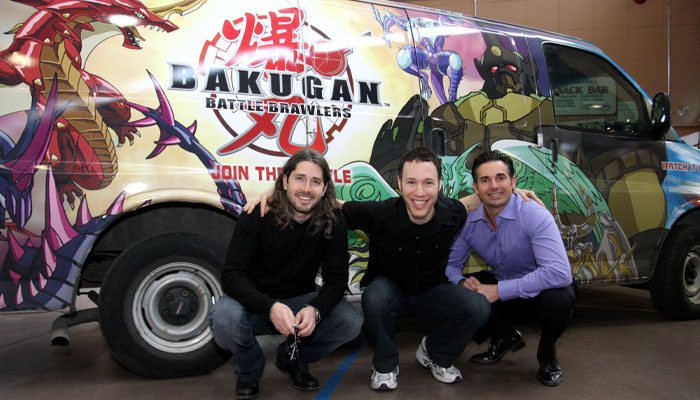
It’s a great question – and we’re very fortunate because the company’s been around for 32 years. It’s a long arc of time and, like you say, it wasn’t just something that ‘poof’ happens. For example, people talk about PAW Patrol but we didn’t do PAW Patrol until our 19th year of business.
So for us it was a very long arc – one product after another, after another, after another. One line review after another, one toy fair after another… It was repeat, repeat, repeat and really honing the craft. And to be honest, we never really thought about leadership, for better or for worse.
And looking back – and thinking about your question – what comes to mind most is that we were all doers. We weren’t going to sit in an ivory tower and philosophize. We were going to go to every toy fair. I probably did 10 trips to Asia before I did a stitch of business in Japan. We went to MIP for years before we ever created a TV show. Ben would hit the road and meet with inventors all the time. Anton was meeting with buyers constantly. So by doing, we modelled behaviour for other people to potentially follow – and some people found it inspiring. That was the leadership method for us.
The other key thing was integrity. The big thing for us was always treating people well, especially in the inventor community – always paying the royalties and never grinding people down on the percentages. Ben had a philosophy – and we still have it – that if we’re making money, they’re making the money, so everybody’s happy. And if we treat people well, it’ll come back to us positively in the future. Anytime we won a TOTY, if the inventor was around, we’d invite them on stage at the event so they got the recognition.
So I think our leadership style is about being in the mix and doing – and inspiring people to do so with integrity and treating people right. It was leadership through doing, not through telling.
Great answer. And on the topic of Spin’s culture, as the company grows, how have you managed to maintain and protect that culture?
It’s a constant thing to focus on – and you have to really believe that culture is everything. There’s many different tools and techniques you can use to keep that alive, but a lot of it comes down to keeping people that have grown up in the company, in the company. It means they can pass the culture onto the next generation – and I’m very much into that generational stuff. I love companies that have people from multiple decades. We have people in our company that are in their seventies and they’re still contributing – it’s awesome. If you’ll look at the companies like Nintendo in Japan, they love having people in multiple generations because everybody’s learning from each other. That unique mix is special.
The other thing is that you’ve got to make sure the CEO of the company lives the culture. You have people in the business with long tenure that have institutional knowledge. If you start to lose that, that’s when your culture can shift – and it can shift very rapidly. And look, it’s very difficult – sometimes you have people coming in, especially in senior leadership, that like to impart their way, right? But culture is everything.
Before we wrap up, what are your hopes for the book?
My goal for the book is to inspire people to have conversations with the people that they’re closest to around what they want to do in their life. I want them to use the book as a tool to decide whether or not they want to take a certain path – in this case, starting their own business.
The other thing is that I’d love for the book to help people reframe the way people think about risk and about their youth… Reframe how they think about being young and how close they are to the zeitgeist, and how they think about partnerships… A reframe around luck, control and the people you work with… There’s a chapter in the book called ‘Painting Your Masterpiece’ which reframes business as an art rather than as a commercial enterprise. A lot of the book reframes topics that I hope people think about and create conversation around. They may not agree with me, but at least it creates the conversation.
And ultimately, I want people to bet on themselves because if people bet on themselves, I think society is going to be a lot healthier. We need more competition and innovation in all industries, right? And we need people living the life that they want to live, with their own definition of success – not society’s definition of a success, or your parent’s definition of success or your friend’s definition success. You need to live by your own definition of successful because then you’re a healthier human being at the end of the day.
If there’s one person out there that reads the book and it gives them the ability to take that leap and embrace a path they really want in their life, then it was worth it.
Absolutely. And we launched Mojo Nation when I was 25 and reading the book did inspire me all over again – so I’d add that it also acts as a passionate supporter for anyone that has already taken the leap.
Totally. And I’ve had a lot of friends in their thirties that have said: “Am I too late?” They’re upset with me! And I remind people that the average age of an entrepreneur is 38.
So they still have time!
Absolutely! I’m just advocating to get on with it a little earlier!
And I understand there’s an accompanying card game on the way?
Yes, we’ve created a No Experience Necessary card game that’s coming out. It includes 120 questions in there, as well as 10 Foundation cards so you get to learn about the person that you’re playing with. Then it’s 10 questions per chapter, all there to create dialogue and discussion.
Last question! Have you now been bitten by the writing bug?
Yes! I do have another book in me, but it’s not going to be a business book. It’s going to be about people growing up with learning disabilities. Once I’ve done the marketing for this one, I’ll sit down for that one because it’s a topic I’m very passionate about.
Amazing. We’ll keep an eye out for that! Ronnen, a huge thanks for taking time out and congratulations again on No Experience Necessary. It’s a terrific read. We’ll pop a link to it here.
–
To stay in the loop with the latest news, interviews and features from the world of toy and game design, sign up to our weekly newsletter here
More Recent Interview

“This was the missing piece…”: Rubber Road’s Jack Fox on TUBBZ’s move into blind collectibles with Mystery Eggs
Jack Fox, Sales & Marketing Director at Rubber Road, talks TUBBZ Mystery Eggs – and why Minions were a perfect fit.

Educational Insights’ Lisa Guili on TikTok, 20 years of Kanoodle – and ten million sales
Lisa Guili reveals how one addictive brain teaser found its audience and became a phenomenon.

David Norman of Stormin’ Studios on inventors, Orchard Toys – and shaking things up!
“It’s not just a name, it’s our mission statement”: In conversation with Stormin’ Studios’ David Norman.

Carrera Revell’s Frank Tiessen on the slot-car set that buyers had to see to believe…
How Speed Arena: Race in a Case became an instant hit: in conversation with Carrera Revell’s Frank Tiessen.
Sidekick Games’ Asger Harding Granerud on Tembo, Hutan – and 10 years of Flamme Rouge
“We were looking at games we were pitching to other publishers and at some point said: ‘Maybe we can do this ourselves…’”: In conversation with Sidekick Games’ Asger Aleksandrov Granerud.

Open 2 Design’s founder, Matt Burtonwood, on creative partnerships – and the joy of collaboration
From Fisher-Price to AI: why award-winning inventor Matt Burtonwood feels sharing ideas beats going it alone.

Popular Articles
“I want people to bet on themselves”: Spin Master Co-Founder Ronnen Harary discusses his new book, No Experience Necessary
Carrera Revell’s Frank Tiessen on the slot-car set that buyers had to see to believe…
David Norman of Stormin' Studios on inventors, Orchard Toys – and shaking things up!

Hasbro launches adult-focused Blooms by Play-Doh range

Abacus Brands launches Barbie Magic Style Studio

Upcoming Events
-

- 30th January 2026
- Spielwarenmesse, Nuremberg
International Game Inventors Convention
-

- 19th - 21st May 2026
- Mandalay Bay Convention Center, Las Vegas
Las Vegas Licensing Expo
-

- 23rd - 25th June 2026
- Stamford Bridge Stadium, Chelsea, London
Play Creators Festival
-

- Tuesday, June 23rd, 2026
- Stamford Bridge Stadium, Chelsea, London
Play Creators Awards
-
- Wednesday, June 24th, 2026
- Stamford Bridge Stadium, Chelsea, London
Play Creators Conference
-

- Thursday, June 25th, 2026
- Stamford Bridge Stadium, Chelsea, London
Mojo Pitch
-

- 6th - 8th October 2026
- Excel London
Brand Licensing Europe