Inventor Mandela Fernández-Grandon on design, collaboration and the joy of playtesting

Mandela, welcome! For those unfamiliar with your games, what are some of the titles on which you’ve worked?
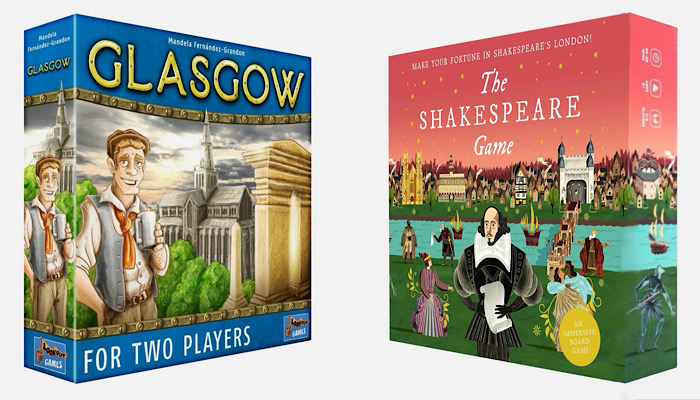
The first game I got out there was called Glasgow. That did quite well internationally. It’s more for the hobby and two-player gamers. I also did a game called Overstocked with a smaller publisher, Play for Keeps. This is a very interactive game for between one and six players. Beyond those, there’re two kinds of games I’ve ended up working… The first are heavier games like Sankoré: The Pride of Mansa Musa, for example that’s a very complicated game about the university in Mali reaching its prime through the funding of Mansa Musa when he was emperor of the Mali Empire.
Yes – very much a heavier game…
And then Ayar: Children of the Sun, which is, again, very much for hobby gamers. That follows the birth of the Incan Empire and the mythology around it. My family – on my father’s side – are Indigenous South Americans, and the legends and myths around that have always interested me so I wanted to convey that in a game. Those last two are both co-designs with the Euro hobby-designer Fabio Lopiano. The second kind of game I’ve ended up doing is more for gift and bookshops…
For example?
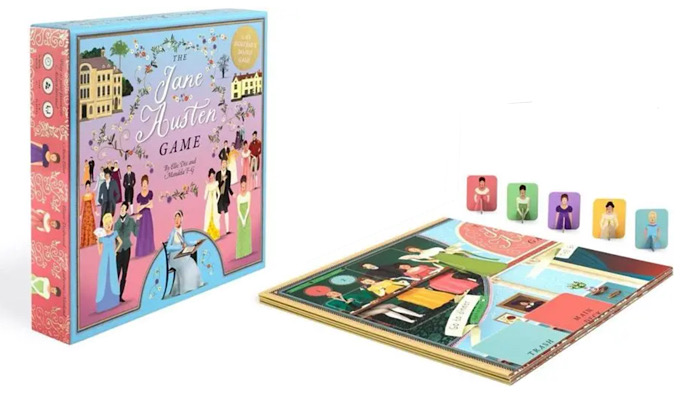
I’ve done The Shakespeare Game, The Jane Austen Game, and a game called Hire Me! which is a social party game. All of those are with Ellie Dix, whom I’ve seen featured frequently on Mojo Nation.
Absolutely. I’ve got a lot of time for Ellie Dix! I’ll link to a series she did a about pitching here and here and an interview with her here…
I saw she’s up for some of the Mojo Play Creator Awards this year, which is lovely. But yes, I have those with Ellie Dix, and we have some more on the horizon. I’ve also had one game released this weekend just gone at UK Games Expo. That’s called Green City; it’s a family plus game I’ve done – again with Fabio.
And what is Green City about?
It’s about trying to make cities commutable by public transport – which maybe doesn’t sound like the most thrilling theme! In fact, it’s quite a fun, light family plus game with a good dose of luck, a decent bit of strategy and a nice, fun presentation. A Japanese company is bringing that out initially.
Interesting. I get the sense that all your games have a bit of mind and a bit of heart in them. Is that fair to say?
I think that’s fair to say, yes. I definitely try to get some heart in them. As for the mind, I think I’m naturally inclined to quite a systematic view of things – possibly because of my background as a scientist. It ends up being difficult not to approach things that way.
In saying that, I do think I’m a bit all over the place in the design sphere because I also like making and playing very silly games! The ideal for me is, I think, when a lighter game has the thinky bit hidden from the players… I like it when we, as designers, do the thinking so that the players don’t have to. They’re just immersed in the fun of it.
Fantastic! You said there that you think of yourself as quite systematic because of your background as a scientist. I want to come back to that! For now, you’re a great one for collaboration, aren’t you?
Yes. I started designing on my own, but now co-design most things. I think working with others offers such a list of benefits… Primarily, they tell you when to stop and when to keep going. One of the major issues I have with game design is the way that – once you have an idea concept – you may be excited about it, and it may be good. But then the path bifurcates: this could happen, or that could happen…
During development, you mean? The idea could go in more than one direction?
Exactly. And then each of those forks could also split – you end up with this whole network of possibilities as regards what the game could be. To me, it feels like a lot of the process is basically cutting down these paths to the one that’s best going to suit what you’re aiming for. But I find that bit challenging.
Having ideas isn’t the problem? Refining them is?
Yes – cutting down ideas and keeping them slim. I find having a co-designer much more efficient in that element. They’re more easily able to say ‘Nope.’ They also tend to say something that plays off it and takes it in a better direction. So I find it useful having more inputs like that. But you know, Deej, another big thing about collaborating is sharing the enjoyment of the process.
Understood. And is there a particular type of person with whom you enjoy working?
One thing I will say is that I always try and work with people that I think are better than me in many ways. That way, I can always learn from them. But it’s also about having somebody else to share the whole experience with. Whether an idea goes ahead or falls through, you still have somebody else in exactly the same boat as you. You can commiserate with them or, when a wonderful opportunity comes to light or you get nominated for an award, you have a co-designer sharing all that with you.
Perfect. Now, we had a conversation recently about your presence in the playtesting area and – indeed – your own events. They had a wonderful name; what were they called?
Ha! Yes… Ellie Dix and I were arranging some development events for designers – we were just calling them designer weekends. However, some of the attendees started calling them by a nice little portmanteau of our names: MandEllieCon.
Ha! And is that now official?
We’ve sort of adopted that ourselves now, yes. These events go back to what I was saying earlier… Both Ellie and I immensely enjoy playtesting. It’s very fun being exposed to new ideas. So we started out participating in weekday events primarily run by Playtest UK, which is a wonderful organisation set up and run by Rob Harris. That’s been a great service to us.
But I’ve also enjoyed many scientific conferences, and the best one of those I’ve ever attended was one where we all stayed in the same hotel for the duration. It was a smaller group, so you really got to know one another through it… Interesting ideas got thrown around at breakfast and lunch and all during those quieter times. We were all mixing with different people that we might not otherwise have taken the time to chat to, so had that chance and that exposure.
Fascinating. I do think some people see reciprocal playtesting as a chore they have to do. But you love it?
I do! It’s just one of my favourite ways to spend time. I’ll happily sit down and play games of all kinds, qualities and complexities, from all kinds of designers. I really enjoy doing that. And if any of the feedback that I can offer is of use to people, then all the better. It gives me a small sense of satisfaction to be part of that and to enjoy the community that builds up from it.
And that’s what led to MandEllieCon?
Right. Ellie and I both wanted to do something that was a little more in that vein and we set up these designer weekends. The main idea is that we get a bunch of designers together, staying on site, and have people playtest games throughout the event. We try and break up the testing with other things so it’s not too intense. We stop to eat all meals together, for example, so that there’s that more natural downtime.
Sounds really useful…
We’ve done it several times and learned some valuable things from each one.
It’s just been a great chance for people to socialise, to push forward their games, to learn from people of different experience levels as well. And this year, we’re scaling it up a little.
How so?
Well, it’s always been a bit limited because we want it to be as accessible and we want to reach as wide a range of designers as possible. That can be difficult because, I think, there tends to be quite a challenge in terms of the socioeconomic backgrounds of who ends up designing games. For the most part, it’s those of us who are comfortable enough, financially, and therefore have more leisure time to engage in this kind of thing on the side.
Right…
But to make it more accessible, Ellie and I have always wanted our event to be completely free of charge. For that reason, we’ve covered the cost of all the food and the hosting of it; there’ve been no costs associated with accommodation. I mean: people chip in for the food if they want to; but that’s entirely optional. We’ve also offered travel support for people if they needed it – all to help reach different people from different backgrounds with different ideas.
I think this is fantastic! But this is not a big, public event?
No, I should stress that this is just something we organise because we get great joy from doing so. But yes, we always want to reach a wider audience of people; people that are less likely to have access to these opportunities, and maybe people that are a bit less represented in the game-design space. Because otherwise, we do get a lot of people from more affluent backgrounds – primarily, we get a lot of white males. So as much as possible, we try to create a balance of different individuals, different representation. So if anybody is out there and does want to contact me – and thinks they fit that bill – that’d be great.
And, you have slightly more scope this year, do you not?
For this time, yes – we’ve actually got a donation from Corey Thompson of the Rose Gauntlet Foundation to help underrepresented professionals in tabletop games industry… So we’re very grateful because they’re going to cover our costs for this one. That allows us to scale up a little and host slightly bigger numbers.
Well, that’s amazing. And I know places are still very limited, but it’s worth designers reaching out to you if you think they fit the bill. What’s the best way to drop you a line to find out more?
If people feel they’re a good match to that description, and they want to connect to other designers and playtest opportunities, then please reach out to me on [email protected]. We may be filling up for this event, but it’s always good to connect with more folk for possible future opportunities.
And just before we wrap things up, Mandela, you mentioned earlier your background in science. What is it you do when you’re not inventing games?
I’m an Associate Professor at a university.
Oh! An Associate Professor of what?
Of chemical ecology and insect behaviour.
Of course. That would’ve been my first guess.
Ha! I work on pheromones and things like that, primarily focusing on insect behaviour. Most of our work is in low-income countries trying to improve people’s livelihoods by developing technologies that might help in agriculture or reducing the spread of disease.
Incredible. I’d like to hear more about that once we’re finished with the interview – sounds fascinating. To wrap things up then, Mandela, tell me: what’s the most interesting object in your office or on your desk?
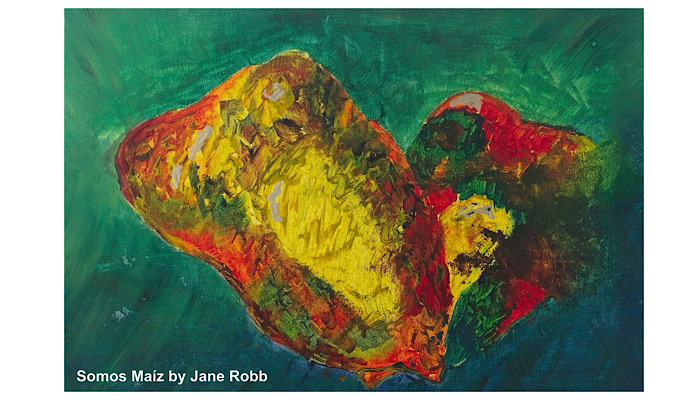
Well, my desk’s kind of empty right now, so I’m now looking at… Here! This is a painting of two grains of maize together…
Two grains of maize? Like corn maize?
Yes. So this is from my partner. She worked in Guatemala for some time as part of her PhD. And there’s a saying in a book by Rigoberta Menchú, one that I was reading at the time that we met. I don’t know if you know this, but Rigoberta Menchú is a Nobel Peace Prize winner for her work with indigenous communities and representation in politics. I’ve met her, actually.
Wait a second… Hold the maize story! You met the Nobel Peace Prize winner Rigoberta Menchú?
Yes. When I was a kid, she visited our house. In fact, I slept on the couch so that Rigoberta Menchú could stay in my bed! Before accepting the Nobel Prize, she was in Glasgow as part of her ‘500 Years of Resistance’ speaking tour… And apparently when a Nobel winner comes to visit, they get priority over the children!
I’ll keep that in mind! So now: back to the maize!
Right! So there’s an expression within Mesoamerican and Indigenous communities: “somos maiz” – we are maize. Historically, this phrase represents the idea that our identity connects deeply with the earth.
The maize is more than just food?
Exactly right. So my partner painted this lovely picture representing the two of us as maize.
Oh, this is an amazing object! Great answer, Mandela!
You might be interested to know that I occasionally slip maize into my games! The last big, complex hobby game I did had maize in it and some camelids as well.
Some camelids… Just for good measure.
Exactly. It had to have some llamas in there.
I’d have been disappointed if it didn’t. Fantastic! Thanks, Mandela.
–
To stay in the loop with the latest news, interviews and features from the world of toy and game design, sign up to our weekly newsletter here
More Recent Interview

Designers Adrien Pédron and Thomas Favrelière on the origins of Archeo – and why Gigamic proved the perfect publisher
“We’d wanted to work with Gigamic for a long time…”: In conversation with designers Thomas Favrelière and Adrien Pédron.

BOTI’s Nico Blauw talks Pembe the Pink Cat, innovation – and the International Toy Board
“The look, the design, the audience, the messaging… It all appealed”: Nico Blauw reveals what made Pembe the Pink Cat a winner for BOTI.
“This was the missing piece…”: Rubber Road’s Jack Fox on TUBBZ’s move into blind collectibles with Mystery Eggs
Jack Fox, Sales & Marketing Director at Rubber Road, talks TUBBZ Mystery Eggs – and why Minions were a perfect fit.

Educational Insights’ Lisa Guili on TikTok, 20 years of Kanoodle – and ten million units sold
Lisa Guili reveals how one addictive brain teaser found its audience and became a phenomenon.
“I want people to bet on themselves”: Spin Master Co-Founder Ronnen Harary discusses his new book, No Experience Necessary
Spin Master Co-Founder Ronnen Harary talks to us about his exciting new book, working with inventors – and Spin’s most underrated launch.

David Norman of Stormin’ Studios on inventors, Orchard Toys – and shaking things up!
“It’s not just a name, it’s our mission statement”: In conversation with Stormin’ Studios’ David Norman.
Popular Articles

DSTLRY launches card game based on its award-winning Somna comic
BOTI’s Nico Blauw talks Pembe the Pink Cat, innovation – and the International Toy Board

Bop It’s Dan Klitsner on creative techniques, his favourite inventions and more
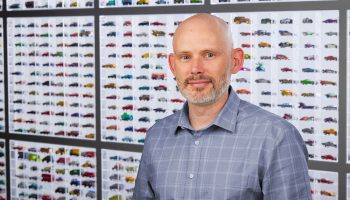
Mattel’s Tyler Kenney on bringing toyetic fun into fingerboarding with Hot Wheels Skate
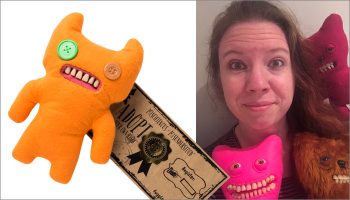
Fugglers creator Louise McGettrick on how an eBay listing for a bag of false teeth inspired her line of plush monsters
Upcoming Events
-

- 30th January 2026
- Spielwarenmesse, Nuremberg
International Game Inventors Convention
-

- 19th - 21st May 2026
- Mandalay Bay Convention Center, Las Vegas
Las Vegas Licensing Expo
-

- 23rd - 25th June 2026
- Stamford Bridge Stadium, Chelsea, London
Play Creators Festival
-

- Tuesday, June 23rd, 2026
- Stamford Bridge Stadium, Chelsea, London
Play Creators Awards
-
- Wednesday, June 24th, 2026
- Stamford Bridge Stadium, Chelsea, London
Play Creators Conference
-

- Thursday, June 25th, 2026
- Stamford Bridge Stadium, Chelsea, London
Mojo Pitch
-

- 6th - 8th October 2026
- Excel London
Brand Licensing Europe