Anomia inventor Andrew Innes tells the story of his game’s long journey to market
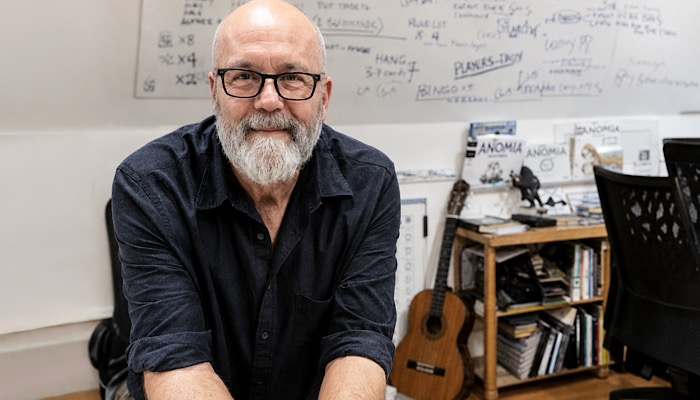
Morning, Andrew! How are you?
I’m all right, thank you! Sorry I’m late. My computer decided not to work, and apparently it thought it was five o’clock in the morning. I figured I’d better restart it before the call!
Ha! Don’t worry. No harm done. Oddly enough, I was just sitting here wondering why all my devices show a different time. One says 16:03, another says 16:05, another 16:07… And my laptop thinks it’s 5:27am! What time is it where you are?
It’s 11 in the morning.
Isn’t that a bit early for a hugely successful game inventor? I assumed you’d roll out of bed around noon…
Ha! No! Six o’clock for me. Sometimes earlier.
No, no! Don’t ruin the illusion, Andrew! People want to imagine you’re living the life of Riley!
Ha!
Well, thank you for making time. Before we get to Anomia itself, I have to ask… What does the word actually mean?
The word has a long history. It goes back to Ancient Greek, where it referred to chaos, lawlessness and namelessness. Then, during the late 1800s, neurologists adopted it to describe a condition where someone has trouble finding the right word. If I was holding this pen, for example, I’d know perfectly well that it was a pen – I just wouldn’t be able to tell you what it was called.
I know the feeling. Ha! And that struck you as the perfect name for the game?
It did. I was playtesting it with a novelist friend who mentioned the phrase “tip of the tongue.” I was like, ‘Oh, that’s an interesting thread…’ When I got home, I started chasing that down – and I quickly found the word anomia. When I realised it meant word-finding difficulty, and chaos and lawlessness. I thought it was perfect. It describes the game exactly.
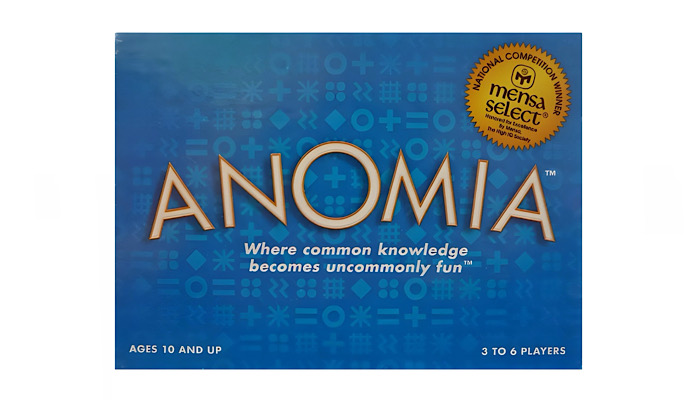
It also worked on the practical side because nobody owned Anomia as a trademark for a game! But I also liked that it was an unusual word. Back then, I could imagine this little blue box sitting on a shelf. I loved this idea that it was slightly nondescript and that people would look at the name and just think, ‘What? What is that?’ I didn’t necessarily want it to look obviously like a game.
It’s quite a brave name! Did you lock it in straight away?
Oh, definitely not! I tortured my poor wife for about three months asking whether or not it was the right name. Ha! Then I remember showing it to someone at Toy Fair and they immediately said, “You’ll have to change the name.” Other people thought it said ammonia! So there was some concern about changing the name to something that immediately made it obvious what it was.
I rather like it! Generally speaking, I think a game’s name and strapline should tell you something about the gameplay… But every now and then, it’s fun to see something that makes you stop and ask, ‘What’s this?’ And in hindsight, was it the right name?!
Well… I think so! Over the years, the word has become more familiar to people. For example, it appeared in the New York Times crossword, and there’re a couple of bands called Anomia. As for the game itself, it’s certainly done well.
Although perhaps, Andrew, in some parallel multiverse, you changed the name and sold twice as many!
Ha! Maybe! Perhaps that’s what’s been holding it back all these years! Ha!
Ha! Like Sliding Doors! And for anyone who hasn’t played Anomia, what’s the gist?
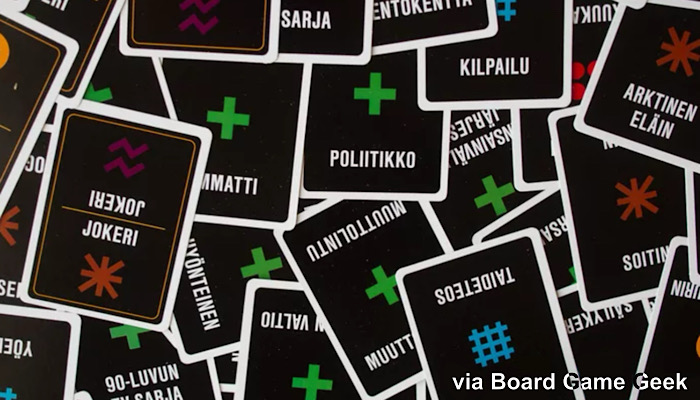
The game uses a deck of cards. Most are category cards, with categories like ice-cream flavours, dog breeds, types of tool… There’s also a coloured symbol and a handful of wild cards. Players take turns flipping cards over. If two of you reveal matching symbols, play stops immediately and those two players race to name an example from the other person’s category.
Brilliant!
Now, the categories themselves are usually things everyone knows but, under pressure, your brain suddenly goes completely blank or blurts out something ridiculous! As the game goes on, you build up piles of cards in front of you… Then, when someone loses a card, it can reveal another matching symbol underneath, triggering another face-off. Those chain reactions are called cascades. The wild cards make things even more chaotic because they can create matches between different symbols. So even when it isn’t technically your turn, you’re still completely involved.
Which means you can’t switch off – even for a second…
Exactly. Even if someone else is drawing a card, you have to be paying attention because you could suddenly be in a face-off.
And for my money, one of the reasons Anomia works so well is that it sits in a sweet spot… You can start playing very quickly; you have to pay attention all the time, and there’s chaos without it feeling overwhelming. You always feel like you’ve got a chance!
You know, I’ve always loved teaching it at conventions because you’ve only got a minute or two to capture people’s attention. I usually get them playing almost immediately, but there’s always this moment – about 90 seconds in – where they suddenly go “Oh!” as they totally get it. They’re in! It happens over and over again, and it’s so satisfying to watch.

Well, having done a bit of research before we spoke, I think your origin story is terrific. So… where did the idea come from?
When I was about ten or 11, I used to play a game called Store. Everyone around the table would choose a different type of shop. I might be the pet shop, you might be the toy shop, say; someone else might be the sweet shop… You all had to memorise everybody else’s choices… Then you’d start turning over cards in an ordinary deck. If you and I happened to reveal matching numbers, we’d race to name something sold in the other person’s shop.
Got it! Sounds chaotic!
It was; it drove me crazy but I absolutely loved it! Ha! I loved the intensity, I loved the laughter, and I remember thinking – even then – that there was something really special about the idea. I just felt it could become something bigger. And that thought stayed with me for years – right through into my thirties.
Oh, wow! It really stuck in your head?
Yes… I was only a kid, but I just couldn’t let the idea go. It kept coming back to me. Later, I was living in New York and working in newspaper production. I did page layout for a daily paper, so I became very proficient with the desktop publishing software we used. One day, I realised I could actually make a prototype… I’d had lots of false starts before then. At one point, I’d even turned it into a board game – just in my head. But I’d never actually built anything. So finally, I made a prototype. It was unbelievably ugly!
Ha!
Once I started playing it with friends, though, I could immediately see what needed refining. So over the next three or four years I just kept improving it and improving it. All the while, I was working full-time and raising a family so it was always an evening-and-weekend project. Eventually, in 2009, I reached the point where I thought, ‘Right. The game’s finished.’ After that, I spent ages polishing the rules and I started visiting Toy Fair simply to understand the industry…
You weren’t pitching it?
No, because I’d previously run a small import business and had decided I wanted to publish it myself. I had a very particular vision for it, so I released that little blue two-deck box which people now know so well. It launched in November 2009. This was just before Kickstarter really existed, but I effectively built my own crowdfunding campaign! I emailed everyone who’d helped me playtest the game over the years – a few hundred people… I also had a mailing list from my music, because I was a musician. The email basically said, ‘Here’s this thing I’ve been working on. If you’d like to pre-order a copy, it’ll cost $25.’
Every copy was signed and numbered.
This is amazing!
In about six weeks I’d raised $20,000 – and that paid for the first print run. So I shipped around 500 pre-orders right before Thanksgiving. Happily, people played it over the holiday, told their friends about it, and then we sold another 500 before Christmas. It was wonderful… Until January arrived. Ha! I still had about 1,500 copies sitting in my attic and thought, ‘What on earth am I going to do with all these games?’ so I started knocking on doors…
First, I approached local retailers around Boston. Next, one of them encouraged me to join ASTRA. Then – that spring – everything seemed to happen at once. We won the Mensa Select Award, I got a full-page feature in the Boston Globe Sunday Magazine, there was some lovely press. The following year we sold 20,000 copies! After that, it just kept growing. Today, before partnering with The Op, we’d sold around two million copies in 15 languages.
Do you know what I absolutely love about that story? The fact that you effectively crowdfunded Anomia before crowdfunding existed. It’s exactly how a time traveller would do it… You couldn’t be the founder of Kickstarter, but you could use that knowledge. Ha!
Ha! I know! Sometimes it does feel as if I accidentally invented half of Kickstarter. But I already knew how to build websites, manage mailing lists and collect payments, so I just cobbled everything together. It was a complete Frankenstein’s monster but somehow it worked.
I love it! And now we’ve discovered a couple of parallel universes… In one, you changed the name and sold twice as many games. In another, you founded Kickstarter! Ha! I rather like this version, though; I love the old-school, get-out-and-push-ness of it! Knocking on doors and making it happen.
You know, I was really inspired by the story of Set when I was getting started because I loved it… It really hurt my brain in a way that I liked! When I heard the story of the inventor – Marsha Falco’s – I found it hugely inspiring… She created the game, worked with a local printer to produce the first copies, started playing it with friends, sold it locally and gradually built it from there.
Makes absolute sense that you’ve followed in those footsteps. You also branched out beyond Anomia, didn’t you? In terms of variations?
Yes… Anomia has the standard two-deck edition – that was the first version. Then there was the Party Edition, which was basically a giant expansion. It had six entirely new decks, with no overlap. Then I made Anomia X, which was the after-dark, adult version. After that came a kids’ version, which is image-based.
Images instead of categories?
Exactly right. Each card has a picture. When there’s a symbol match, you race to say a word that starts with the same sound as the picture. So if it’s a piano, you might say ‘pig’ or ‘party.’ If you’re five years old and can’t read yet, you can still play. It’s actually really fun with adults as well because it trips you up in a completely different way. It’s a great drinking game! I also made a pop-culture edition, with categories based around films, music, television, food and internet culture.
And Duple? Is that a completely different game?
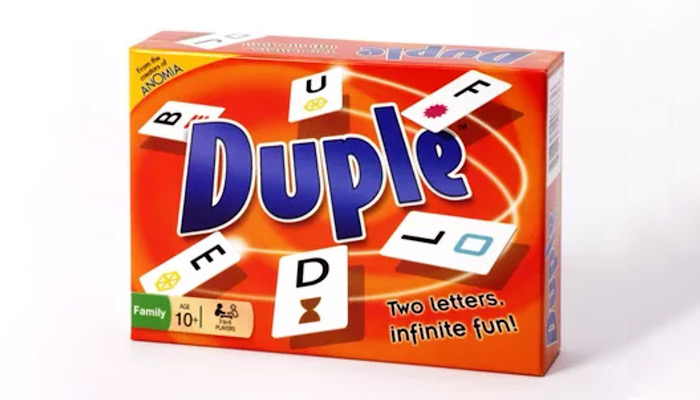
Duple is sort of a cousin of Anomia. It uses the same symbol-matching mechanic, but instead of category cards on each player’s pile, there’s a single category card in the middle of the table. So if your card has an L and mine has a D, and our symbols match, we race to think of a word that contains both letters while also fitting the category… So if the category was ‘animal’, you might say ‘leopard!’ It’s slower, but it’s a fantastic word game. I made it because I was always frustrated by Bananagrams and Scrabble…
How so?
Well, it’s not a criticism – I love them both – but nobody’s talking during those games; everyone’s doing their own thing. Duple is a highly social word game. Sometimes everybody gets completely stumped. Nobody can think of a word. You’ve got to sit there, thinking, ‘L… L… L… D! An animal with an L and a D…Oh! Leopard!’ Sometimes, an All Play card appears when you discard a category and suddenly everyone has to think of a word using all of the letters currently showing. There might be five or six letters in play, so sometimes it’s lightning fast and sometimes everyone is completely stumped.
Great fun! But you didn’t pack it all in and become a full-time game inventor, did you?
No, I kept working. When I launched Anomia, I was working for a financial publisher in New York City. I’d moved to Boston, but I was still working remotely for them…
Wait a minute… You were remote working in New York while living in Boston?
All the way back then?
Ha! Yes!
So you invented crowdfunding before crowdfunding, and remote working before remote working? My time-travel theory is holding up!
Ha! That’s funny!
When is this roughly?
Towards the end of 2009. Actually, it was a slightly lonely time. We’d moved to Boston; our son had been born in New York and was about a year and a half old. Then our daughter arrived six months later… I was working from home all the time, so between that and having two young children, life became very insular. I hardly ever left the house, apart from travelling back to New York every couple of weeks. Then, in January 2010, I joined the Harvard Business Review, where I spent about six years doing digital-product development.
Makes sense…
I’d started out in print production at a publisher in New York before moving into the web team as digital publishing emerged. By the time I joined HBR, I was developing app-based and mobile and web products across the different parts of Harvard Business Publishing. Then, in 2015, there was a restructuring. My team was dissolved and a number of us were let go.
By then, though, I’d actually been trying to persuade my boss to let me go part-time so I could devote more time to Anomia! I’d also licensed the game to another company… They manufactured it and handled distribution, but they weren’t really marketing it. So when I left HBR, I thought, ‘Right. Now I can really focus on building the brand.’ And now – as you may know – we’ve just entered a really interesting new chapter.
Tell me about that!
Our long-time North American licensing partner, whom we’d worked with for 13 or 14 years, suddenly went bankrupt last August. Completely out of the blue.
Blimey!
It was a huge shock. So from August through to February, I was completely focused on finding a new licensing partner. There was a lot of interest, which was exciting. We had meetings with lots of different companies before we ended up with The Op. I’m delighted about that because I think Anomia sits perfectly alongside games like Flip 7, Hues & Cues and Tapple. It just feels like it belongs in that catalogue.
It really does! I’m curious though… When your previous publisher went under and you suddenly found yourself needing a new home, were publishers courting you? Or did you have to go out and pitch the game yourself?
Oh, it was a little of both. We had a lot of interest – I think we received offers from about nine companies. I’d already known the team at The Op, though, so it wasn’t a complete surprise that they were interested. But we still had to pull together 16 years of sales data, present everything, sign countless NDAs, sit through meeting after meeting, review pitch decks and compare offers. It was a whole process… and I don’t know if you know this, but we literally signed the deal on the Thursday before New York Toy Fair opened.
I did not know that! That’s cutting it fine!
One of my favourite moments came earlier that week. I was talking to them about how we’d handle the Toy Fair launch if we managed to get the deal over the line in time. David Blanchard got this slightly sheepish look on his face and said, “You know those giant rotating signs that hang from the ceiling in the Javits Center?” I said, “Yeah…” And he said, “Well… We’ve already put the Anomia logo on one.”
Ha!
They’d done it on the assumption we’d get the deal finished. I absolutely loved that. We all wanted it to happen – it was just a case of getting the details over the line. And of course, The Op has tremendous marketing experience. I do think Anomia is a slightly different proposition for them because they’re licensing an established game rather than launching something entirely new. Anyway, we signed everything in February, and this is the new version…
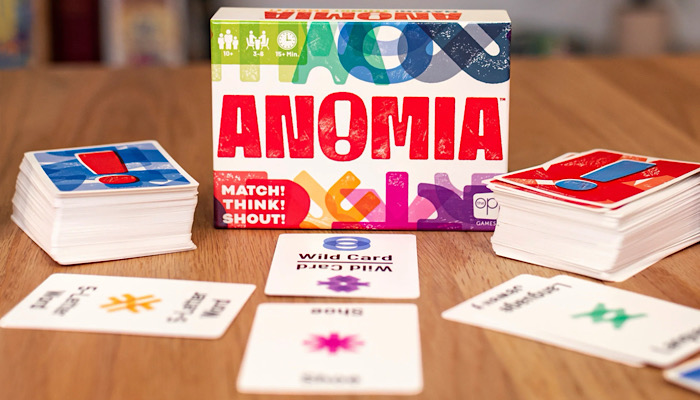
Oh, it looks great!
Thanks! I absolutely love the redesign. It launches at Gen Con in a few weeks. I’ll be there demoing the game with the team. I’m really looking forward to it. We’re still selling through stock of the previous editions – the original game, Party, X and Kids – but next year everything will be in the new format. That’s where this new chapter really begins.
Extraordinary story. I’m so glad we managed to make time to chat – especially given how busy you are travelling through time.
Ha! Starting Kickstarter before Kickstarter…
Secretly inventing remote working… Developing Red Mercury… Building the Antikythera Mechanism as a prank. I know we haven’t discussed those things specifically…
Ha!
I’m looking towards the future, are there more games on the horizon?
Oh, absolutely. My vision for Anomia is much broader than the four core games which are really just the foundation. There are lots of different directions we can take it. In fact, on my website I’ve got downloadable print-and-play decks for a food edition, an animal edition… There’s even a completely blank deck so people can make their own categories.
Oh, interesting!
Teachers use them in classrooms; every class ends up creating its own unique deck. I’ve made custom decks for schools, weddings and even literary festivals. Last year I created a deck based entirely around the town hosting the festival; it’s full of local references and in-jokes. I don’t know whether The Op will want to go down that route commercially, but I do think there’s huge potential for customisation. I’ve also found Anomia has become incredibly popular with speech pathologists. I exhibit at speech and hearing conferences because therapists use it as part of rehabilitation after strokes and traumatic brain injuries.
And beyond Anomia?
Beyond Anomia, I’ve had another game bubbling away for years. It’s a completely different style of game. I’ve made several prototypes, hit a wall, picked it up again, then had to put it aside when everything happened with Anomia. Now I’m back working on it again… It’s much more content-heavy, so building each prototype takes quite a while. I’m trying to create a dungeon crawler that appeals to people who love accessible games like Anomia. My first prototype played in about two and a half hours, which was far too long! Ha!
Ha! Well, Andrew, this has been fascinating. I think Anomia is wonderful And I think you’re right – it feels like it belongs at the op, so congratulations and good luck with that. To wrap things up, tell me: what’s the most interesting object in your office or on your desk?
That’s easy!
Is it?!
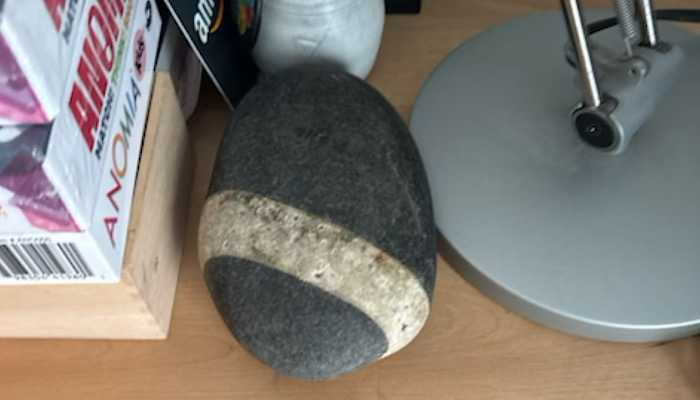
It’s this rock!
Don’t tell me: one of the tools you used when you helped build Stonehenge?
Ha! No! Ha! It’s a piece of basalt with a huge band of quartz running through it. I found it on the coast in Maine years ago. I think it’s a few hundred million years old and it’s just… Beautiful. I’ve kept it on my desk ever since.
Amazing! Thank you again for making time, Andrew. Let’s meet up in New York next year; be a pleasure to shake your hand.
–
To stay in the loop with the latest news, interviews and features from the world of toy and game design, sign up to our weekly newsletter here
More Recent Interview

Designers Adrien Pédron and Thomas Favrelière on the origins of Archeo – and why Gigamic proved the perfect publisher
“We’d wanted to work with Gigamic for a long time…”: In conversation with designers Thomas Favrelière and Adrien Pédron.

BOTI’s Nico Blauw talks Pembe the Pink Cat, innovation – and the International Toy Board
“The look, the design, the audience, the messaging… It all appealed”: Nico Blauw reveals what made Pembe the Pink Cat a winner for BOTI.
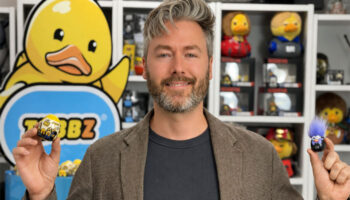
“This was the missing piece…”: Rubber Road’s Jack Fox on TUBBZ’s move into blind collectibles with Mystery Eggs
Jack Fox, Sales & Marketing Director at Rubber Road, talks TUBBZ Mystery Eggs – and why Minions were a perfect fit.

Educational Insights’ Lisa Guili on TikTok, 20 years of Kanoodle – and ten million units sold
Lisa Guili reveals how one addictive brain teaser found its audience and became a phenomenon.

“I want people to bet on themselves”: Spin Master Co-Founder Ronnen Harary discusses his new book, No Experience Necessary
Spin Master Co-Founder Ronnen Harary talks to us about his exciting new book, working with inventors – and Spin’s most underrated launch.
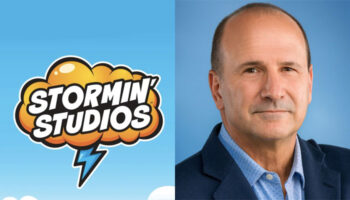
David Norman of Stormin’ Studios on inventors, Orchard Toys – and shaking things up!
“It’s not just a name, it’s our mission statement”: In conversation with Stormin’ Studios’ David Norman.
Popular Articles
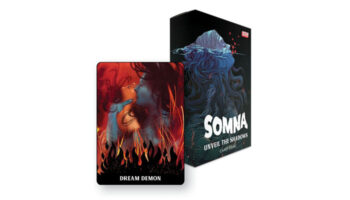
DSTLRY launches card game based on its award-winning Somna comic
Educational Insights’ Lisa Guili on TikTok, 20 years of Kanoodle – and ten million units sold
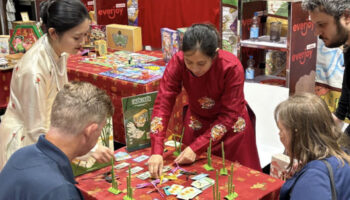
Vietnamese game design contest – Road to Essen – returns for its second edition
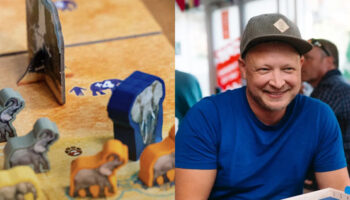
Sidekick Games’ Asger Harding Granerud on Tembo, Hutan – and 10 years of Flamme Rouge

"I see faces everywhere!": Zack Buchman – Creative Director at Furry Puppet Studio – on creating characters
Upcoming Events
-
- 30th January 2026
- Spielwarenmesse, Nuremberg
International Game Inventors Convention
-

- 19th - 21st May 2026
- Mandalay Bay Convention Center, Las Vegas
Las Vegas Licensing Expo
-
- 23rd - 25th June 2026
- Stamford Bridge Stadium, Chelsea, London
Play Creators Festival
-
- Tuesday, June 23rd, 2026
- Stamford Bridge Stadium, Chelsea, London
Play Creators Awards
-
- Wednesday, June 24th, 2026
- Stamford Bridge Stadium, Chelsea, London
Play Creators Conference
-
- Thursday, June 25th, 2026
- Stamford Bridge Stadium, Chelsea, London
Mojo Pitch
-

- 6th - 8th October 2026
- Excel London
Brand Licensing Europe