Designer Tobias Tesar on the origins of Käpt’n Memo – and what helps him get games signed
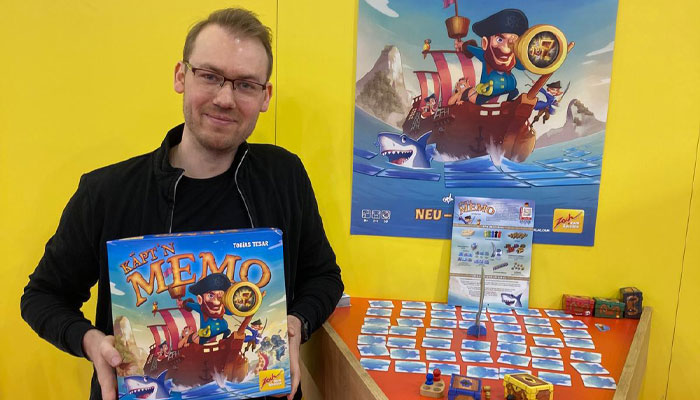
Tobias, it’s great to catch up. Let’s talk Käpt’n Memo! For anyone new to the game, how would you pitch it?
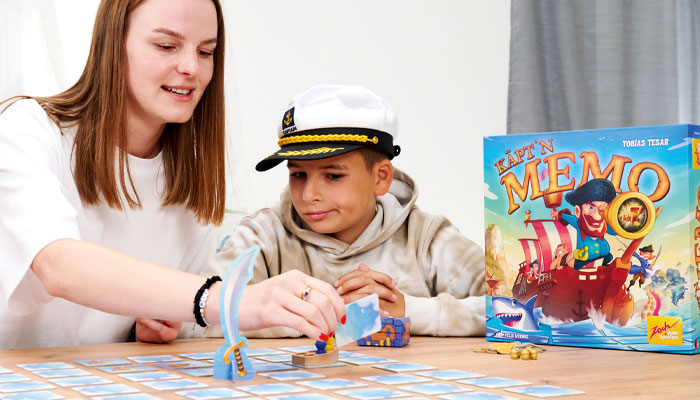
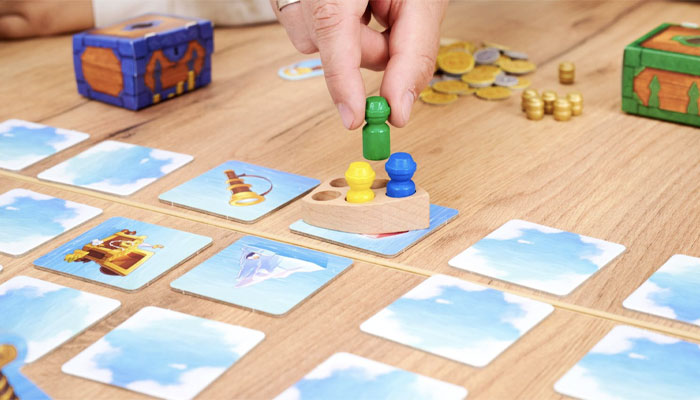
Thanks for having me! Käpt’n Memo is a mix of push your luck and memory-mechanism. One of you becomes the captain and steers a ship across a 7×7 tile grid, where you want to find treasures, not hazards. All other players are the sailors, and they have to decide every turn whether they still trust the captain’s route or would rather get off the boat. If the captain reveals the same hazard twice, the ship sinks and everyone still on board gets nothing. You flip all the tiles back, try to remember where the hazards are, and then the next player can try their luck as the captain. You slowly discover what is where, and you have to find a safe route that gets you treasures without sinking.
Terrific! How did this one come about?
I was playing a bunch of push your luck games with my friends over the years. I always thought that a tad bit more information about which card comes next could be interesting, so that it’s not only luck but also an educated guess that determines whether you bust or not. I ended up with a memory mechanism to introduce more and more information over the course of the game.
This is published by Zoch – what made them a great home for Käpt’n Memo?
Zoch is the perfect fit for this game. They have a lot of other family games with a memory aspect, and their target audience matches that of Käpt’n Memo. Also, the people I worked with at Zoch immediately understood what makes this game great and created a beautiful product.
The game is very well balanced, even with the random layout. I’m always tempted to stay on the boat! What went into creating the balance needed in a successful push-your-luck game?
Just a lot of trial and error honestly. I quickly committed to six different hazards and also to each of them appearing five times in the game – but the number of treasure chests in the game, and how many of them you have to find to end the voyage successfully, was ironed out over several weeks of playtesting.
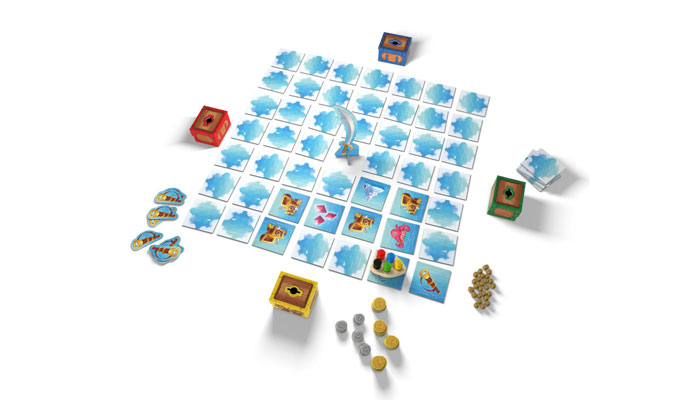
In the first version, you had to find seven treasures to be successful. This was a lot harder to achieve, but still doable. I decided to go for more success moments in the game and lowered this to five chests later in the design process, then altered the balancing to reflect the change. Together with the team at Zoch, we worked more on the points and how the rubies worked, which gave the game its final rules tweak.
The game still has a lot of randomness and luck involved. We just tried to make the moments where you feel punished by bad luck appear as rarely as possible so they are not too frustrating, while moments where luck swings in the other direction can still happen often enough to keep the game exciting.
Stepping back a little, what set you on the path to game design?
After 10 years of being a self-employed motion designer, I was looking for something else to focus my mind on. I had always enjoyed board games, so I thought: ‘How hard can it be to design a game?’ After that thought had been in my head for a few months, I finally started my first board game design in 2021.
I was trying to find other designers in Munich to test my game with, and one of the first people I met was Thomas Weber. He had already been designing games for several years and, looking back, he has been the biggest help in getting my design career started. He gave me great feedback and always encouraged me to keep designing. Thomas was also the one who told me that I should apply for the Spiel des Jahres scholarship. He had been nominated for it one year earlier as well. So I applied with two of my games and was lucky enough to win it.
And what did that scholarship entail?
The scholarship allows you to get an inside look at the board game scene in Germany. Among other things, it included visiting Ravensburger for a week and getting to know the publisher, as well as spending a week with the established designer Jens-Peter Schliemann. The week I spent with Jens-Peter was the most valuable part of the scholarship. It was incredibly inspiring to learn about his thought processes and to get his feedback on some of my games and ideas.
I can imagine! We spoke with Jens-Peter a while back and it was a great conversation. I’ll pop a link here! And what was those early days as a designer like for you?
Like most new designers, I received only rejections in the first years. I tried to mentally prepare for that, but after already investing two years full-time in board game design and research, the rejections started to get to me. I was considering accepting defeat and quitting this whole money-wasting endeavour. My games were not innovative enough, not simple enough, not fun enough, not good enough, not intuitive enough… But I didn’t want to quit without proving to myself that I could do it, so I decided that I would keep hitting my head against the wall until I had one contract. Only then would I allow myself to quit and look for something else to do.
Wow.
Shortly after that moment, my game Second’s Best won the Hippodice Competition. I was happy about it, but it felt bittersweet at the time.
Oh, why?
Well, how good is winning a design competition if no publisher wants to sign the game? Fortunately for me, a few months later, Second’s Best became my first signed game. In 2024, I signed seven more games, and in 2025 a couple more. I never stopped inventing new games.
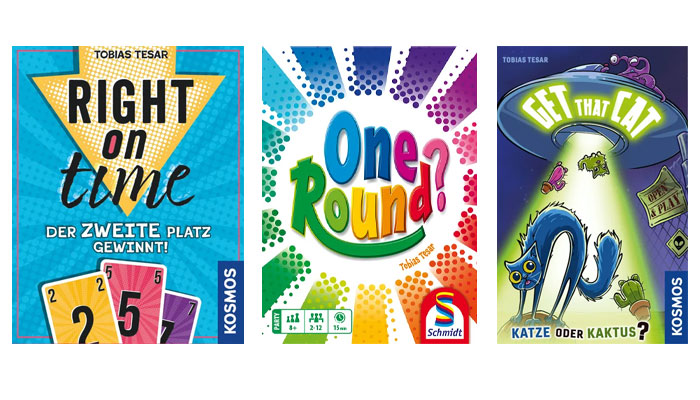
Amazing – and quite the momentum shift! What do you put that down to? Perseverance?
I’d say learning from other designers has had the biggest impact on my ability to get games signed. Having someone you can regularly ask for advice, someone you can talk to about the problems you encounter – both in your game design and on a personal, emotional, and mental level – was the deciding factor in the end. Winning the scholarship was a much-needed success in a long line of failures and helped me keep going. But ultimately, it’s the people around you who carry you over the line.
Great answer. And on that, do you have any pitching tips for other budding designers?
There are some tips that everyone mentions when it comes to pitching: quickly show what makes your game different, what the novel idea is and where the fun lies. Since I tend to design simple games, I try to get the other person to play a turn as quickly as possible. With a more complex game, this might not be feasible, but if you can manage to explain the game while you are already playing, that’s a very effective way to pitch it. In the end, I think that if you have a good game and you know what makes it great, pitching becomes easy, and you shouldn’t worry too much about it.
Last question! What fuels your creativity? What helps you have ideas?
This is tough to answer. Obviously, we all play the games that exist, and they inspire us to a certain degree. But the more experienced I get with designing games, the more I think that great games are discovered, not invented. I don’t think I really got any better at coming up with good ideas, I just became better at identifying bad ideas and moving on more quickly. So I just try a lot and hope I stumble across something fun. Finding the motivation to just sit down and try something out is often the hardest part.
Tobias, a huge thanks for taking time out to chat. And congrats again on Käpt’n Memo.
–
To stay in the loop with the latest news, interviews and features from the world of toy and game design, sign up to our weekly newsletter here
More Recent Interview


Inventor Mandela Fernández-Grandon on design, collaboration and the joy of playtesting
“Working with others offers a list of benefits…” In conversation with Mandela Fernández-Grandon.

Dina Al Rifai – Creative Director at The Loyal Subjects – on how being a collector shapes her approach to design
“I usually start with the emotional hook – what is this product supposed to make someone feel?” In conversation with The Loyal Subjects’ Dina Al Rifai.

“Play is evolving…”: Hasbro’s Tim Kilpin talks kids, Kidults and KPop Demon Hunters
Tim Kilpin, Hasbro’s President of Toys, Board Games, Licensing and Entertainment, on recent highlights – and things to get excited about.

Spin Master’s Angus Walker on bringing classic horror brands into TCGs with Hellbreak
“Faithfully representing these beloved characters was our design team’s top priority”: Angus Walker – VP, Marketing & GBU Lead, Games & Outdoor at Spin Master – talks Hellbreak.

As he retires, Make It Real’s Dominique Roy reflects on career highlights, mentors and lessons
“Even though you design something once, the injection machine will produce one unit every 30 seconds – that’s a serious responsibility”: In conversation with Dominique Roy.

Zatu Games’s Rory Kelly on Yubibo, demoing games and celebrating ten years in the industry
“If someone can explain a game in 30 seconds, I’ve done my job.” Catching up with Zatu’s Rory Kelly.

Popular Articles

Spirograph at 60: Meet Duncan Fisher, son of Denys Fisher – the inventor of Spirograph, Cyclex and Stickle Bricks!
Mini Brands Really Works Vinyl represents "major step forward for the brand", says Zuru
Zuru's Starbox collectibles brings together "elevated design, strong storytelling and trend-led play patterns"

Zuru readies NFL Ballers
Bop It’s Dan Klitsner on creative techniques, his favourite inventions and more

Upcoming Events
-
- 30th January 2026
- Spielwarenmesse, Nuremberg
International Game Inventors Convention
-

- 19th - 21st May 2026
- Mandalay Bay Convention Center, Las Vegas
Las Vegas Licensing Expo
-

- 23rd - 25th June 2026
- Stamford Bridge Stadium, Chelsea, London
Play Creators Festival
-

- Tuesday, June 23rd, 2026
- Stamford Bridge Stadium, Chelsea, London
Play Creators Awards
-
- Wednesday, June 24th, 2026
- Stamford Bridge Stadium, Chelsea, London
Play Creators Conference
-

- Thursday, June 25th, 2026
- Stamford Bridge Stadium, Chelsea, London
Mojo Pitch
-

- 6th - 8th October 2026
- Excel London
Brand Licensing Europe