As he retires, Make It Real’s Dominique Roy reflects on career highlights, mentors and lessons
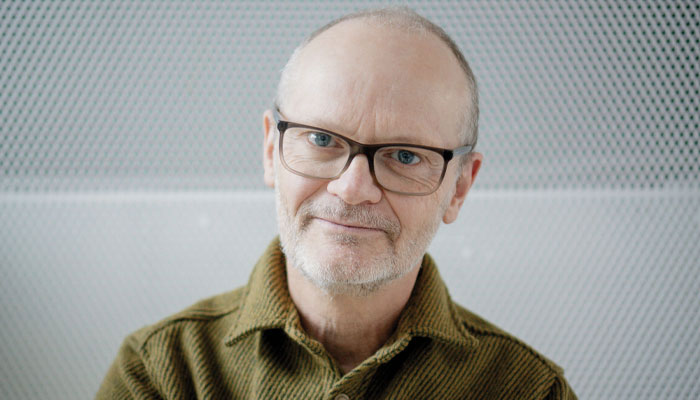
Dom, it’s always lovely to catch up – and we’re doing so shortly after you’ve retired! Congratulations on a remarkable career. When you look back, do you think toys have proven a good fit for your ‘design sensibilities’?
It’s funny because I mentioned in one of our other interviews that I’m more a product designer than a toy designer. But looking back, I may end being the toy designer in the world with the widest spectrum since I designed dog toys, kids’ toy and adult toys – and adult toys as in sex toys, not kidult!
Oh! What was that for?
Back when I had my design consultancy, we met a guy who had a company that made small appliances and stuff like that. He played hockey with a sex therapist, and the sex therapist had an idea for a sex toy – or a ‘therapeutic tool’ as it was called because at that time, sex toys were very pornographic. So that was one early project!
I like how you saved this for the retirement chat! And did having that design consultancy shape how you approached being an in-house designer?
Certainly, but looking back, I should have done the reverse! We were four barely graduated partners at the consultancy – and we were quite naive about how difficult it would be. I did that for 12 years and worked on fascinating projects like transportation projects, medical projects, scientific projects, dog toys… I learned a lot. And I’m sure if I worked in-house first instead, I would have learned in a less difficult way!
And where did you go from the consultancy?
Mega Bloks. I joined the company as a design manager, but the company was growing very fast and we needed a better structure for how new product development was managed. The company put in place a gate process and they asked me to be a project manager. At the time, I felt I had to mourn the design aspect, but maybe six months into it I realised that I was now involved with marketing, manufacturing, graphic design… You name it! It provided me with a very holistic vision of product development, which was invaluable.
The other key thing with Mega Bloks was that we were manufacturing productson-site here in Montreal, with only a door separating the design department and the factory. I could sit for half an hour looking at people and machines assembling stuff. That was really enlightening in terms of how things are done and where a portion of the money is going.
Before joining Mega Bloks, did you have any pre-conceived ideas about what the toy industry would be like?
Yes – all smoke and mirrors! And there’s a lot of smoke and mirrors in the toy industry. For good or bad, we’re all targeting for that TV moment – which may not last a long time. And for me, it was difficult when I made the transition between Mega Bloks and Spin Master. At Mega Bloks, a good product was a product that sold by itself; that doesn’t need TV. You look at the box, you get it. For a very long time, the strategy at Mega was basically: ‘Let LEGO make TV ads to bring people to the aisle, and we’ll catch them while they’re there.’ But after a year at Spin Master, I realised the importance of the TV moment.
I remember one project that we proposed in our team – it was some sort of suitcase for Kinetic Sand. But when we presented the thing, people were saying: “This is such a boring product!” But sometimes you need staples… Something that is perhaps not that inventive or spectacular – there’s no wow moment – but people need them. And activity products are different – there’s a need for such product. And when I walk the aisle, 10 years later, it’s still on the shelf.
And that process helped you adjust to life at Spin?
Yes, and so did a training session we had about leadership. Before you joined the training, you needed to define the reason why you wake up in the morning. For me, my goal every morning was to design products that generate instant emotion and everlasting memories. That always grounded me and was really helpful.
A great north star. Let’s talk about some key products you’ve worked on across your career. The first you wanted to discuss was iCoaster back at Mega Bloks.
Yes, this was a big bet for us. There was a lot of money involved in tooling because we started from scratch… I recall a meeting where the design department was looking at the prototype – and the CFO was there… Everybody was nervous about the price point! But it really aligned with our Magnext brand. We had the ball climbing up the side of the elevator… It was quite ahead of its time.
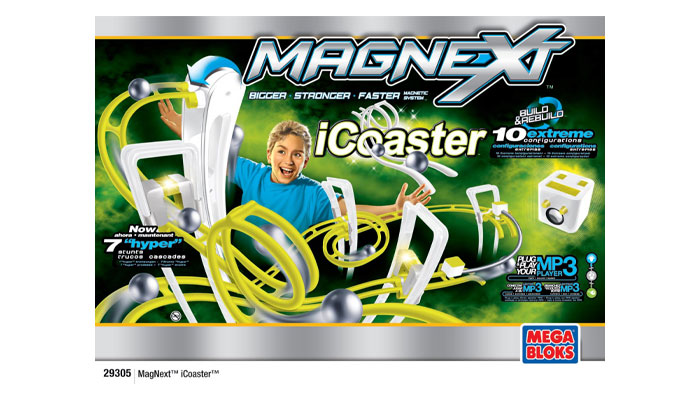
One of the principles here was ‘If you can’t put it on the front of the box, don’t put inside the box’. It has been super important to me because most of the time, you don’t have access to TV or a huge marketing campaign – people need to look at the box and understand what’s inside. Another guy at Mega said: “If it doesn’t scream value, it’s worth nothing.” So if it’s a $20 item, you have at least $20 of fun packed into that box. This one was a good example because we got that box to fit a certain size, but the product itself was twice the size in reality. And the product was $90.
Amazing. And you want to credit the entire team behind this one – so there’s Ans Beaulieu, Guillaume Guyader, Jonathan Jaget and Patrick Latour. Good work team! And was there a big push marketing-wise for this?
We didn’t spend a lot of money on TV. It was very rare. But we did shoot a TV ad and we did a market test in Denver. We put the product only in Toys ‘R’ Us in Denver. We aired the TV ad and the lift was 10 times compared to the market where there was no TV ad. That told us we needed TV.
Did it do well?
It did very well, especially for a $90 toy.
From iCoaster to i-loom. This came from Wooky Entertainment and a team spanning yourself and Samuel Beaupré, Alfredo Chavez and Dominique Fleurant. What made this a special project?
I actually left the company before it hit shelves, but was there throughout its development. I don’t think it was a huge commercial success and Wooky had some difficulties and vanished a couple of years after that. But with i-loom, the concept calls for a non-complete play experience in a box – which may explain the results.
And this sees you place your iPad into the device and it tells you how to create complex knotted bracelets.
Yes, and we looked at the penetration of iPads in US and it was already quite high, like 60% to 70% of households had an iPad at that time. We took a proven play patten with the friendship bracelet, but wanted to allow people to create more patterns and make it way more open-ended than just doing candy stripes. So we came up with that idea of using an iPad to deliver real-time CGI video instructions.
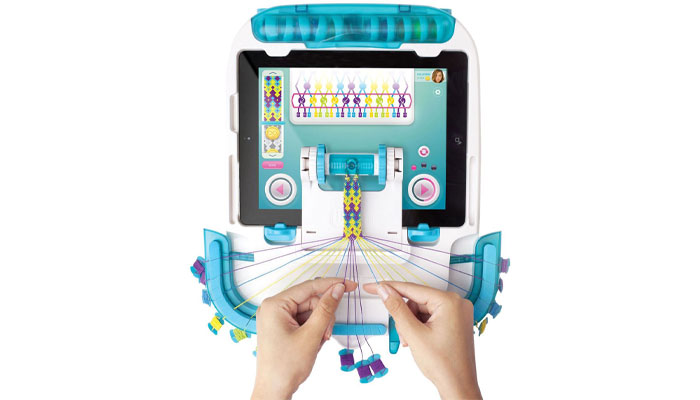
Basically, you select a pattern, design your bracelet and the iPad delivers fully customized step-by-step instructions on how to knot it. It was a very powerful idea and very well executed, but it didn’t sell as much as we invested in terms of energy into it.
Did that experience inform anything about how you approached the KumiKreator from Spin Master?
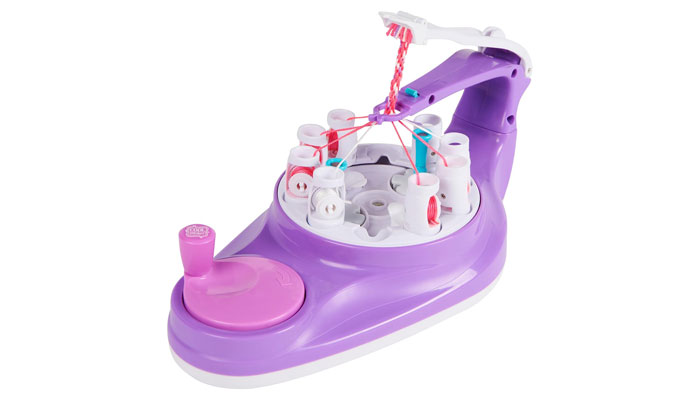
I’m sure it did – and I will say, the KumiKreator is probably the best invention I’ve ever been pitched. It came from Fuse and you see their video and say: “Oh my God, that’s it – we need to do this!” And our job was to not spoil it. The main contribution we made was to get to the fun faster – so eventually we came to a machine that loaded the spool at factory level. It was just fantastic.
Absolutely. And as you say, this came from Fuse, while the team at Spin included Arta Alagheband, Mollie Jameson and Audrey Tam. Was it a hit immediately?
No, when we launched, the first month was not that great – and people started getting nervous. So a decision was made to lower the price point by $5… And it totally exploded. The number of units we sold were just incredible. I’m very proud to have been involved in this one.
Did that reinforce the value of working with inventors?
I learned about the existence of toy inventors while at Spin. We had an inventor relations department, and I was inspired by how Spin managed inventor relations – they are great at it. One of our successes at Make It Real is that we went from being showed items by inventors that had already been turned down by several companies, to having inventors come direct to us with concepts designed for us. I think that’s because the Make It Real is great at executing inventor concepts – and hopefully we improve the product in the process.
Absolutely. I know you also wanted to mention a recent Make It Real launch as a career highlight – the Mini Pottery Studio. This came from you and Friday Fu, Josiane Geoffrion, Marie-Michèle Girard-Rheault and Jonathan Jaget. Talk me through this one.
Yes. Vic Bertrand – one of the two brothers behind Mega Bloks – used to say: “Toys are always about refried beans”, which referred to there being a lot of reinvention in toys. And there is, especially in the activity category, where you always try to use existing play patterns and innovate on them. But as we discussed with the i-Loom, there’s always a risk of over innovating. Another saying I remember is “Know your shit” from Spin Master’s Ben Verardi. Both sayings come into play with the Mini Pottery Wheel.
I knew the play pattern and I did a lot of testing in my basement – testing existing products. I also knew this space as we did a Pottery Wheel project at Spin. And if you go to Amazon and look at ‘Pottery wheels for kids’, you’ll see that there’s a lot of them – that’s a great indication that it’s still relevant. When we presented this one internally, one of the first things I heard was: ‘Kids don’t want to do pottery anymore’ – but pottery is universal. It’s just about finding the right twist to make it new.
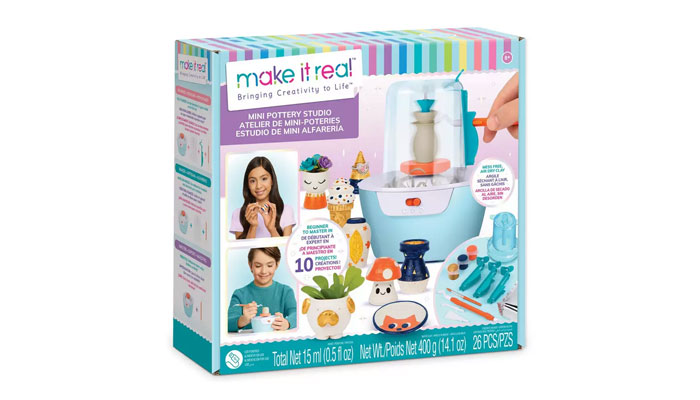
And this ended up being the product I’ve been involved with that has been copied the most. And copied very fast! The first copies came from Asia and they were pretty close – different from a styling standpoint, but the colour scheme was the same. Since then, we’ve seen close to 10 copies of this product. They were all infringing the patent and once the patent was issued and public, then their strategy changed. They changed the process in order to go around the patent. It’s kind of the holy grail for an inventor to have a patent, and we don’t regret it, but I’m very cautious about it in that sense that the patent process is not designed for toys. Between filing and getting the patent issued, it’s a two- or three-year process, which is sometimes the life expectancy of a toy from a mass market standpoint.
Good point. And how do you reflect on what makes a product a success? Or a failure?
Well, my rate of success is not great. Like most of the people in the industry, we talk a lot about the successes but I have a bunch of products that didn’t succeed at all – even if I believed they were fun. In order to make a success, you need an incredible alignment of the planets – marketing, manufacturing, positioning… So many things that need to happen, it’s just insane.
One thing I do very frequently is go to a chain of stores here called Winners. They sell end of line – products that probably never sold well somewhere else. And I see toys there that look quite good and fun to me. Many are great ideas, but clearly, for whatever reason, have not succeeded. It makes me very humble about how many things need to happen – and how many talented people need be involved – in order to create a success.
I’m at the end of my career now, so it’s the short window where I can give advice – because after that, I don’t want to be that uncle that gives advice.
Ha! Go for it!
I would say that failure is very important. I gained a lot of knowledge because I failed a lot. As they say, you either win or learn. And I learned the very hard way. But I would invite any inventor or toy designer to be curious about literally everything – marketing, sales, other industries, manufacturing, engineering, costing, pricing, branding, positioning, culture, photography, museums… At some point it will percolate in your product and bonify it. I’m convinced of that.
Great advice.
And when it comes to success, I feel that innovation needs to be at the core of a company to succeed. If a company aims to be innovative, innovation needs to be linked directly to the individual who drives the company’s vision. Otherwise, innovation becomes random. If you just look at the top and bottom line of any toy company, there’s many ways to succeed. There are companies that are known just to copy stuff and they do very decent numbers. And let’s be honest, we’re here to sell products and this is the ultimate way to assess the success of a product. As an example, at Mega, we were very successful with the Dragons line. At some point, we saturated, so we created a line called King Arthur – and the castle we did for the King Arthur line was the best we ever did from a design standpoint… But the line was a failure.
On the flipside, I won’t name the product, but I worked on something where both the designer and I said: “That’s not great…” there was a license attached product and although it wasn’t a good product per se from a design standpoint, the things sold like crazy. So the reverse exists, too. But even though you design something once, the injection machine will pop one unit every 30 seconds. When you consider a 24/7 production schedule, you end up shipping a lot of units that can/will end up in a landfill somewhere, that’s a serious responsibility. Add-in the fact that we’re making toys, and that’s an extra layer of responsibility. We need to take it seriously.
Before we wrap up, is there a toy out there that you wish you’d designed?
There’s a bunch! Hatchimals is a huge commercial success, the spark of that idea is pure magic too. I didn’t work on that but when I was interviewed at Spin, they were about to launch it and everyone there was excited. That’s one of the things I admire most about Spin Master – they believe they can do it. Look at Hatchimals, there’s lots going on there, but they believed they could do it and absolutely nailed the unboxing process.
It’s also very elegant from a mechanical standpoint, which I think is the essence of this innovation – it’s why innovation needs to exist within a special, protected environment in a company. And Spin (and Mega at a time used to) do it very well. Vic Bertrand used to say – and this sounds terrible but is full of wisdom – ‘Kill the puppy’. When we have an idea, it’s a very sentimental thing. We’re attached to it and will fight for it. But at some point, you need to say: ‘The planets aren’t aligning here. Let’s kill it’. And I’ve seen Spin kill similar projects. But Hatchimals made it to the shelf and is a historical success.
Last question! Now you’re retired, what are planning to do with your time?
I will be building a house. I will be an IKEA cabinet hacker. Lots of woodworking and architectural photography when I have the opportunity. I will ski, I will mountain bike, I will do nothing, I will read, I will swim. And I hope I will be in a position to still get involved with inventing products – but that will happen when it’s raining.
Ha! Here’s hoping for many rainy days so we see you pitching inventions soon! Dom, this has been a joy. Huge congrats on an incredible career and happy retirement! Do stay in touch.
–
To stay in the loop with the latest news, interviews and features from the world of toy and game design, sign up to our weekly newsletter here
More Recent Interview

“This was the missing piece…”: Rubber Road’s Jack Fox on TUBBZ’s move into blind collectibles with Mystery Eggs
Jack Fox, Sales & Marketing Director at Rubber Road, talks TUBBZ Mystery Eggs – and why Minions were a perfect fit.
Educational Insights’ Lisa Guili on TikTok, 20 years of Kanoodle – and ten million units sold
Lisa Guili reveals how one addictive brain teaser found its audience and became a phenomenon.
“I want people to bet on themselves”: Spin Master Co-Founder Ronnen Harary discusses his new book, No Experience Necessary
Spin Master Co-Founder Ronnen Harary talks to us about his exciting new book, working with inventors – and Spin’s most underrated launch.
David Norman of Stormin’ Studios on inventors, Orchard Toys – and shaking things up!
“It’s not just a name, it’s our mission statement”: In conversation with Stormin’ Studios’ David Norman.
Carrera Revell’s Frank Tiessen on the slot-car set that buyers had to see to believe…
How Speed Arena: Race in a Case became an instant hit: in conversation with Carrera Revell’s Frank Tiessen.
Sidekick Games’ Asger Harding Granerud on Tembo, Hutan – and 10 years of Flamme Rouge
“We were looking at games we were pitching to other publishers and at some point said: ‘Maybe we can do this ourselves…’”: In conversation with Sidekick Games’ Asger Aleksandrov Granerud.
Popular Articles
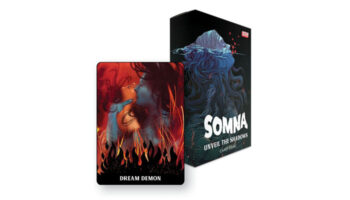
DSTLRY launches card game based on its award-winning Somna comic
What Kids Want! joins Virtual Mojo Pitch 2023
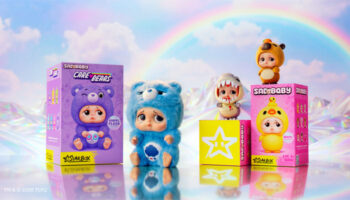
Zuru's Starbox collectibles brings together "elevated design, strong storytelling and trend-led play patterns"
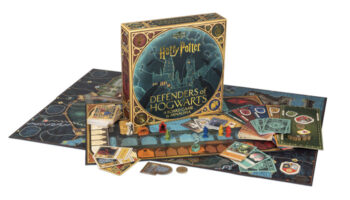
MinaLima readies Harry Potter board game, Defenders of Hogwarts

Wow! Stuff to launch Fuggler Puppetronics in 2026
Upcoming Events
-
- 30th January 2026
- Spielwarenmesse, Nuremberg
International Game Inventors Convention
-

- 19th - 21st May 2026
- Mandalay Bay Convention Center, Las Vegas
Las Vegas Licensing Expo
-

- 23rd - 25th June 2026
- Stamford Bridge Stadium, Chelsea, London
Play Creators Festival
-

- Tuesday, June 23rd, 2026
- Stamford Bridge Stadium, Chelsea, London
Play Creators Awards
-
- Wednesday, June 24th, 2026
- Stamford Bridge Stadium, Chelsea, London
Play Creators Conference
-
- Thursday, June 25th, 2026
- Stamford Bridge Stadium, Chelsea, London
Mojo Pitch
-

- 6th - 8th October 2026
- Excel London
Brand Licensing Europe