Guardian of the Galaxy: Howard Roffman on George Lucas, Star Wars and the art of protecting a franchise
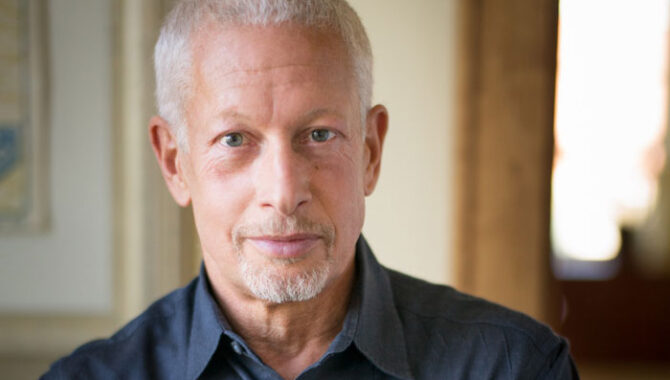
In the world of entertainment licensing, few individuals have had a greater influence on the modern industry than Howard Roffman.
During his time at Lucasfilm and as President of Lucas Licensing, Howard helped transform Star Wars from a successful film franchise into a global cultural and commercial phenomenon. Through a deep understanding of storytelling, fans and long-term brand stewardship, he pioneered many of the strategies that now underpin franchise management across film, publishing, gaming and consumer products.
In this conversation with Paul Bufton – Founder of Licensed Ltd and a long-time licensing executive who has worked across franchises like Star Wars, Harry Potter, Jurassic and Minions – Howard reflects on his remarkable journey from young attorney to one of the most influential figures in the history of licensing. He shares insights on fandom, creativity and the delicate balance between commercial opportunity and protecting the integrity of an iconic brand.
Paul Bufton, Founder, Licensed Ltd: Howard, it’s great to be able to catch up with you for this. The work that you and George Lucas did effectively brought licensing as we know it into the modern era – and delivered it at a scale that was unforeseen at the time. How did you first come into contact with George – and how did that relationship evolve to you working together?
Howard Roffman, Former President of Lucas Licensing: I was a young attorney practicing at a big law firm in Washington, D.C. I’d been there for two years, and I wasn’t very happy. It just wasn’t the life for me. Fortunately, I’d made a number of friends in Washington and one of them, Lester Hyman, was a very well-connected attorney. A year earlier in 1979, a good friend of his had been hired as the general counsel at Lucasfilm – which was still a very young company – and she was looking for an associate. She wanted somebody who didn’t have an entertainment law background, who could bring a fresh perspective, and she asked Lester for recommendations. He recommended me.
And were you aware of George at that time?
Yes, I was familiar with George from American Graffiti and Star Wars. Remember, this was a couple months before Empire Strikes Back came out. It’s funny because a lot of my friends – and my father – were saying: “How do you know this movie’s not going to bomb? Why would you leave a good job at a law firm and go do a cockamamie thing like this?” But all my instincts told me to take the job. So I did. I started the week that the Empire Strikes Back came out. Luckily it wasn’t a bomb!
What were those first few months like at Lucasfilm?
Well, Empire came out at the end of May, and by December George had decided to fire the president and consolidate everything up where he had his production base in Northern California. Before that our corporate offices were in L.A., where I worked. George told the new president to eliminate as much redundancy as he could in the consolidation, which ultimately meant cutting about half the L.A. staff. My boss was one of the ones cut, so I got pulled into the transition team as the last in-house lawyer standing, which meant I was suddenly integrated into the senior management of the company.
That gave me a lot of exposure to George, and we just formed a friendship and a bond. Not that long after that, I became general counsel – which I was vastly under-qualified to do. It was an exciting time, but after a few years, I realised I didn’t want to stay in the law forever. I really wanted to be running a business. I made that known to George and the company president and actually went about hiring my successor in the hope that eventually they could move me somewhere else.
And this paved the way to you entering licensing?
Yes. If you remember, after Return of the Jedi, sales of Star Wars merchandise went into a pretty severe decline. George tried to prop things up with a couple of animated series for ABC Morning TV but that didn’t work. The writing was on the wall in terms of the business being in the distress and, sadly, it reached the point where we had to lay off pretty much our entire licensing team – including the Head of Licensing.
And that was exactly the moment when our president came to me and said: “How would you like to run licensing?” Some timing, huh? It was another one of those moments where a lot of people were telling me: “Don’t do it! The business is in trouble! They’re setting you up!” I’m a realist, but I’m an optimist too. I usually don’t like taking advice from cynical people and, luckily, I didn’t in this case. I felt this was the opportunity I’d been waiting for, so I took it.
Amazing. And was it as much of a challenge as they warned you it’d be?
It was a real struggle in the beginning. I didn’t have a huge amount of experience in consumer products, and the industry was not looking favourably on Star Wars at that point. In their minds, it had its moment in the sun and everyone had moved on to the next thing.
Were there any licensing programmes you looked up to or admired back then?
Disney was a very important model, though not a perfect one for Star Wars. Another model that influenced me a lot was Looney Tunes, which had grown long in the tooth before Warner Brothers hired Dan Romanelli to come in and breathe a whole new life into the franchise. Dan made it much more contemporary while still leaning into its iconic nature. He allowed a lot of different design modifications and made Looney Tunes cool again. I paid attention to what Dan and Disney were doing and found them both very inspiring.
What strategies did you deploy to breathe life back into the Star Wars licensing programme?
Well, at first there was a little bit of gobbling up the low-hanging fruit. We had never done a role-playing game. It was obvious that we didn’t need new entertainment to sustain that, so we went out to a lot of the role-playing game companies and wound up giving the licence to a smaller one, but who we thought would really give it their all. And they did! West End Games did a great job with it.

Beyond that, my initial instinct was to just go out and sell the crap out of Star Wars and hope I could get at least some products back on the shelves. It wasn’t terribly strategic, but I wanted to deliver quick results. I wanted to show George the money, as they say. And I couldn’t have been more wrong. I did a lot of surveying, talking to retailers, former licensees, taking the temperature – and it was a pretty bleak picture, to be honest. They all told me, in one way or another, that Star Wars was dead.
Oh!
That was the message I had to take back to George. I thought he was going to fire me on the spot! But he didn’t. I had a great conversation with him where he basically said: “It’s not dead, it’s just sleeping – and it’s okay to let it rest because there’s still a future for it.” He always held out the prospect that he would make more movies, but he wasn’t committed to it at that point. He was still kind of recovering from the first trilogy and what that did to his life. He said: “Look at Disney. They reissue their classic films every seven years and that works great for them. We can probably do something like that with Star Wars.” That was the paradigm shift for me. He was essentially telling me I needed to start thinking more long-term. I needed to convince people to see Star Wars as more of a ‘day in, day out’ brand. But, clearly, that wasn’t going to happen overnight. First, it had to start proving itself in different areas.
And which area did you tackle first?
Publishing. I didn’t have the power to go out and make another movie. Only George could do that. I couldn’t make a TV series either. So what could I do? And that’s when I started thinking: All the new kids don’t really know Star Wars. They’re watching Masters of the Universe. But the kids that grew up with the first trilogy aren’t kids anymore. They’re at a different point in their life. What might interest them? And I got to thinking: Star Wars was a saga – a sprawling, mythological story. And there were clearly many, many more stories yet to be told.
So we thought: what if we got great science fiction writers to write new fiction in the Star Wars universe? We could do that for minimal investment and see if there’s an appetite for it. So I went to George to see how he felt about the idea. Now, George is very much a ‘show me’ kind of guy, and he was appropriately sceptical. “You can try it,” he said, “but it’s probably not going to work. The first one will sell like hot cakes because everybody’s going to think that it’s the next Star Wars movie… But when they realise it’s not, then who knows!” Luckily, he gave me enough rope to go out there and do it!
And what was your brief to the writers?
Well, we agreed to some ground rules. George was okay with setting the new stories after Return of the Jedi, but anything before A New Hope was off limits. He said: “You cannot tell the story of the prequels because if I make more movies, that’s where I’m gonna go.” He also told us not to kill off any of the main characters. But that was it, because at that point, he was focused on other things. He made Willow and Tucker and was off doing his own thing, with the prequels ruminating in his head.
So off we went to find a publisher. It was really interesting. Ballantine Books had a deep legacy with the franchise and a right of first negotiation on any spin-off books, but thanks to a nasty personality clash inside the company at the time, they turned down the opportunity. We were pretty surprised because it meant they lost their lock on future Star Wars rights.
We wound up making a deal with Bantam Books, thanks to the tenacity and vision of a really wonderful guy there named Lou Aronica. And boy did he deliver! Lou brought in Timothy Zahn, which lead to Heir to the Empire and the first ever Star Wars trilogy told through books. To our very pleasant surprise, Heir to the Empire hit number one on the New York Times bestseller list. We’d been cautiously hoping that it might sell well for a science fiction book, but here it was, performing like popular fiction.
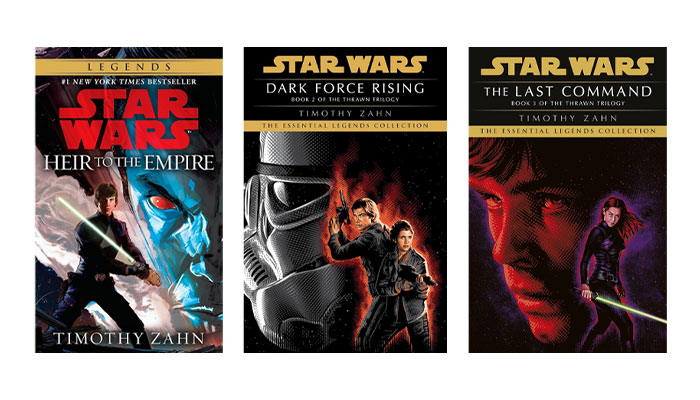
I remember the launch, Howard. It was incredible.
You were still a child, right?
Barely!
Had you graduated high school yet?
I had and was already at university – it seemed as if every bookstore window was dedicated to Heir of the Empire. Did George read the first draft and provide notes?
No, he did not want to get in the weeds on that. He trusted me. As long as we stuck to the rules he laid down, he was okay with it. Obviously, none of us knew how big it was going to get at that point. Once we saw there was really a market for this, then we started calling it ‘the expanded universe’ and laid down a real set of rules so there would be continuity. And those rules would be sacrosanct across all the different things we did in the expanded universe – comics, video games, all the various forms of storytelling. They all had to have an internal integrity, because without that it was just going to fall apart and wouldn’t be respected by fans.
If we look at the Marvel Cinematic Universe or The Wizarding World of Harry Potter… I wonder if Star Wars was really the first iteration of a major movie franchise that had an expanded universe?
The only thing I’m aware of that is analogous, although not perfectly analogous, is Star Trek. Star Trek had a series of spin-off novels. Obviously, Star Trek wasn’t really driven by films, and it wasn’t a consumer products franchise in the way of Star Wars. It was much more esoteric. And a lot less focused on continuity.
Let’s talk fans! You have a clear understanding, affinity and respect for fans. How did you establish a way to listen to fans and to take on board their feedback?
Look, when it comes to fans, one of the biggest mistakes people make – and I’ve seen this over and over again with Star Wars, especially in the modern day – is to lump all fans in together as if they are some sort of monolithic entity and you’re either pleasing them or displeasing them. That’s simply not true. Fandom is like a pyramid. At the base – the broadest part – are people that have a fairly casual connection to the property. As you go up in terms of fanaticism, which is where the word “fan” derives from, it gets narrower and narrower.
The tip – core fans – are a fairly small group. They’re people who obsess over the minutia. They can tell you everything that happened in every book and TV episode and video game. And, if you’re trying to make those guys happy with everything you do, you’re in for trouble. They’re very opinionated, they don’t all agree with each other, and you cannot take direction from them. Yes, it’s really important to understand their headspace and to communicate with them. They’re critically important members of the whole Star Wars ecosystem. But if you see yourself as beholden to them, you’ll be paralyzed.
From your experience, and looking at other franchises, do you think it’s possible to lose the trust of fans? And if so, do you think it is possible to regain the trust of fans by course correcting within a major franchise?
One of the things that’s important about major franchises is that they’re long-term. The more generation-spanning they are, the broader the fandom and the more entry points you have. The generation that came in with the original trilogy grew up in a particular moment in history that has its own set of realities and assumptions. Their children came in at a different point – the prequels – and they related to those films differently than a lot of people from that original Star Wars generation. That’s part of what a long-term relationship entails, and I would submit that gaining, losing and regaining trust in long-term relationships is always possible.
With Star Wars, there were some key moments that – from a fan trust point of view – were fraught. One of those was the transition from the first trilogy to the second trilogy. There’s a generation that fell in love with Star Wars because of what that first trilogy was. That story and those characters became so familiar and comforting to them. It was almost sacred in a lot of ways. George then waited more than a decade before setting out to make a new trilogy set a generation before the first trilogy.
That presented him with a fundamental issue. Everything about the first trilogy was unique to the story that he was telling in those films and the period of time that he was covering in Star Wars history. It had its own shop-worn world. When you go 30 years before that, you’re not the same period of history. The context is different, the vehicles are different, the buildings are different, the clothes are different. Things have to look and feel different and that freaked out a lot of the people who had these warm and fuzzy associations with the original trilogy. ‘Where are my X-Wings? Where are my TIE Fighters?’
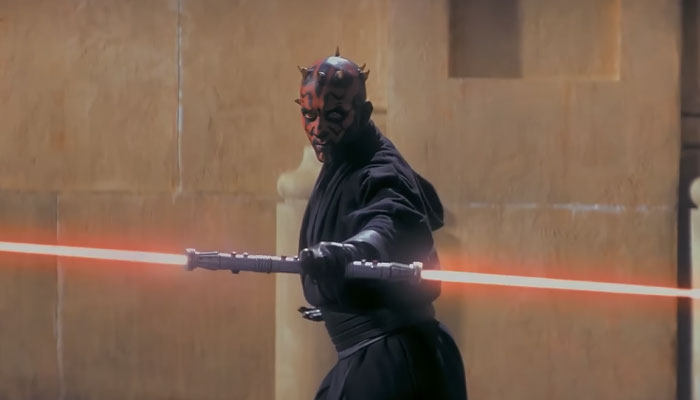
You could argue that the creative choices George made for the prequels broke trust with some of the original fans, but the reality is that George had a very good reason for what he was doing. He knew exactly the story he wanted to tell and why. He knew the emotions he wanted to tap and the lessons he wanted to impart. Even if you quibble with how good the prequels were from a filmmaking point of view, the fact is they told a coherent and powerful story that fit beautifully into the broader Star Wars Saga and captured the hearts and minds of the generation that was growing up at that point.
Absolutely, which brings us to the recent trilogy and questions of how the modern audience connected with that.
Let’s be honest, Paul. It’s still too early to know who really got captured by this last trilogy, let alone how deeply, and how that connection, however strong or weak it is, will stand the test of time. Obviously, it’s been pretty universally criticized for not telling a coherent, well-thought-through story. I think it also stands as an example of why pleasing ‘the fans’ can be a very fraught proposition.
George always said: ‘The fans aren’t making these movies. I’m making them.’ He did that because he had a clear vision and the creative integrity to stay the course. In 2012 he sells the company to Disney and relinquishes creative control. It passes to a corporation – a great company, mind you, but lacking that unique vision, insight and chutzpa of George Lucas. Their executives all hailed from the original generation, so, not surprisingly, their strategy was essentially to give ‘the fans’ something they believed those ‘fans’ wanted – something familiar, something that felt like the originals.
And there you run the risk of the recent trilogy being too derivative of the classic trilogy.
Oh, you think those movies were derivative?
Ha! And sticking with fandom, when you were doing the role, were you a Star Wars fan – and did that matter?
THX 1138 didn’t register with me at the time, but I was a huge fan of American Graffiti. I saw that movie and it touched me pretty deeply, so I knew straight away George Lucas was a very special filmmaker. When I went to see Star Wars for the first time, it was the worst experience! We got there late for the matinee, thinking the theatre would be empty – but it was packed with kids and we had to sit in the first row. It was like looking up the side of a huge building! And the kids did not stop screaming from the first frame of that movie, so I really didn’t know what the hell was going on!
It wasn’t until Empire that I got the message. The premiere was a benefit for the Special Olympics and I was lucky enough to attend. I watched that movie and it just blew me away. It was so smart and moving and deep. When I started work a couple of week later, I realized we had a screening room and I said: “I’ve got to see the first Star Wars again.” They screened the movie for me and – finally! – I got it.
My love for Star Wars was there, but it wasn’t born from fanaticism. Star Wars just resonated with me and I cared deeply about it. Honestly, I don’t see how you can do the job I did without having a deep connection to and understanding of the IP that you’re representing. If you don’t have that, then you have no business being in that role. But on the other side of that coin, if you’re so fanatical that you lose perspective or objectivity, then you’re equally dangerous.
Was there a moment during your time working on Star Wars when protecting the brand meant turning down a very large commercial opportunity?
We were approached all the time by liquor companies, but we knew we weren’t going to license that. For a long time, gambling was off the table too, but by the mid-200’s, we decided that was okay to do because adults would understand and enjoy the connection and it would be inaccessible to kids. So we briefly had Star Wars slot machines that were quite successful. That all got swept away once we were acquired by Disney because Disney was not having any of it!
Going back to George, was there anything about being around someone like him that rubbed off on you in terms of your creativity?
Tons of things. He was and is a very inspiring guy. He’s values-driven, in the sense of promoting human values and a value system. He thinks very seriously about the messages his films convey. He has an enormous intellectual curiosity and a real love of history, which drove him to look at things like mythology and real historical events to inform what he was doing in Star Wars. He’s always been a compulsive documentary watcher. He was fascinated by World War II and the rise of authoritarian regimes. He knew that one of the ways to make Star Wars believable was to ground it in what we have seen time and again through human history about how dictators come into power – and what it takes to bring about their downfall. And that’s why it resonates.
Last question! Throughout your career with Lucasfilm, what was the one thing you’re most proud of?
There are many things I’m proud of, happy with or honoured to have been a part of. In terms of my licensing achievements, the proudest achievement was forging the LEGO Star Wars partnership. That was something I’d wanted to do for a long time – and for a long time it was the impossible dream, because LEGO was so conservative. Their whole philosophy was about generic real-life themes like cities and firemen. The idea of licensing felt risky and short term and they weren’t about that. But there came a point where the old model wasn’t serving them too well and their American management began trying to persuade their colleagues in Billund that it was time to dip a toe into licensing.
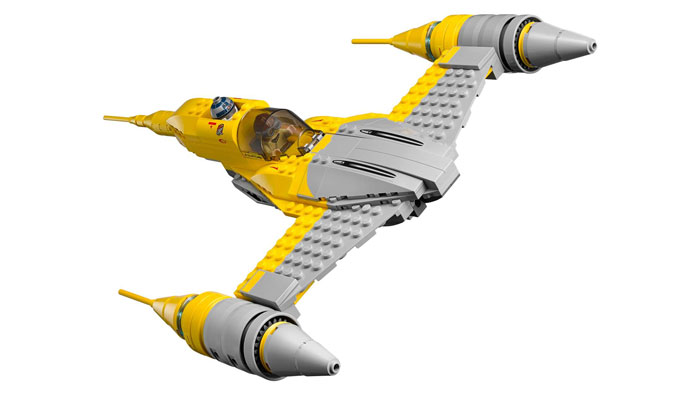
That push came at a good time – a couple of years before the launch of the prequels – and LEGO identified two brands that could potentially work for them because of their longevity: Star Wars and Disney. Putting Star Wars and LEGO together turned out to be beyond anybody’s expectations – it was just magical. And the good news was that both companies understood how to manage it, understood the unique personality of each brand and what that looked like when both were combined. It was like mixing chocolate and peanut butter; two things that are great in their own, but when you put them together, it’s also great, but in its own unique way. It took a certain sensibility to do that and I’m really happy with the way it turned out.
Howard, this has been great. A huge thanks again for taking the time to chat.
–
To stay in the loop with the latest news, interviews and features from the world of toy and game design, sign up to our weekly newsletter here
More Recent Interview

Inventor Mandela Fernández-Grandon on design, collaboration and the joy of playtesting
“Working with others offers a list of benefits…” In conversation with Mandela Fernández-Grandon.
Dina Al Rifai – Creative Director at The Loyal Subjects – on how being a collector shapes her approach to design
“I usually start with the emotional hook – what is this product supposed to make someone feel?” In conversation with The Loyal Subjects’ Dina Al Rifai.

“Play is evolving…”: Hasbro’s Tim Kilpin talks kids, Kidults and KPop Demon Hunters
Tim Kilpin, Hasbro’s President of Toys, Board Games, Licensing and Entertainment, on recent highlights – and things to get excited about.
Spin Master’s Angus Walker on bringing classic horror brands into TCGs with Hellbreak
“Faithfully representing these beloved characters was our design team’s top priority”: Angus Walker – VP, Marketing & GBU Lead, Games & Outdoor at Spin Master – talks Hellbreak.

As he retires, Make It Real’s Dominique Roy reflects on career highlights, mentors and lessons
“Even though you design something once, the injection machine will produce one unit every 30 seconds – that’s a serious responsibility”: In conversation with Dominique Roy.

Zatu Games’s Rory Kelly on Yubibo, demoing games and celebrating ten years in the industry
“If someone can explain a game in 30 seconds, I’ve done my job.” Catching up with Zatu’s Rory Kelly.

Popular Articles

Spirograph at 60: Meet Duncan Fisher, son of Denys Fisher – the inventor of Spirograph, Cyclex and Stickle Bricks!

Mini Brands Really Works Vinyl represents "major step forward for the brand", says Zuru

Zuru's Starbox collectibles brings together "elevated design, strong storytelling and trend-led play patterns"

Zuru readies NFL Ballers
Bop It’s Dan Klitsner on creative techniques, his favourite inventions and more

Upcoming Events
-

- 30th January 2026
- Spielwarenmesse, Nuremberg
International Game Inventors Convention
-

- 19th - 21st May 2026
- Mandalay Bay Convention Center, Las Vegas
Las Vegas Licensing Expo
-

- 23rd - 25th June 2026
- Stamford Bridge Stadium, Chelsea, London
Play Creators Festival
-

- Tuesday, June 23rd, 2026
- Stamford Bridge Stadium, Chelsea, London
Play Creators Awards
-
- Wednesday, June 24th, 2026
- Stamford Bridge Stadium, Chelsea, London
Play Creators Conference
-

- Thursday, June 25th, 2026
- Stamford Bridge Stadium, Chelsea, London
Mojo Pitch
-

- 6th - 8th October 2026
- Excel London
Brand Licensing Europe