How are All Jigsaw Puzzles made? Company MD Brian O’Donnell reveals a skilful process…
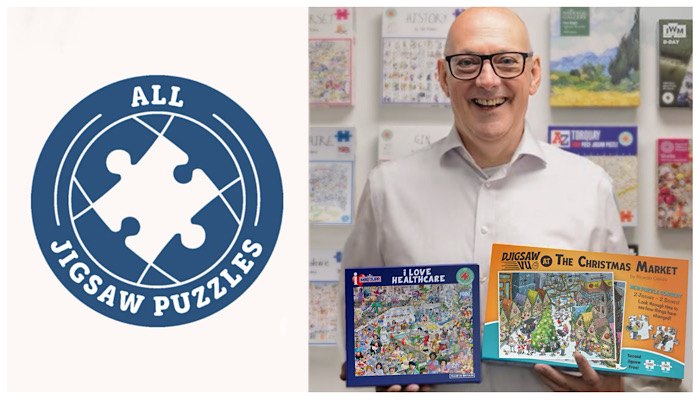
Brian O’Donnell! Thanks for making the time – and on Friday the 13th, as well!
Yes! We might be risking fortune here!
Well, I appreciate you taking the risk! Not least because we first talked about doing an interview in 2022… But here we are! Now: you’re the MD of All Jigsaw Puzzles. Am I right in saying that this wasn’t a jigsaw-puzzle company to start with?
You are. This business was originally a map manufacturer called Map Marketing. We do still make maps but since the 2010s, I would say, map selling has been a declining business thanks to technology. First with sat-nav, but then with phones… And in 2003, Map Marketing started making map jigsaw puzzles.
Map jigsaw puzzles? For when you need to know where you are – but not particularly quickly?!
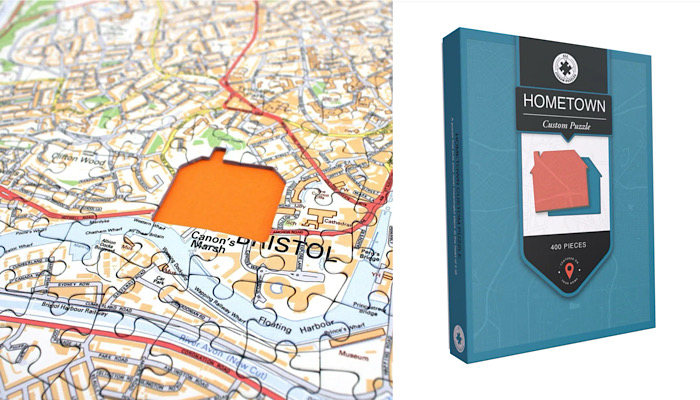
Ha! No, the first product was a jigsaw of a map, but the centrepiece was a house-shaped piece where your house would be. We’ve sold well over a million individual puzzles of people’s houses! That was a brand-new product concept there in 2003. We launched it in America in 2005, and a lot of sales came from America. It was a great product for us through mail-order catalogues.
I do wonder – ha! – I do wonder if we have to explain to younger readers what a mail-order catalogue is! “It’s a retail website printed on paper…”
Ha! Well, yes! It’s a long time ago, isn’t it?! But that was big businesses! Back then, we used to work with all these American catalogue companies. We’d make the puzzles; they’d put them in their catalogues… They’d send us the orders, we’d make the product in Devon, then ship it to the US. It was one of the craziest businesses I’ve ever known!
In any case, in 2014, Map Marketing bought All Jigsaw Puzzles which was a Sussex-based jigsaw store set up by Alan Maclachlan in 2001. Map Marketing also bought Ryco Originals, which was a short-run custom-puzzle business. I joined the following year and set about making All Jigsaw Puzzles a manufacturer as well as a store. Today, we’re All Jigsaw Puzzles Ltd. and also a part of Smart Toys and Games.
Wow! So lots to unpack there… It’s All Jigsaw’s 25th anniversary this year – and you’ve been on board for a lot of that time. What were you doing before?
Before I worked here, I was selling on amazon and our own website. What I realised with the puzzles is that you really need to own the product… Because if every retailer can sell the same puzzles, customers are basically arguing over the price. Whereas if you make your own puzzles, you can dictate the price. So that’s why I wanted to start commissioning and making puzzles.
Let’s talk about that! I rarely meet someone that actually manufactures puzzles. I know that not every picture works for a jigsaw… What kind of images do?
If you look at the people that we call puzzlers – people who do a puzzle, finish it, then do another puzzle, finish it, do another – they tend to want every piece to be unique. So when you think about cutting a picture into a thousand pieces, you can imagine the kind of thing that wouldn’t work… A classic picture of a country scene, for example, might have too much blue sky, or too much green grass. Most puzzlers prefer each piece to be more distinct.
Because there’s no real fun working out which of 200 pieces of blue you’re looking at?
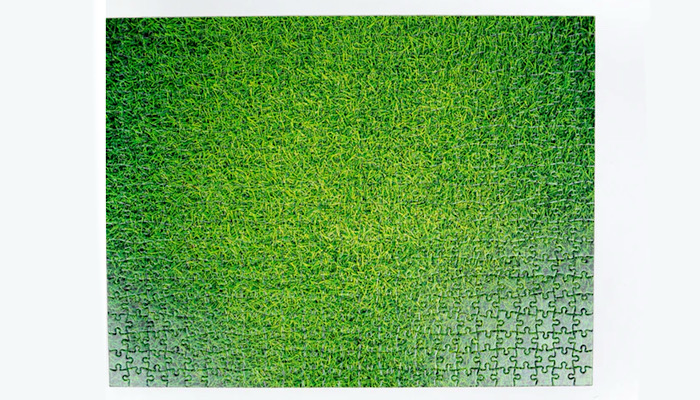
Exactly. So it has to be that both the cut of the die and the colour of the image mean that piece can’t fit anywhere else. That’s for puzzlers. With a gift, it’s a different thing. One of our biggest selling puzzles is from our Impuzzible range… It’s literally a picture of a lawn; it’s called Natural Grass. We sell loads of those every year but – I’m guessing – mainly to people who are giving it to someone else.
Yes… Almost as a ‘bazinga’ gift. So! We’ve got the image right… How does this image now become a jigsaw?
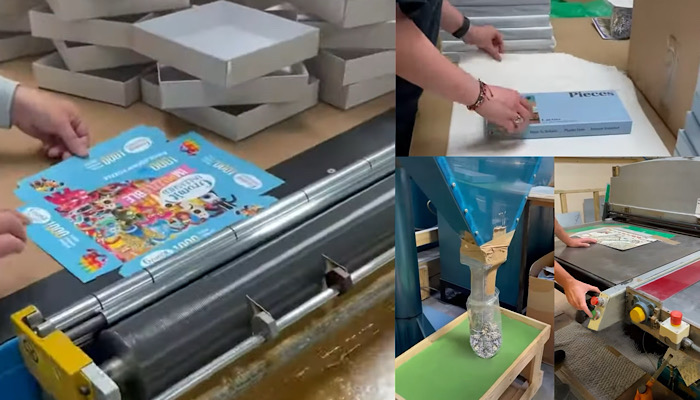
Initially, a jigsaw is just a piece of paper stuck to a piece of board. For that, we use a pretty standard glue… If you were to go to a shop to get the kind of glue you use to put a puzzle into a frame, it’s that! A pretty standard type of PVA. It does take a bit of skill applying the glue… You have to make sure there’s enough moisture – but not too much. We glue the picture to a special, extra dense blue board. Then we cure it overnight: we don’t stamp the puzzle the same day as we glue it.
Now, just to be a little clearer: the board is “extra dense”?
Right. It’s a special puzzle board that’s imported from Holland. Because you want the board to be quite sturdy in almost every respect, but to cut easily under the pressure of the blade. It takes about 50 metres of blade to cut a 1000-piece puzzle. So we have a picture. We glue it to a board. We cure it… Then I put the whole thing – flat – in a machine. Next, a huge cutting tool comes down – with about 1,000 tonnes of pressure pushing the 50 metres of blade into the board to cut it cleanly.
50 metres of blade to cut one puzzle? Gosh! Well – yes… I suppose it would be; it’s all curves, isn’t it?!
It’s all curves – and every part of the cut has to be accurate… Otherwise you get a piece with a bit hanging on, or turned up at the corner. So that’s why we need the very fibrous puzzle board, an incredibly strong die-cutting press and a really good cutting die… Most of our dies are hand made by a company up near Manchester here in the UK. We send them a file of what it needs to look like, and they get it made for us. It’s very specialist; it’s a dying art in the UK.
Extraordinary. And I’m guessing that once the cutting machine lifts, I’m left with a puzzle that IS cut… But it’s not actually in separate pieces? It needs taking apart?
Scrambling! Yes.
Hot dog! Scrambling, did you say? Was that the word?!
Yes! It goes along and up a conveyor belt to get scrambled. And if a piece is going to go missing, this is most likely when it will happen! But I’ll also tell you this because it’s a fun fact… Our most common email from members of the public is to say, ‘There’s a piece missing from our puzzle!’ Then, our second most common email is to say, ‘Don’t worry! I found it!’
Ha! Of course it is! I’ve nearly done it myself! I guess people look for a piece and look for a piece – and keep looking for a piece… And if they still can’t find it, they assume it was never in the box. It’s so easy to fire off an email!
Right! But then it turns out it was under the box, or behind a plant pot, or the dog ate it, or it fell off the table and got kicked under the sofa… Ha! It’s just one of those things. I guess a lot of the job at puzzle companies is trying to minimise the missing-piece admin more than rectifying the issue because the technology with the scramblers lets you see if there are any pieces left… And the suction of the cutting press makes it really unlikely that a piece would get left behind there.
You couldn’t tell a piece was missing by weight, I suppose? Too many variables?
That’s right… In the first place, every jigsaw piece is irregular so it’s going to weigh a slightly different amount. And with a 1000-piece puzzle, one piece is only around 0.1% of the total weight anyway… It’s tiny. On top of that, there are increases and decreases in moisture throughout the day – so measuring by weight wouldn’t be accurate enough.
No, I hear that. Alright! I’m trying to think what’s left in our process… After the jigsaw’s been scrambled, it needs packaging. You make your own boxes?
We do now, yes. We didn’t when I first joined; we just used to put a sticker on a blank box… I thought that looked a bit rubbish; I figured we could make our own boxes. How hard could that be? Boxes are just pieces of paper glued to pieces of card and cut out…
Sure! If you can make a jigsaw, you can make box! Riiiiiiiiiiiight?
Ha! It was such a nightmare, Deej! I think it took over two years to get that process right… Jigsaws are much more straightforward – we knew what we were doing with a jigsaw! But we got there and now we make all the boxes in-house, yes. Finally, we have an area called ‘reconciliation’ where we match jigsaws to their boxes. So if you asked us to do a print-on-demand jigsaw using – for example – a picture of you and your dog, then we have a barcode system that lets the jigsaw itself go down one production line and the box goes on another. When they get to the reconciliation area, we scan them both to bring them back together and send them out.
Love it! Thank you for walking me through that; I’ve always wanted to know more about that manufacturing process. Now, in 2023, Smart Toys and Games acquired the company. How did that happen?
Map Marketing stopped trading in 2022 – to keep a long story short – we had to buy it back from administration. My fellow directors and I bought it and set up a new limited company. We didn’t have the capacity to invest in it, though – we were basically just saving it. So we were looking for investment and – funnily enough – one of our biggest customers is The Happy Puzzle Company… At that time, It had been under Gavin Ucko’s stewardship. Do you know Gavin?
Yes, and we’ve done a couple of interviews with Gavin. And actually, I think one of them was about jigsaws! I’ll put links to them here and here.
Ah! Great! Well, at that time, Gavin had just been bought by Smart and he suggested we talk to them. He knew they were interested in acquiring people. And you know Peter Rooke, of course, so you probably know he’s not just a really good guy… He also really knows what he’s doing! He sizes up a business very quickly and knows the industry in a way that very few people do. I think Peter realised it was a good opportunity because we have some strengths that Smart doesn’t, and Smart has some strengths that we don’t.
You know, I don’t think Peter’s done an interview with us, but I’ve got a lot of time for him. He’s beloved by the industry; I’ve never heard anyone say a bad word about him! And out of interest, what was the first big change that Smart made?
The first big change? They bought a giant new die-cutting machine! It’s about twice the speed of the old one – and much better quality. Which makes sense… Smart are really big on quality… So now we work with thicker jigsaw board, with better printers and faster, better die cutting. Not that I would dare to touch the jigsaw machine! Ha! It’s too expensive! I don’t want to interfere with that!
Ha! Are you ever on the factory floor? I get the sense that you would be…
Well, I come in every day, and I chat to people on the factory floor every day. And heading toward Christmas, everybody goes out on the floor to do different things, yes. I don’t personally tend to go on the machines because I daren’t! The thing I do tend to do is wrapping… That’s wrapping with a W! I go and wrap and dispatch – out of harm’s way!
Ha! I’m curious to ask: what’s the future of jigsaws, Brian?
A couple of things come to mind. First is print on demand. That’s a big growth area for us with sites like Snapfish – the photo sites that lets you create one-off jigsaws of your mom and your dog or whatever. Also, in the next couple of weeks, we’re launching a project that we’re calling managed-service print on demand. We’re trying to open up libraries that have piles of really great digitized images that don’t get used; just making them available as print-on-demand puzzles. As far as I’m aware, we’re the only UK company that can do large-scale print-on-demand puzzles.
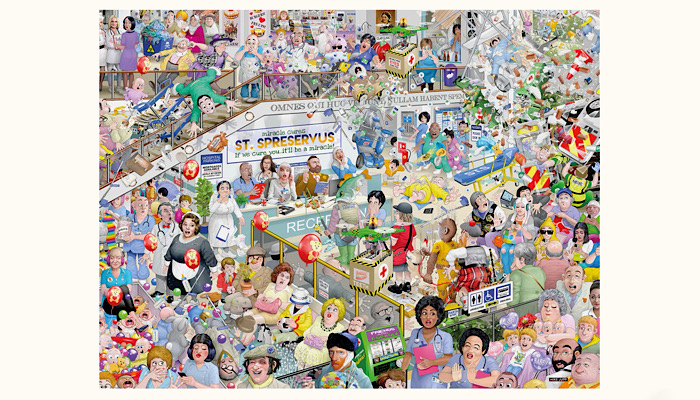
The other growth area is personalisation. Actually, I’ll show you the design that won us Silver in last year’s Puzzle of the Year award. So this is I Love Healthcare by Mike Jupp, a classic Puzzler’s puzzle… Every piece is unique in the way we discussed earlier. But we’ve also got a version in which you can add your own personalisation right there in the product. So you can make it say ‘Happy Christmas’ or ‘Good luck dad’ or ‘Marry me’ – whatever you like really. We’ve done it with a couple of puzzles this year and they’re working really well.
I love that. A classic puzzle, but with an element of personalisation…
The other thing we’re doing this year is working with our sister company, The Happy Puzzle Company, to launch a range of retail puzzles. So All Jigsaw Puzzles will be the back-of-box brand, but The Happy Puzzle Company would be on the front.
I like that synergy. Wonderful stuff! Now, to wrap things up, Brian, I’m curious to hear your answer to this… What’s the most interesting object in on your desk?
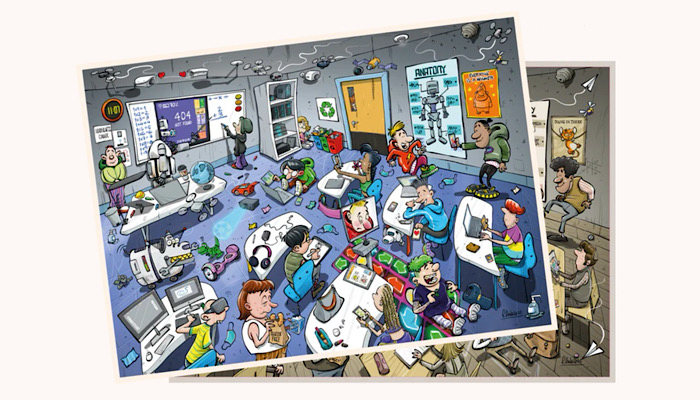
Wow! Well… When I look around, all I see is puzzles! It’s literally puzzle, puzzle puzzle, puzzle puzzle… Oh! One thing you might appreciate is this… It’s part of a range called Djigsaw Vu – a mix of deja vu and jigsaw. On the box, you can see the jigsaw is an image of a Christmas market. But you actually get two puzzles in the box! The second image is of the same Christmas market but 100 years earlier… So once you complete the first image, you can use that to help piece together the second one. And you don’t ever see that second image until you’ve completed it.
Oh, I love that! And I guess that serves an audience that you spoke about in a BBC Breakfast interview… The people that prefer not to have the image on the box. Was this a direct reach into that market?
It’s interesting that you say that because I hadn’t actually followed that train of thought! It’s obviously been sitting in my brain waiting to come out! Really interesting. Then, when one of the team came up with the DJigsaw Vu name and I thought it was really clever. It only works in the English market, but it’s really good.
Wonderful! Thank you so much for making time to talk about this Brian. It only took us four years to make it happen, but it was worth the wait!
No, not at all – thank you! We can do it again; let’s do another interview in 2030! Ha!
Ha! I’d love that, actually; I’ll hold you to that!
–
To stay in the loop with the latest news, interviews and features from the world of toy and game design, sign up to our weekly newsletter here
More Recent Interview

Designers Adrien Pédron and Thomas Favrelière on the origins of Archeo – and why Gigamic proved the perfect publisher
“We’d wanted to work with Gigamic for a long time…”: In conversation with designers Thomas Favrelière and Adrien Pédron.
BOTI’s Nico Blauw talks Pembe the Pink Cat, innovation – and the International Toy Board
“The look, the design, the audience, the messaging… It all appealed”: Nico Blauw reveals what made Pembe the Pink Cat a winner for BOTI.
“This was the missing piece…”: Rubber Road’s Jack Fox on TUBBZ’s move into blind collectibles with Mystery Eggs
Jack Fox, Sales & Marketing Director at Rubber Road, talks TUBBZ Mystery Eggs – and why Minions were a perfect fit.
Educational Insights’ Lisa Guili on TikTok, 20 years of Kanoodle – and ten million units sold
Lisa Guili reveals how one addictive brain teaser found its audience and became a phenomenon.
“I want people to bet on themselves”: Spin Master Co-Founder Ronnen Harary discusses his new book, No Experience Necessary
Spin Master Co-Founder Ronnen Harary talks to us about his exciting new book, working with inventors – and Spin’s most underrated launch.

David Norman of Stormin’ Studios on inventors, Orchard Toys – and shaking things up!
“It’s not just a name, it’s our mission statement”: In conversation with Stormin’ Studios’ David Norman.
Popular Articles
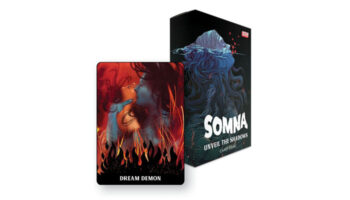
DSTLRY launches card game based on its award-winning Somna comic
BOTI’s Nico Blauw talks Pembe the Pink Cat, innovation – and the International Toy Board
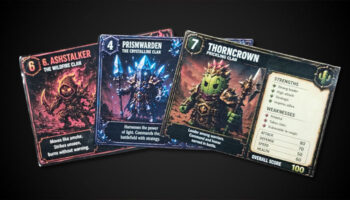
A Prickly Plan for Playground Popularity...
Bop It’s Dan Klitsner on creative techniques, his favourite inventions and more

Wow! Stuff to launch Fuggler Puppetronics in 2026
Upcoming Events
-
- 30th January 2026
- Spielwarenmesse, Nuremberg
International Game Inventors Convention
-

- 19th - 21st May 2026
- Mandalay Bay Convention Center, Las Vegas
Las Vegas Licensing Expo
-

- 23rd - 25th June 2026
- Stamford Bridge Stadium, Chelsea, London
Play Creators Festival
-

- Tuesday, June 23rd, 2026
- Stamford Bridge Stadium, Chelsea, London
Play Creators Awards
-
- Wednesday, June 24th, 2026
- Stamford Bridge Stadium, Chelsea, London
Play Creators Conference
-
- Thursday, June 25th, 2026
- Stamford Bridge Stadium, Chelsea, London
Mojo Pitch
-

- 6th - 8th October 2026
- Excel London
Brand Licensing Europe