Icons on Icons: Ron Dubren, Dan Klitsner and Richard Levy discuss the legacies of Tickle Me Elmo, Bop It and Furby

Ron, Dan, Richard – Tickle Me Elmo, Bop It and Furby are all turning 30 over the next few years. What made the late nineties a special time to be a toy inventor?
Ron Dubren, Co-Inventor of Tickle Me Elmo: It was the end of the golden age of toy inventing.
Richard Levy, Co-Developer of Furby: You took the words right out of my mouth.
Ron: Well, how do you think I knew that? I’ve listened to you over the years, Richard!
Richard: Ha! But back in those days, either Parker Brothers or Milton Bradley had the first inventor party at New York Toy Fair. And it was about us – the inventors. We were treated very well. Then other companies started doing inventor receptions. Then one day, we showed up and brand owners – studios – were also included. So, little by little the party was diluted and we inventors were pushed aside. More recently many toy companies have introduced the portals. All submissions must go through a portal now.
So you feel that back in the 90s the ‘relations’ part of ‘inventor relations’ was at its peak?
Richard: Absolutely.
Ron: No question about it.
Dan Klitsner, Inventor of Bop It: I think there was a little more direct contact between inventors and decision makers 30 years ago. And perhaps more ‘maverick’ executives who would just go for a new concept without much – if any – marketing analysis because they personally believed in it.
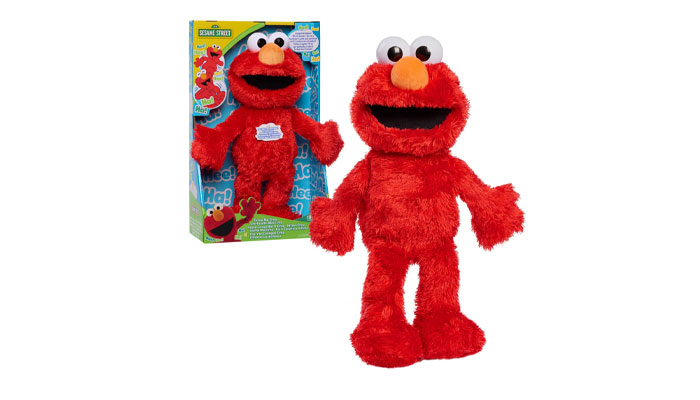
Ron: I think one issue became branding. Now, all three of us have benefited from branding. Tickle Me Elmo benefitted from the Sesame Street brand, while Furby and Bop It became brands in the own right. But around the late Nineties, all the toy companies became very interested in brands. “That’s a great feature, what brand can we put that in?” They were less interested in a great concept standing on its own.
Richard: Do you know why there are no evergreens today, Billy? Because they cut down the forest every year.
Dan: Good line!
Richard: That’s what all inventors live with. And Dan, you’re right. I have a notice in my office that reads: ‘Thou shalt not committee’. Today everything’s a committee, right? My first toy was electronic Starbird with Milton Bradley. I knew so little about the toy industry that I pitched a toy to a game company. Mel Taft – Senior VP of R&D – made the decision for the company doing a toy. He saw the business opportunity. R&D told sales what they were going to sell. Can you imagine that happening today, guys? Things today are wrapped up in corporate administrivia and most people are afraid to make decisions. The paralysis of analysis.
On that, how important was having an internal champion for these products?
Ron: It’s the most important thing. Back then, you were counting on your inventor relations person to be your champion because, back then, they had the power to do that. For me and Greg Hyman, my inventing partner on Tickle Me Elmo, that person was Stan Clutton – who was at Playtime Products and then Tyco when Tyco bought Playtime. He was the one that saw it had potential and reconnected once they had the Sesame Street license. Without Stan it would have never happened.
Dan: That’s the thing. I think these days – and I don’t mean this in a disrespectful way – the inventor relations people are more like scouts for great ideas. So they don’t necessarily have the same voice in championing an idea with the same authority that someone like Stan Clutton might’ve had. Do you think that’s true guys?
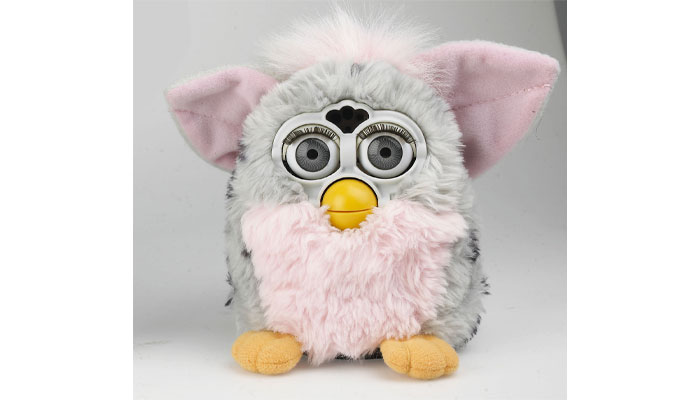
Richard: Yes, and I’ll tell you a quick inventor relations story with Furby. When I got together with Dave Hampton and Caleb Chung in Los Angeles to work on Furby, it wasn’t anywhere close to where it had to be. They had been turned down by two other companies before I joined the jolly band. And I knew I couldn’t trust it to an inventor relations type at any company. I had to tease it. I had to pitch the importance of a first meeting.
So, I called Roger Schiffman – Co-Founder and President of Tiger Electronics – personally. I said: “Roger, I have something you must see”. I explained that the prototype was on the West Coast and he agreed to see it while he was in Los Angeles. I arranged for Dave and Caleb, both in Los Angeles, to go to Roger’s hotel. But, the day before the meeting, Roger called me and said: “I’m sick. I can’t take the meeting.” I said: “What do you mean you’re sick?” He’s blowing into a handkerchief. He sounded horrible; he’s telling me that he cancelled a trip to Hong Kong and that he can’t see the guys… I said: “Roger, how many years have I known you? Have I ever wasted your time?”
He responded: “25 years and you have never wasted my time.” I said: “So, unless you are critically ill, please do me a personal favour and see my partners at your hotel.” They will show you an amazing concept. He saw it and called me a couple minutes later to ask: “Where do we go from here?”
That’s what we’re talking about. Roger was a decision-maker: an entrepreneurial showman. Tiger, as a company, moved with the Divine Right of Kings.
Dan: The champion for Bop It was Bill Dohrmann – Head of Inventor Relations at Parker Brothers. He was incredible. And look, you can never know when you’ll have the right thing at the right time, but you can have the right relationships in place to help it happen. I had met with Bill before and I really respected his view and how he assessed concepts. I wanted to pitch Bop It specifically to Bill – and when I did, he said: “We’re not doing games like this… But we should be.” That sums up his approach to inventor relations. Someone else might’ve looked at Bop It and said: ‘This isn’t on our wishlist, so I don’t want to bring it in.’ Bill had the vision and the position to champion the concept.
Richard: And I think all three of us would agree with me here… My biggest hits have been ideas that weren’t on a wish list.
If we look at the legacies of these three items, what do you think is key to their longevity? And did you have a responsibility, as inventors, to push and be involved in keeping these items – and their spin-offs – fresh?
Richard: If the trade wants a product, it’ll stay in the market. We’re in the fashion industry – never get caught with your trends down!
Dan: I think Furby and Tickle Me Elmo were different than Bop It in that they were worldwide hits immediately. Bop It was more of a creeper. It did well and just kept growing over five years. And coincidentally, Ron, you called it for Bop It first! I recall very clearly that we were standing next to each other in the showroom at Parker Brothers in the Toy Building and you were fresh off your Tickle Me Elmo year. We were on an inventor tour – it was the first time I had seen it shown in the showroom –and you looked at Bop It and said to me: “That could be a good one.” You saw something in it.
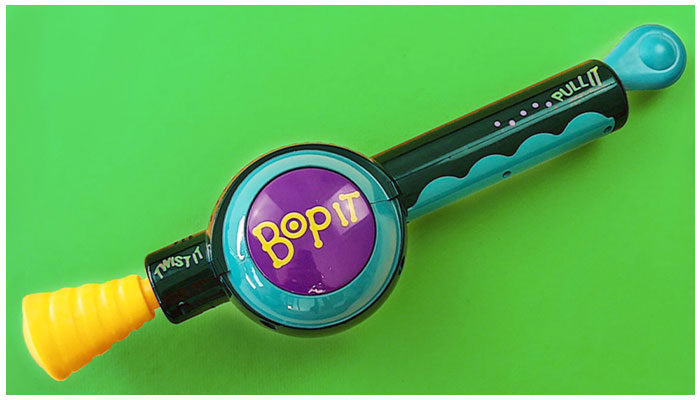
Ron: Well, the interesting thing to me about Bop It is that it arrived as an item but evolved into a brand. That’s the challenge today for inventors – how do you pitch brands and would-be franchises. How did Bop It become a brand?
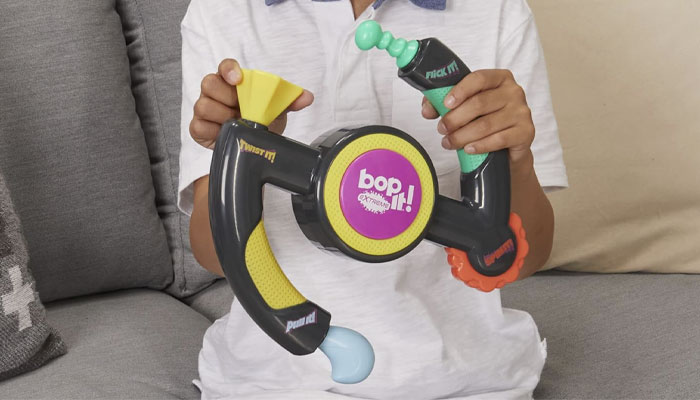
Dan: Well, first of all you have to credit the vision of several key people at Parker Bros at the time. Bob Welch did such a beautiful, elegant industrial design for the OG Bop It. As an industrial designer, I really wanted to be involved with the future of the item, so after the launch I was working on lots of ideas and mock-ups for how to expand it. Fortunately, Bill Dohrmann and Gary Bergman called after the first holiday season and said: “Hey, Bop It is a hit! – what should we do next?” Often, toy companies just try to do it all internally and don’t engage the original Inventor. But I pitched them on the idea for an Extreme Bop It, rather than a cost-reduced sequel and luckily they were open to it.
They connected me with Darrell Merino and their other talented designers like Dan Sanfilippo, and that was really the start of a 25 year relationship with the internal group at Hasbro which has continued to this day. So I didn’t feel like just the inventor – we really became partners on the brand.
Richard: This is interesting. With Furby, I asked Roger how many he’d have to sell in the first year to consider it a success. He said: “250,000 units and we’re golden!” Furby sold four million in that first year! Four million. Randy Rissman – the other co-founder of Tiger – called me into his office one day and said: “We need more! Let’s do Furby Babies.” That’s how decisions are made by entrepreneurs; that’s how Tiger rolled. No focus groups. No committees. My partner David Hampton, an electronic genius, told Randy what could be done for a price point and we were off to the races.
By the way, in 1999, during the six weeks leading up to Christmas, Roger told me retailers around the world sold one Furby every minute, 24 hours a day, 7 days a week.
So when did you recognize that Furby was a brand and not just a successful item?
Richard: It happened organically over time. It had gotten so much publicity – the U.S. National Security Agency even banned it from its headquarters because they thought it had a recording device in it. It was banned from many airplanes. All kinds of ridiculous stuff.
I give Hasbro tremendous credit in making Furby an imaginative global brand that has sustained these past 25 years. Hasbro built on Tiger’s first generation Furby and has worked hard to keep it fresh and endearing; disrupting pop culture and impacting every corner of the culture zeitgeist. Methinks there is no end in sight for our beloved creature.
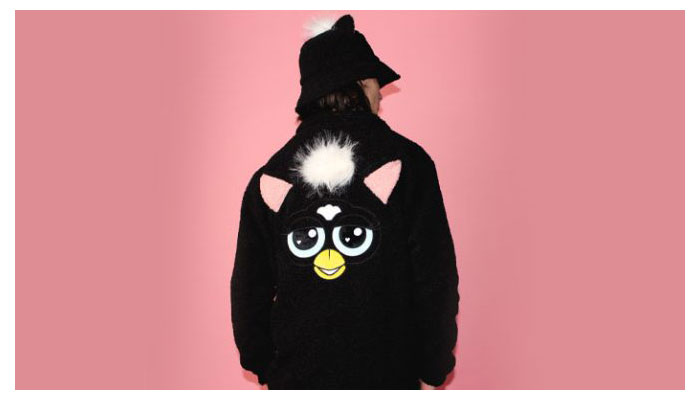
Ron: That’s interesting though because Tickle Me Elmo was a pop culture phenomenon, but I don’t think it has any value today as a brand.
Richard: I understand. I guess the toy gods smiled on Furby.
Dan: Why do you think Tickle Me Elmo doesn’t have that same brand value these days Ron?
Ron: It goes back to strategy. At Tyco, Stan Clutton – SVP of Marketing & Design – and Neil Friedman – the President – had some disagreement about how to deal with Tickle Me Elmo after the craze. Stan wanted to keep it in line and make it an evergreen, Neil disagreed and wanted to instead bring it back every five or 10 years. Neil won that argument. So five years after the craze was over, it returned as Tickle Me Elmo Surprise, and 10 years later they launched Tickle Me Elmo Extreme – or T.M.X. And Neil’s decision was vindicated because that was an enormous hit.
I think what ultimately hurt the brand potential of Tickle Me Elmo was that Mattel gave up the rights and so Hasbro got the Sesame license and you can see what’s happened to the Sesame Street brand since. And now Tickle Me Elmo with a smaller company. It doesn’t have the impact it had before.
Dan: It’s interesting how often relationships are so key to all of this. Phil Jackson was at Parker Brothers when Bop It launched and when he moved to Mattel he kept asking me: “Can we bring Bop It over to Mattel?” The volume was always good so it was always a no, but when he moved to Hasbro in 2006, Bop It wasn’t doing so well… So I said to him: “There’s good news and bad news… The good news is Bop It might become finally available. The bad news is you’re back at Hasbro!”
But Phil coming back to Hasbro was probably the key to the growth of the brand because he was the one that led the relaunch of Bop It two years later. He had this vision for it that helped it thrive past its 10th anniversary. So I’d say: Yes, I’ve put thousands of thousands of hours into keeping Bop It alive, but there’s literally hundreds of other people that have been key to its longevity.
Richard: A big difference compared to Furby or Bop It is that Tickle Me Elmo is based on a TV show – a pre-existing brand.
So while Tickle Me Elmo is an iconic toy brand in its own right – it wasn’t ‘ownable’ in the same way that Furby and Bop It was.
Ron: Exactly. To the toy companies, Tickle Me Elmo was an external brand. It was never treated as an internal brand. It still isn’t.
That being said, why do you feel it still resonates with people?
Ron: Tickle Me Elmo made people feel joy. Simple as that. It was a joyful laugh out loud experience.
Richard: And Ron, the motor which gave it the shaking… That looked awesome on television – especially that red colour because in those days the cameras would bleed it a little bit.
Ron: The shaking was actually a suggestion from the ad agency. They suggested it as a visual feature. My wife had actually suggested that to me back when the concept was Tickles the Chimp, but I said: “No, they’d never put a motor in… Too expensive!” And it almost never happened because the mothers in the focus group liked it both ways, with and without the motor. Someone made the decision to go with the $30 retail rather than $20 retail and the rest is history. But yes, the shaking was key because it gave the item a great ‘try me’ feature. People would try it in stores and it made people laugh.
And for Bop It and Furby – why do you feel they resonated and continue to resonate?
Richard: I didn’t think about it at the time, but Furby was the first robotic pet, so that played a large part. People bonded to it. Furby was full of surprises. It appeared to learn. The more someone played with Furby its language went from Furbish to English. David also programmed Easter eggs into it.
But a major launch vehicle was organized by Marc Rosenberg, Tiger’s VP of PR and Promotion. He invited Wired magazine to do a 13-page behind the scenes feature on Furby, which got the tech community interested in the creature. Wired magazine wrote: “The team at Tiger seems to thrive on beating the odds – they’re gamblers at heart.”
Ron: The same thing happened with Tickle Me Elmo and The Rosie O’Donnell Show – she gave away 200 free Tickle Me Elmos. That gave it a leg up, along with good luck and timing.
Dan: Absolutely, it takes a lot of luck, a little bit of this and a little bit of that for a toy to become iconic. What’s interesting about Bop It is that it often gets left off lists that Tamagotchi, Tickle Me Elmo, Furby and others are on – maybe because Bop It was big enough to make an imprint, but not so big that it ever burnt out. And the other lucky aspect to this was that Bop It’s gameplay, and especially it’s music, got into the pop culture – or ‘Bop Culture’ as I call it! The actions have been spoofed on The Simpsons, SNL, Robot Chicken and other shows which probably helped it’s popularity tremendously.
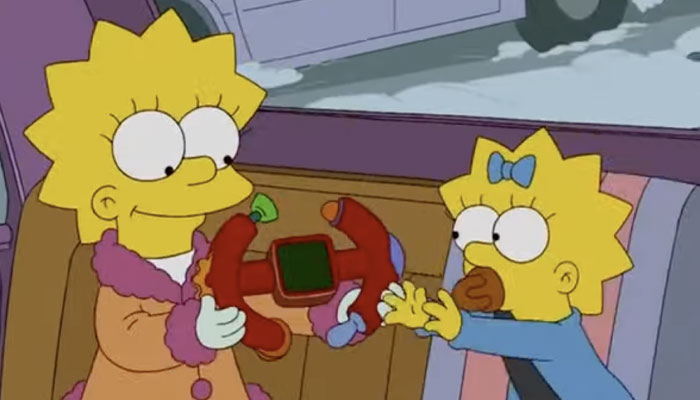
More recently in the pandemic, I started some Bop It social media to tell the Bop It story and connect with fans. It was mind-blowing how many thousands of millennials started to tune in and tell me about how it was their favourite Nineties game. They’d mention the music being iconic and told me about all these songs on Spotify that use the musical riffs and are even named Bop It! There are hundreds of them! Lizzo even came out with one!
Rolling Stone did an article about Bop It about six months ago, with the tagline “What’s the most nostalgic song of the 90s?” It was about how music can get inside you, and that if the Bop It was sold as a single instead of a toy, it would be considered a multi platinum record. Unfortunately, I don’t think they are about to send me one!
Richard: And Billy, with all of these, it’s often the parent that drives first sales. It has to resonate with parents on some level. The kid often doesn’t even know about the toy and the parent wants their kid to be the first on the block with it!
Dan: Good point Richard. Another common factor that can make a toy iconic is if it is the ‘first’ of something. In the same way that Furby was the first perceived mass market AI/robotic toy, Tickle Me Elmo was probably one of the first ‘multiple sensor’ interactive plush characters, and Bop It was in many ways the first gesture recognition toy.
Before we wrap up, did having a big smash hit toy change your approach to inventing in any way?
Richard: With Furby, I boxed it off as a kind of anomaly. Now, don’t get me wrong, I’m very grateful for it, but I just love creating toys and games. It wasn’t about making so much money or having a hit or whatever…
Ron: I have toy inventing in my DNA and while people sometimes perceive you as a one-hit wonder, I feel the same about all of my toys and games. It’s sort of like they’re my kids. I feel proud of every one. And there’s so much blood, sweat and tears that goes into inventing – and so many concepts that don’t make it – that you have to love the process. If you don’t love the process, you don’t belong in toy inventing.
Dan: For me, Bop It was a dream come true. Besides providing enough income over the years to give me some buffer – to cover my thousands of rejections – it gave me a direction in the toy industry that fit me perfectly. I am basically an industrial designer who loves music and games, and Bop It was that incarnated – part game, part industrial design, part music. It also taught me a very important approach that I have milked all these years: Watch the player, not the game.
I was also extremely lucky that my amazing partners Brian and Gary were also very interested and talented in those categories. It’s why so many of our inventions since then – over 30 years together! – are of the same genre… Things like Perplexus, Hyperdash and many other industrial design-centric concepts.
To wrap things up, almost 30 years on, what does it feel like knowing these items have been important to people?
Richard: I couldn’t be prouder. Watching children play with Furby and seeing grandparents and parents getting them for their grandkids and kids – it’s a great honour, frankly.
Dan: It’s a feeling of connection. That you started something that impacted others in ways you will never know and that the ripples have reached millions of people. Like I’m sure both of you guys have had with Furby and Tickle Me Elmo… It’s sort of mystical that to think: ‘Wow, I’m the guy that threw the pebble in the water that caused these ripples – and the ripples are still going.’ That’s a crazy feeling.
Ron: For me it’s about optimism and the joy of the creative process. It’s also what Elmo taught me – ‘Elmo’s Law’ – that if anything can go right, it will go right. Now look, I made that up, but I made it up for a very important reason… Too often, especially as toy inventors, we see how things go wrong all the time – how Murphy reared his ugly head every possible way. So it’s kind of wonderful to realise sometimes things go right. And they go right for amazingly unpredictable reasons.
And, like with all of these products, there are many people along the way who make contributions – it’s never just my invention. It’s about the people you’ve worked with along the way that made it happen.
Dan: Absolutely. And all the luck, right?
Richard: And all of us have more scars than medals. You know?
Guys, we’ll wrap things up there. A huge thanks again for taking time out to talk – and congrats on these upcoming milestones.
–
To stay in the loop with the latest news, interviews and features from the world of toy and game design, sign up to our weekly newsletter here
More Recent Interview

Designers Adrien Pédron and Thomas Favrelière on the origins of Archeo – and why Gigamic proved the perfect publisher
“We’d wanted to work with Gigamic for a long time…”: In conversation with designers Thomas Favrelière and Adrien Pédron.
BOTI’s Nico Blauw talks Pembe the Pink Cat, innovation – and the International Toy Board
“The look, the design, the audience, the messaging… It all appealed”: Nico Blauw reveals what made Pembe the Pink Cat a winner for BOTI.
“This was the missing piece…”: Rubber Road’s Jack Fox on TUBBZ’s move into blind collectibles with Mystery Eggs
Jack Fox, Sales & Marketing Director at Rubber Road, talks TUBBZ Mystery Eggs – and why Minions were a perfect fit.

Educational Insights’ Lisa Guili on TikTok, 20 years of Kanoodle – and ten million units sold
Lisa Guili reveals how one addictive brain teaser found its audience and became a phenomenon.

“I want people to bet on themselves”: Spin Master Co-Founder Ronnen Harary discusses his new book, No Experience Necessary
Spin Master Co-Founder Ronnen Harary talks to us about his exciting new book, working with inventors – and Spin’s most underrated launch.
David Norman of Stormin’ Studios on inventors, Orchard Toys – and shaking things up!
“It’s not just a name, it’s our mission statement”: In conversation with Stormin’ Studios’ David Norman.
Popular Articles
DSTLRY launches card game based on its award-winning Somna comic
BOTI’s Nico Blauw talks Pembe the Pink Cat, innovation – and the International Toy Board
Bop It’s Dan Klitsner on creative techniques, his favourite inventions and more
Designers Adrien Pédron and Thomas Favrelière on the origins of Archeo – and why Gigamic proved the perfect publisher

Wow! Stuff to launch Fuggler Puppetronics in 2026
Upcoming Events
-
- 30th January 2026
- Spielwarenmesse, Nuremberg
International Game Inventors Convention
-

- 19th - 21st May 2026
- Mandalay Bay Convention Center, Las Vegas
Las Vegas Licensing Expo
-

- 23rd - 25th June 2026
- Stamford Bridge Stadium, Chelsea, London
Play Creators Festival
-
- Tuesday, June 23rd, 2026
- Stamford Bridge Stadium, Chelsea, London
Play Creators Awards
-
- Wednesday, June 24th, 2026
- Stamford Bridge Stadium, Chelsea, London
Play Creators Conference
-
- Thursday, June 25th, 2026
- Stamford Bridge Stadium, Chelsea, London
Mojo Pitch
-

- 6th - 8th October 2026
- Excel London
Brand Licensing Europe