My mistake! Deej Johnson on the three questions you should ask before binning your blunders
“Name the greatest of all the inventors? Accident!” So said Author Mark Twain – and perhaps that’s all the steering some people need! Think of Alexander Fleming’s discovery of penicillin! While many people hear an embellished version of this story, the gist is generally true… After accidentally leaving a number of research cultures to one side for far longer than planned, Fleming found some of them had been killed by mould. Realising that something was afoot, he began investigating – and the age of modern antibiotics began.
But while history shows us that penicillin – and plenty of wonderful inventions – began with accidents, many people are far too quick to dismiss their own mistakes. In this short article, I’ll show you the three questions you should ask yourself before shelving your mistakes. First, though, let me share with you this charmingly pompous phrase…
A Departure from the Route of Intention
What happens when thick fog, strong wind and heavy rain send planes off to land hundreds of miles away from their destinations? A former aviator assures me that many pilots jokingly acknowledge the inconvenience with this sardonic phrase… So rather than stress out or fume angrily at air traffic control, the crew calmly acknowledges the need to depart from the route of intention. Illustrates a critical point in ideation: there’s no advantage to getting stressed when things go wrong!
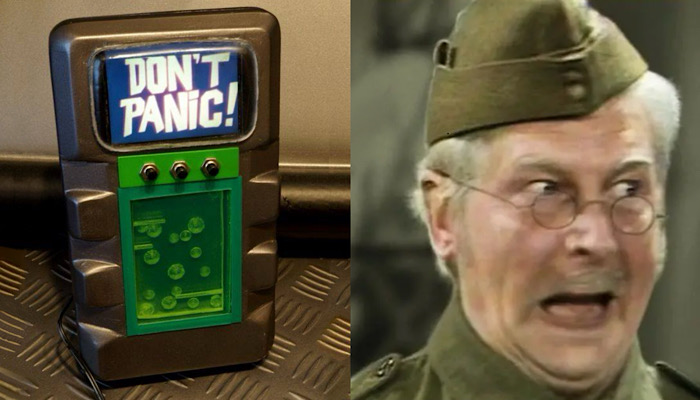
Don’t Panic!
If The Hitchhiker’s Guide to the Galaxy and Dad’s Army’s Corporal Jones both said it, it can’t be bad advice! Many people experience real stress and anxiety in the face of a mistake – that’s natural. And while it is natural, it isn’t helpful… The human brain is far less creative when stressed. So although mistakes might initially seem like bad things, we need to remember that most many of them intrinsically hold the seed of creativity at their centre. Why? Because creativity is about seeing things from different perspectives – and mistakes give you no choice but to see things differently.
The usefulness of mistakes, accidents and being wrong!
It’s not just the combination of an accident and a calm mind that turns cock ups into creativity. You also have to develop a habit of looking at mistakes with curiosity. In my experience, one of the best ways to develop this habit is to routine me ask three questions to change the way you think…
Three Questions Can Change the Way You Think
How long it would have taken to discover penicillin if Fleming hadn’t had the wit to examine his serendipitous mould? We’ll never know! What we do know is that taking a look at mistakes – if nothing else – teaches us about avoiding similar mistakes in the future. There’s often something else valuable to be found in a mistake, though – and these three questions help you find out what it might be…
1) How Can This Mistake Help You?
You must have had it happen: something goes wrong, then turns out to work in your favour. Well, most people give it very little thought… But sincerely asking, “How can this help me?” in the wake of a mistake vastly increases the chances that the hour will – indeed – become useful.
One example of this comes from a prop maker I know who, after many years of not using papier-mâché, misremembered how it was made. He happily set about making a small prop by tearing newspaper into shreds and dragging each strip through a bowl of Plaster of Paris. Not glue! Not wallpaper paste! Plaster of Paris…
The error became clear after he took a short phone call in the middle of the job and came back to find the project now set as solid as a rock! After understanding his mistake, the prop maker realised that this error actually makes for a very fast way to create large, sturdy, freestanding props. Plaster of Paris sets quicker than paste and paper, is easier to paint, and dries looking like a stone-textured surface. To this day, the idea serves him well… So far it’s helped him to make a log cabin, a parody of the facehugger eggs from Alien, a fake plaster cast for an arm, a gravestone and a host of other bits in stage and video projects.
2) Could it Help Someone Else?
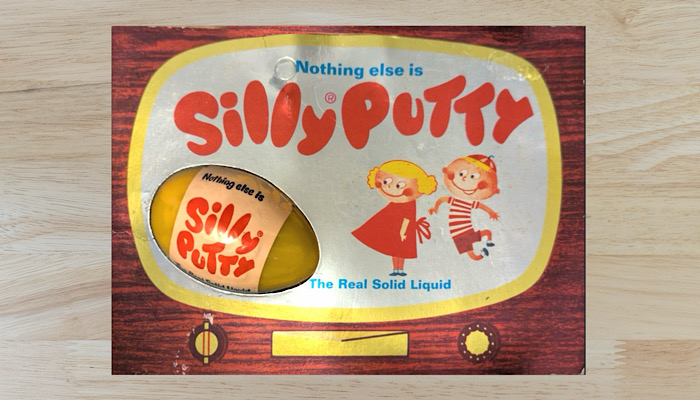
It may well be that your mistake is of more use to someone else than it is to you. Don’t be afraid to broaden your thinking and consider what others might make of the error. The best-selling novelty Silly Putty is a failed invention that falls into this category. It came about in 1943 when American scientists were attempting to make a silicone-based substitute for rubber to help the war effort…
The bouncing, snapping, stretching, picture-copying stuff absolutely didn’t work for that original purpose, however, and was largely dismissed – even by its inventors. It found no practical use at all for six years. Only then did it begin to find a use as the toy we know today! In much the same way, you might find that a cook’s disastrous attempt to make dough could become a child’s modelling toy; a misprinted pack of cards can help a magician no end; even an incidental story about a mistake might, in itself, be grist to the mill for a writer.
3) What Would MAKE it Useful to Somebody?
There are times at which neither of the above questions pays off. In which case this is the catch-all question. At the very least, telling others how to avoid that mistake in future makes it useful. Beyond that, you might find that the creative techniques Factor Nudging and What if… throw up something valuable.
What if None of This Helps?
Well, what if it doesn’t?! The mistake happened anyway; you’ve not lost much by looking at it through creative eyes. This is especially true when you keep applying these principles and asking the questions until they’re habitual.
My Mistake?
Everything that’s true about looking at your own accidents, mistakes and guesses also applies to the accidents, mistakes and guesses of others. Keep your eyes peeled for errors and oddities around you – and continually look for the intrinsic ideas that others might be passing over.
Toy and Game Examples
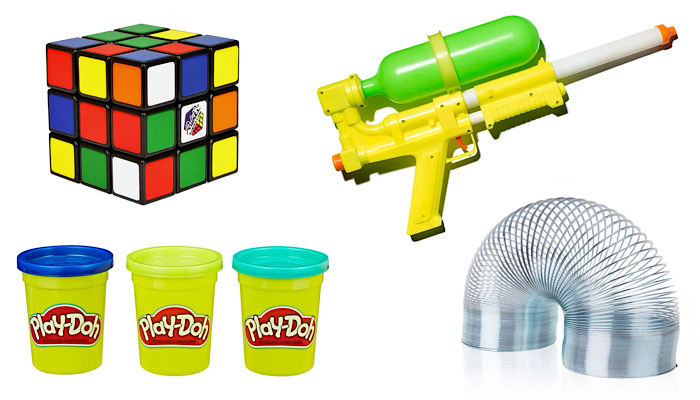
We’ve already mentioned Silly Putty here. But did you know several other toys and games came to life because of mistakes? You can read potted histories of these products in the article Accidental Genius, here. These products include the Rubik’s cube, Slinky, Play-Doh, Super Soaker and more.
Other Examples
For the sake of completeness, here are 34 inventions or discoveries that came about through these principles. If you need convincing as to the value of examining your mistakes, think what the financial worth is to any one of these things – never mind all of them!
• Anaesthesia
• Popsicles
• Aspirin
• Post-it Notes
• Bricks
• Radioactivity
• Ring Doughnuts
• Coca-Cola
• Saccharin
• Crisps
• Sandwiches
• Dynamite
• Superglue
• Frisbees
• Scotchgard
• Fudge
• Plastic
• Chocolate Chip Cookies
• ‘Smart Dust’
• Glass
• Soap that Floats
• Ice Cream Cones
• Tea
• Inkjet Printers
• Teabags
• Maple Syrup
• Teflon
• Microwave Ovens
• Valium
• Nachos
• Velcro
• Pacemakers
• Vulcanised Rubber
• X-rays
–
To stay in the loop with the latest news, interviews and features from the world of toy and game design, sign up to our weekly newsletter here
More Recent Feature


The Happy Accident: Deej Johnson explores a dozen toys and games that came about by mistake
Accidental Genius… Which popular toys became a success – despite beginning by chance?!

More or Less…
Industry figures reveal what they’d like see more – and less – of from the industry in 2026…

Stuff We Loved: What are the industry’s favourite toy and game launches of 2025?
We asked figures in the industry for their favourite toy and game launches of the year. The only caveat… They couldn’t choose a product they were involved in!
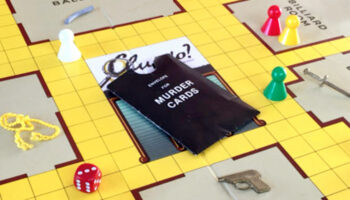
Without a Clue: What does this extraordinary letter to Cluedo’s inventor tell us about the early days of the game?
We look at a letter sent to Cluedo inventor Anthony Pratt regarding sales – and rejecting his next idea…
Who had stuff we love at The Big Christmas Press Show? Deej Johnson offers a seasonal round up
Deej Johnson reports on a strong showing for toys and games at The Big Christmas Press Show.

As companies make decisions around the use of AI in their internal product development processes, is the role of external inventors more valuable than ever?
“If a company wants products with soul, story and a little magic, they’re still going to need us weirdos!”: Industry figures discuss the impact AI may have on the value of engaging with inventors.
Popular Articles

DSTLRY launches card game based on its award-winning Somna comic

Hasbro's Angus Walker on creativity, pitching and the key to successful inventor relations
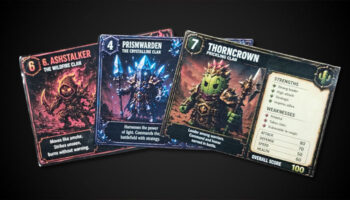
A Prickly Plan for Playground Popularity...
What Kids Want! joins Virtual Mojo Pitch 2023

“It’s a game and soundtrack in one!”: Inventor Marcus Carleson and Jumbo’s Ferran Codina on the story behind Hitster
Upcoming Events
-
- 30th January 2026
- Spielwarenmesse, Nuremberg
International Game Inventors Convention
-

- 19th - 21st May 2026
- Mandalay Bay Convention Center, Las Vegas
Las Vegas Licensing Expo
-

- 23rd - 25th June 2026
- Stamford Bridge Stadium, Chelsea, London
Play Creators Festival
-

- Tuesday, June 23rd, 2026
- Stamford Bridge Stadium, Chelsea, London
Play Creators Awards
-
- Wednesday, June 24th, 2026
- Stamford Bridge Stadium, Chelsea, London
Play Creators Conference
-

- Thursday, June 25th, 2026
- Stamford Bridge Stadium, Chelsea, London
Mojo Pitch
-

- 6th - 8th October 2026
- Excel London
Brand Licensing Europe