The Happy Accident: Deej Johnson explores a dozen toys and games that came about by mistake

In a recent Mojo Nation article, I revealed three questions that habitually creative people can ask themselves to get more out of mistakes! You can read that piece here. In the meanwhile, here are 12 fantastic toys and games that came about by mistake…

The Rubik’s Cube
Yes, THE Rubik’s Cube, one of the best-selling toys/games/puzzles in all of history – with more than 450 million units sold – was a happy accident. Inventor Ernö Rubik never intended it to be a toy: it was supposed to be a tool! In 1974, Rubik built his first cube to help teach students three-dimensional geometry. He used this cube to help demonstrate spatial relations…
After showing it to his students, however, Rubik found that he had scrambled the cube – and was unable to solve it for a month! Only then did Rubik begin to see his cube as a puzzle. Indeed, it wasn’t until 1979 that a lighter-weight version of the cube debuted at the Nuremberg Toy Fair. You can read more about the history of the cube in interviews with Mike Moody of Seven Towns here and Ernö Rubik himself here.
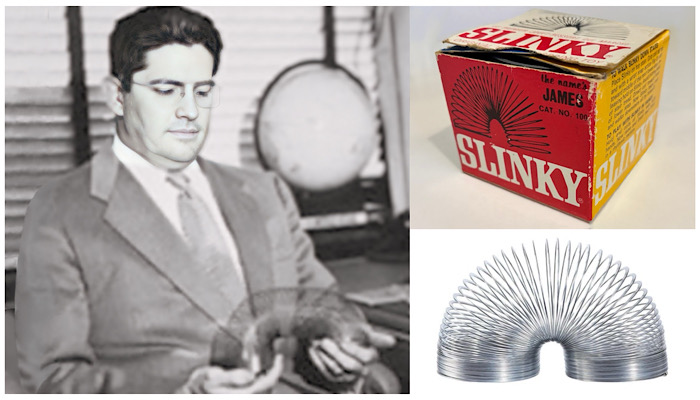
Slinky
The giant spring that – under very specific circumstances – walks down stairs or, with soothing ease, cascades from hand to hand, began with an accident. As naval engineer Richard James started to work on a battleship tension coil, it’s said the object slipped from his hand… It hit the ground, bounced and inspired a thought: could the right spring make an interesting toy? In 1943, the answer turned out to be a massive yes and – over the next 80 years – the happy accident sold to the tune of more than 350-million units.
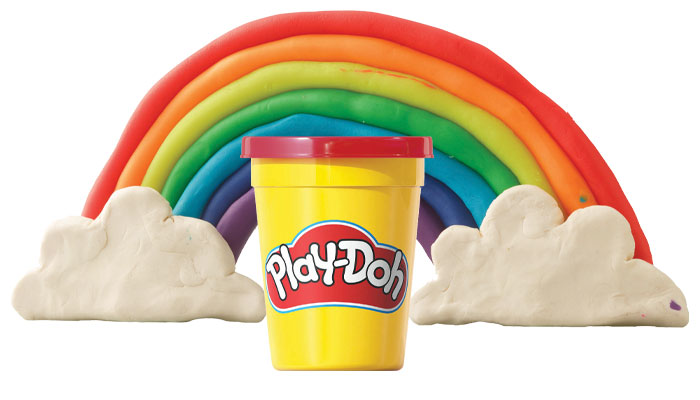
Play-Doh
Rather than being moulded by the hands of infants, Play-Doh originally served mankind as a wallpaper cleaner. Specifically, it was developed by Kutol Products to help remove coal dust. In 1955, however, its creators got wind of the fact that children were using it in pretty much the same way they do now… By 1956, the business had begun selling containers of it as a plaything and, in 1965, General Mills bought the rights to it. Estimates suggest that companies have now sold well over three BILLION tubs of Play-Doh. You can read a full history of Play-Doh that we wrote to celebrate its 70th anniversary here.
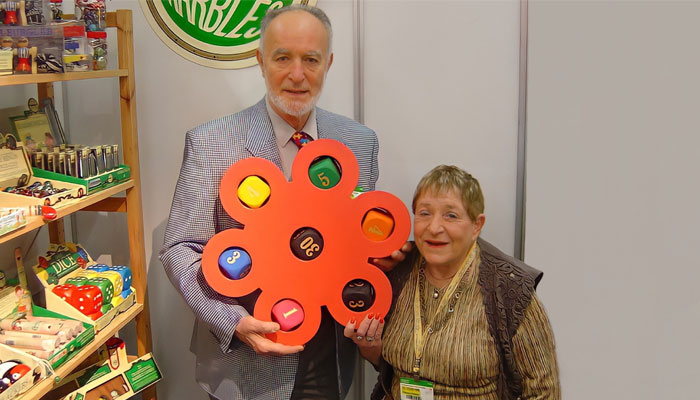
Magimixer
One of the all-time best-selling products from Theora Concepts – the inventors behind Guess Who? – is the dice toy Magimixer. Devised in 1973, the extraordinary flower-shaped unit ‘locks’ a number of dice between two layers of plastic… But allows them to rotate in the most tactilely satisfying way! And how did the idea come about? According to Boaz Coster – son of the inventors – his mother, Ora, was simply tidying her desk…
When Ora lifted up a couple of plastic round-hole stencils, she noticed a pair of wooden dice caught between them. The dice were ‘locked in’ but could still spin. Ora quickly made a flower-shaped prototype of her new toy idea using thick cardboard and seven dice. When her husband, Theo, returned safely from reserve duty in Israel’s October War, he then made a plastic model. The result has sold steadily ever since! You can read an interview with Gideon and Boaz Coster about Theora concepts here.

Water Balloons
Of all the inventions on this list, this must surely be the most incongruous! Think of all the hours of fun that water balloons have given to children all over the planet… And now brace yourself for a shock! The inventor – Edgar Ellington – came up with the earliest version while helping the British fight WW1! Ellington was actually trying to create a waterproof sock to stop soldiers getting trench foot. It’s said that after trying on one of his prototypes, he filled it with water to see if it now leaked… When he saw that it did, Ellington threw the prototype onto the table in frustration! The result? The inspiration for the first purpose-made ‘water grenade’ – leading to the modern water balloon.

Super Soaker
The water balloon isn’t the only H20-based-toy developed by happy accident! The Super Soaker also came about through a failed invention, serendipity – and a flash of inspiration! Back in 1982, NASA engineer Lonnie Johnson was working on a new type of pump for an environmentally friendly cooling system. To test his idea – replacing a chemical with circulating water and air pressure – Johnson connected a high-pressure nozzle to his bathroom tap…
When Johnson turned it on, he shot a powerful stream of water clear across his bathroom… And quickly realised that this action had potential as a toy. In time, Johnson began working on a water gun that used air pressure, needed no batteries and remained safe for children. Johnson licensed his design to Larami in 1989 – and they launched the toy in 1990 under the name Power Drencher. After a rebranding to Super Soaker in 1991, companies have since sold more than 200 million toys – and generated over $1 billion in sales.
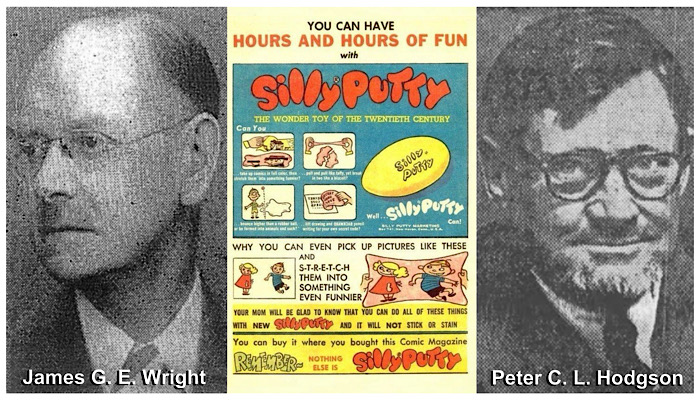
Silly Putty
This is another product of failed wartime invention. It came about in 1943 when James Gilbert Ernest Wright – a Scottish-born chemical engineer at General Electric – was looking to make a silicone-based substitute for rubber to help the war effort. He combined boric acid and silicone oil to create the bouncing, snapping, stretching, picture-copying novelty… Which absolutely didn’t work for its original purpose!
For that reason, the substance was largely dismissed – even by its inventors. In fact, it found no practical use at all for six years… It was only when marketing consultant Peter C. L. Hodgson saw the material in 1949 that anyone really thought it had potential! Hodgson reimagined it as a toy, packaged it in a plastic egg… And gave it the name Nutty Putty! Not long afterwards, due to marketing concerns, its name changed to the now legendary Silly Putty.
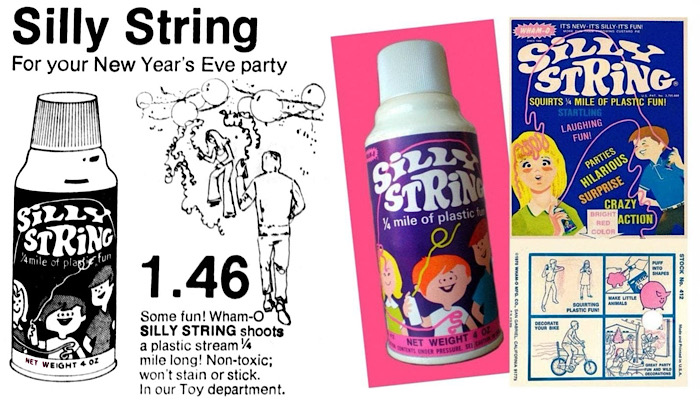
Silly String
The story of Silly Putty shares a little of its heart with the development of 1972’s Silly String. It’s the tale of inventors with a high-minded idea that simply didn’t do what they’d hoped. Inventor Leonard A. Fish and chemist Robert P. Cox wanted to create a spray-on medical cast for injured limbs. Yes, the idea was to develop a liquid that quickly solidified when sprayed onto sprained or broken body parts. Sadly, the liquid the duo created never served that high-minded purpose. However, after testing more than 500 combinations of liquid and nozzle, Fish and Cox accidentally produced a string that shot out for a full 30 feet!
The team went on to adjust the formula to make it less sticky and more colourful… And licensed the idea to Wham-O. As an interesting footnote to the story, Silly String did eventually end up saving limbs – and lives! In 1993, Sergeant First Class David B. Chandler, Chief Instructor of the United States Army’s Sapper Leader Course, had an interesting thought… What if the military could use Silly String to detect tripwires? It turns out that the novelty product is so light that it doesn’t break the tripwires that trigger explosions. As a result, the military has unofficially used Silly String to detect booby-trap triggers for a number of years.
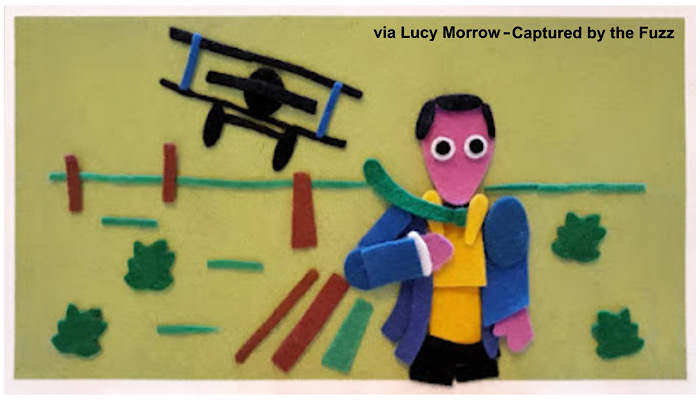
Fuzzy Felt
The simple-as-that toy Fuzzy Felt was invented during World War II by America’s Lois Allan, neé Day. Her job? Manufacturing felt gaskets to seal tank components! As she and her husband Peter went about this thankless business in the outbuildings of their UK home, Lois noticed that her colleagues’ children would often collect the felt offcuts… They would then stick these scrap pieces onto the backs of table mats. As good luck would have it, the backs of the mats were just fuzzy enough to hold the felt shapes in place temporarily.
Of course, Allan did more than just notice this. She recognised a commercial opportunity, and developed the idea into a creative, low-cost toy. When the war ended, Lois showed the idea to the buyers at esteemed UK retailers such as Heals and John Lewis. After Fuzzy-Felt hit the market in 1950, Lois and Peter went on to found Allan Industries Ltd. Fuzzy felt remained enormously popular in the UK for many years, then found wider success in the 1970s. The themed sets included On the Farm, Ballet, Bible Stories, Maths – and even Winnie the Pooh.
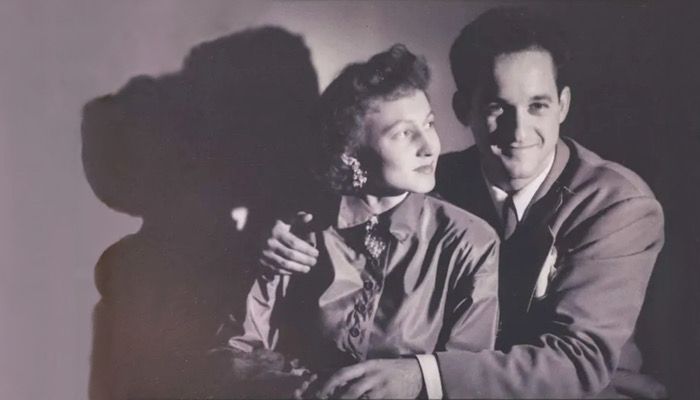
Colorforms
While Fuzzy-Felt took one side of the Atlantic by storm, Colorforms – its vinyl equivalent – dominated America. It was created in 1951 by husband-and-wife team Harry and Patricia Kislevitz. Facing the challenge of decorating their home cheaply, the pair of artists lucked out when the owner of a handbag factory gave them a roll of flexible vinyl! Using the vinyl on their bathroom walls, the duo quickly discovered how well vinyl stuck to itself and to other shiny surfaces. Somewhat unconventionally, the duo then started leaving scissors and pieces of the vinyl in their bathroom – and invited visitors to help create an ever-changing collage!
It didn’t take long for Mr. and Mrs Kislevitz to realise that this kooky idea might have some commercial value. The vinyl pieces clearly offered an easy, affordable and glue-free way to play. They duo began to market their idea in sets featuring bold colours and simple shapes against a black laminated backboard. Within short order, Colorforms became available in a wide range of theme-driven and character sets. Indeed, people now recognise Harry and Patricia as pioneers of toy licensing.
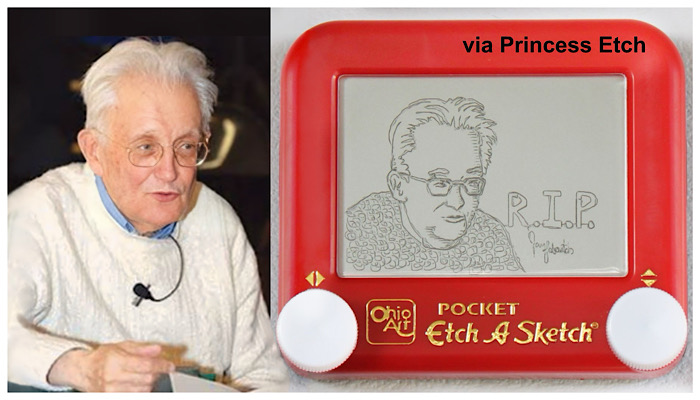
Etch-A-Sketch
Isn’t this list astounding?! Originally called L’Ecran Magique – The Magic Screen – the Etch-A-Sketch is capable of producing some mind-boggling drawings! The work of artist Princess Etch, for example, must be the envy of a whole generation of fans who never managed anything more exotic than a staircase… But the groundbreaking toy itself came about through quite a specific set of circumstances. In 1955, French electrician André Cassagnes noticed that when he touched some aluminium powder that was clinging to a sheet of plastic, it left a visible mark…
Realising that static electricity was making this possible, Cassagnes used his engineering know-how to develop his observation into a product. The original design employed two joysticks – not knobs – to control a stylus. The stylus then obligingly scraped aluminium powder from the underside of a glass screen. In due course, Cassagnes presented the toy at the 1959 Nuremberg Toy Fair. After the Ohio Art Company bought the rights for $25,000, they launched it in time for the 1960 holiday season… Companies have since sold over 175 million units.
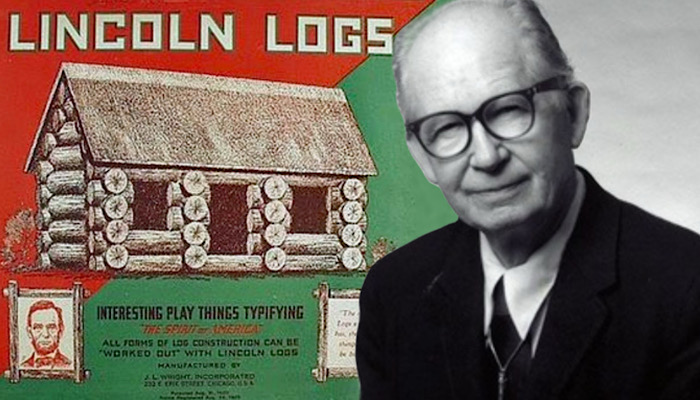
Lincoln Logs
What’s the connection between the architecture of Japan’s Imperial Hotel and Lincoln Logs? The answer is inventor John Lloyd Wright… John was the son of the famous architect Frank Lloyd Wright. In 1916, while Frank was working on plans for the Imperial Hotel in Tokyo, John noticed the unusual appearance of the building’s foundations. To help make the hotel more earthquake resistant, these used a ‘floating cantilever’ of interlocking beams!
Inspired by the visual of this design in his father’s architectural plans, John realised that it could serve as the basis of a children’s building toy. He eventually made the idea a reality, naming the toy Lincoln Logs and creating them out of redwood. John Lloyd Wright patented the idea as ‘Toy Cabin Construction’ on August 31, 1920. They officially launched to the public in 1924.
–
To stay in the loop with the latest news, interviews and features from the world of toy and game design, sign up to our weekly newsletter here
More Recent Feature


My mistake! Deej Johnson on the three questions you should ask before binning your blunders
Big mistake or great idea? What habitually creative people ask themselves when things go wrong…

More or Less…
Industry figures reveal what they’d like see more – and less – of from the industry in 2026…

Stuff We Loved: What are the industry’s favourite toy and game launches of 2025?
We asked figures in the industry for their favourite toy and game launches of the year. The only caveat… They couldn’t choose a product they were involved in!
Without a Clue: What does this extraordinary letter to Cluedo’s inventor tell us about the early days of the game?
We look at a letter sent to Cluedo inventor Anthony Pratt regarding sales – and rejecting his next idea…

Who had stuff we love at The Big Christmas Press Show? Deej Johnson offers a seasonal round up
Deej Johnson reports on a strong showing for toys and games at The Big Christmas Press Show.

As companies make decisions around the use of AI in their internal product development processes, is the role of external inventors more valuable than ever?
“If a company wants products with soul, story and a little magic, they’re still going to need us weirdos!”: Industry figures discuss the impact AI may have on the value of engaging with inventors.


Popular Articles

Bop It’s Dan Klitsner on creative techniques, his favourite inventions and more

FReNeTiC enjoys successful Board Game Club debut

The Bedlam Cube’s inventor, Bruce Bedlam, on staying creative – and why questions are key

Open Innovation and your intellectual property rights

Inka and Markus Brand on the origins of their escape room-inspired Exit: The Game series

Upcoming Events
-

- 30th January 2026
- Spielwarenmesse, Nuremberg
International Game Inventors Convention
-

- 19th - 21st May 2026
- Mandalay Bay Convention Center, Las Vegas
Las Vegas Licensing Expo
-

- 23rd - 25th June 2026
- Stamford Bridge Stadium, Chelsea, London
Play Creators Festival
-

- Tuesday, June 23rd, 2026
- Stamford Bridge Stadium, Chelsea, London
Play Creators Awards
-

- Wednesday, June 24th, 2026
- Stamford Bridge Stadium, Chelsea, London
Play Creators Conference
-

- Thursday, June 25th, 2026
- Stamford Bridge Stadium, Chelsea, London
Mojo Pitch
-

- 6th - 8th October 2026
- Excel London
Brand Licensing Europe