Play-Doh at 70
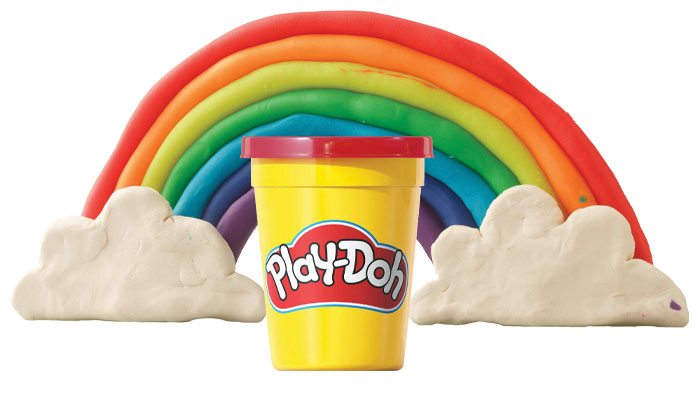
The Dutch have a saying: “Achter de wolken schijnt de zon.” Roughly speaking, it means “Behind the clouds, the sun is shining.” Which certainly proved to be the case for Cincinnati-based soap manufacturer Noah McVicker back in 1956…
Now, you may already know the name Noah McVicker. He’s widely acknowledged as the inventor of Play-Doh. In fact, though, Noah invented his pliable putty in the 1930s for just one reason… To help people dab soot off their wallpaper! Simply called Wall Cleaner, this idea did pretty well for Kutol Products, founded in 1912.
By the 1950s, though, many American homes had cleaner fuels and vinyl-based wallpaper. As a result, Kutol Wall Cleaner became an uncherished memory… Discontinued and not much missed! Indeed, Kutol itself soon teetered on the edge of bankruptcy. To help turn things around, Noah brought on board his nephew – Joseph McVicker. And this is where we meet the real hero of the story: Joseph’s sister-in- law, Kathryn ‘Kay’ Schwindt Zufall. As a nursery-school teacher, Kay read a magazine article on how teachers were using the putty as a craft toy. Curious, Kay took a tin to work and watched her class fashion the product into decorations. She then told her extended family about this extraordinary repurposing…
So while there’s no doubt that Noah invented the original compound, selling it as a toy was Kay’s idea. What’s more, it was Kay and her husband that suggested calling the new toy ‘Play-Doh’. Both Noah and Joe greatly preferred the name Kutol’s Rainbow Modeling Compound. Fortunately, the better name won out when Noah and Joe founded Rainbow Crafts Incorporated in 1956.
They began selling gallon-sized cans of Play-Doh to schools in blue, red and yellow. And so it was that the McVickers began to see the sun behind the clouds… Soon after that, the team invited TV personality Bob Keeshan to use Play-Doh on his show in exchange for a 2% take of the sales. Keeshan – better known as Captain Kangaroo – featured the product up to three times a week. This marketing masterstroke put Play-Doh on the map… And it’s really never been off the map since.
MOMENTS THAT SHAPED PLAY-DOH
1956
An Imagination Icon is Born
A happy accident changes play forever when a wallpaper cleaner becomes a tool for creative exploration. A new era of hands-on creativity is born.
1960
The Fun Factory Launches a Movement
The Fun Factory, Play-Doh’s first playset, redefines what it means to create something from your imagination. The extruder’s colourful ribbons and shapes create an experience… Not just a compound.
1979
Doctor Drill ‘n’ Fill Becomes a Playtime Classic
A playful twist on dentistry, Doctor Drill ‘n’ Fill merges design ingenuity and tactile fun. Decades on, it remains one of the brand’s most iconic playsets.
1986
The Yellow Can Becomes an Icon
With its bright hue and bold typography, the yellow Play- Doh can instantly becomes a design classic. Beyond packaging, it represents optimism, creativity and the joyful chaos of play…
1998
Hall of Fame Induction
Play-Doh is enshrined in the National Toy Hall of Fame! This isn’t just recognition of its nostalgic value… It’s also an acknowledgment of the brand’s impact.
2024
Confirming the Power of Imagination
The brand’s Imagination Research Initiative study shows how creative, tactile play helps children develop problem-solving, emotional expression and confidence.
2025 – 2026
Imagination in Motion
In 2025, Play-Doh expands through impactful licensing. Partnerships include a Disney Junior line for young children. Meanwhile, Play-Doh Barbie sets let older kids design imaginative fashions.
–
To stay in the loop with the latest news, interviews and features from the world of toy and game design, sign up to our weekly newsletter here
More Recent Opinion


Not All Fun and Games: Deej Johnson explains how you can start to break the Cycle of Depression
What small steps can you take to start to get out of a period of low mood? Deej Johnson explains.
Not All Fun and Games: In mental-health month, Deej Johnson explains the Cycle of Depression
How does depression start? Deej Johnson on anxiety, sleep and Psychological Basic Needs.
A Prickly Plan for Playground Popularity…
Sharp Sharp’s Steve McInerny looks at how three primary school children came up with a trading card craze at school.
Not All Fun and Games: In mental-health month, Deej Johnson looks at every human’s Psychological Basic Needs
Deej Johnson on the nine psychological needs humans must provide for in order to be content…

From Creator to Checkout: SituAction’s Nic Jones on how social commerce is empowering the next generation of innovators
SituAction’s Nic Jones looks at how the next great toy success story could begin not with a pitch, but with a post.

Making Things Studio’s Fi Murray sheds light on how she tackles that all important sizzle video
Making Things Studio’s Fi Murray on why today’s sizzle reels need to do much more than dazzle…
Popular Articles
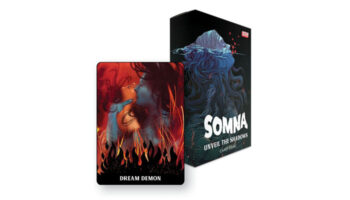
DSTLRY launches card game based on its award-winning Somna comic

Wow! Stuff to launch Fuggler Puppetronics in 2026
David Norman of Stormin' Studios on inventors, Orchard Toys – and shaking things up!
How Pass the Pigs brought home the bacon: David Moffat on olives, beer and 74 million swine
Hasbro partners with Nintendo for Legend of Zelda toys
Upcoming Events
-
- 30th January 2026
- Spielwarenmesse, Nuremberg
International Game Inventors Convention
-

- 19th - 21st May 2026
- Mandalay Bay Convention Center, Las Vegas
Las Vegas Licensing Expo
-

- 23rd - 25th June 2026
- Stamford Bridge Stadium, Chelsea, London
Play Creators Festival
-

- Tuesday, June 23rd, 2026
- Stamford Bridge Stadium, Chelsea, London
Play Creators Awards
-
- Wednesday, June 24th, 2026
- Stamford Bridge Stadium, Chelsea, London
Play Creators Conference
-
- Thursday, June 25th, 2026
- Stamford Bridge Stadium, Chelsea, London
Mojo Pitch
-

- 6th - 8th October 2026
- Excel London
Brand Licensing Europe