Not All Fun and Games: In mental-health month, Deej Johnson explains the Cycle of Depression

Have you had thoughts of suicide or self harm? If so, call the Samaritans in the UK on 116 123, or the emergency services on 999. If you’re in the US, call 988 Suicide and Crisis Lifeline on 988. Please do that now.
Of all the things I’ve written for Mojo, this might be the most important. Why? Because it’s said that one in ten of us experiences an episode of depression in their lifetime. Meanwhile, millions more can benefit from learning how to support someone they know. And despite all the fun that’s to be had in the toy industry, no one can become totally immune to the symptoms of depression…
These include feelings of emptiness, loss of interest in activities, low energy, sleep problems, changes in appetite, difficulty concentrating and feelings of worthlessness or guilt. No matter where someone sits on the spectrum of low mood, these are common, treatable symptoms… This article – one of three – shows how rumination, anxiety and poor-quality sleep contribute to the Cycle of Depression – a complex issue affected by biology, psychology and life circumstances.
Who’s this piece for? And why’s it so short?
Although it’s not a substitute for medical advice, I’ve written this thinking of people who have shown symptoms of depression for two weeks or more. It’s especially intended for those whose daily functioning – work, relationships, self-care and so on – are affected, or those supporting others in that situation.
This article is short because I want readers to feel it’s manageable. For many going through a period of low mood, it’s not easy to find the energy to take helpful actions. Please remember, though: Although depression is common, it is treatable… People do recover from it, especially when they get support. That being the case, if you get the sense it’s time to speak to a doctor or someone you trust, please do that. Otherwise, you can get the gist of this in just a few short paragraphs.
The Cycle of Depression: How Does it Start?
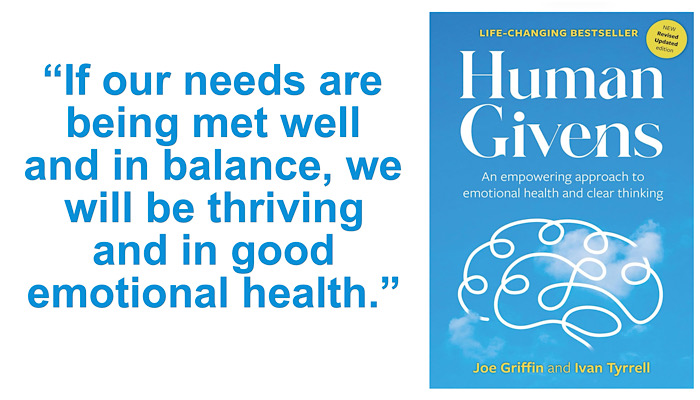
Depression is a complex issue. However, Human Givens therapists suggest that we each have a number of Psychological Basic Needs… And that we have innate resources to help meet those needs. You can understand a little amount about how this works here. In short, though, if some of these needs go unmet, people may find themselves more vulnerable to issues such as addiction and depression.
With depression specifically, a troubling matter – real or imagined – causes some people to ruminate. They find themselves dwelling on problems to an unhelpful degree. Subsequently, in trying to process the day’s emotional arousal as they sleep, their brains don’t get enough high-quality sleep. Instead, they get too much of what’s known as Rapid Eye Movement or R.E.M. sleep. As a result, they find themselves waking up exhausted, still emotionally aroused and less able to resolve their issues.
Consequently, the person then lacks the energy needed to take useful action, see helpful people, effect solutions or do enjoyable things. Consequently, more and more of their Psychological Basic Needs go unmet… This causes further rumination and anxiety – and it becomes harder to break the cycle.
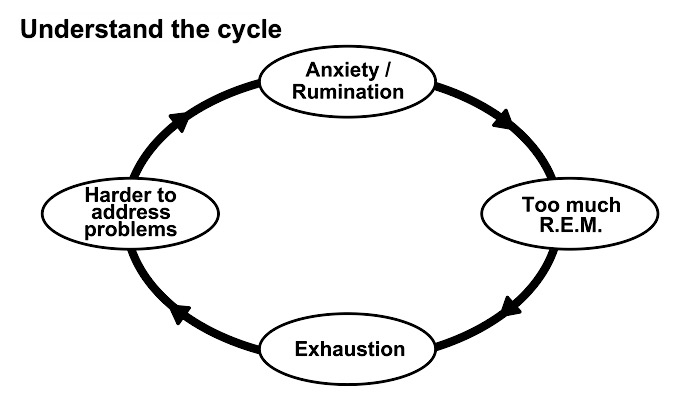
Do some of these symptoms feel familiar? If so, you may want to read about how you can start to break the cycle here, or wonder if you need to get professional help. My suggestion would be that you do seek help, particularly if you find your symptoms have:
• Lasted more than two weeks
• Worsened, despite small steps
• Led to ANY thoughts of self-harm
• Interfered with work, relationships, or sleep
Finally, I’m well aware that some readers may have felt hesitant or uncertain about looking to get help. Now, you may be surprised how much even a short, confidential conversation with your doctor can help. You don’t have to commit to long-term help, but your doctor should be able to explain how you can take other small, positive steps. That’s also true of a therapist, of course. Therapy isn’t about you being analysed: it’s a structured way to get practical help.
——-
Deej Johnson holds a diploma in Brief, Solution-Focused Hypnotherapy. Nevertheless, neither Deej nor Mojo Nation can accept responsibility for the consequences of any action or inaction based on the information presented here. If you have any doubts or concerns over medical and health issues, our best advice is to get professional help. In the US, call 988 Suicide and Crisis Lifeline on 988. In the UK, dial 999 in an emergency. Alternatively, call the Samaritans on 116 123, visit your GP or call NHS Direct on 111 to discuss your health.
–
To stay in the loop with the latest news, interviews and features from the world of toy and game design, sign up to our weekly newsletter here
More Recent Opinion


Not All Fun and Games: Deej Johnson explains how you can start to break the Cycle of Depression
What small steps can you take to start to get out of a period of low mood? Deej Johnson explains.
A Prickly Plan for Playground Popularity…
Sharp Sharp’s Steve McInerny looks at how three primary school children came up with a trading card craze at school.
Not All Fun and Games: In mental-health month, Deej Johnson looks at every human’s Psychological Basic Needs
Deej Johnson on the nine psychological needs humans must provide for in order to be content…

Play-Doh at 70
Deej Johnson on the amazing origins of the world’s favourite compound.

From Creator to Checkout: SituAction’s Nic Jones on how social commerce is empowering the next generation of innovators
SituAction’s Nic Jones looks at how the next great toy success story could begin not with a pitch, but with a post.

Making Things Studio’s Fi Murray sheds light on how she tackles that all important sizzle video
Making Things Studio’s Fi Murray on why today’s sizzle reels need to do much more than dazzle…
Popular Articles
A Prickly Plan for Playground Popularity...

Educational Insights’ Lisa Guili on TikTok, 20 years of Kanoodle – and ten million units sold

Hasbro partners with Nintendo for Legend of Zelda toys

Not All Fun and Games: In mental-health month, Deej Johnson explains the Cycle of Depression
Bop It’s Dan Klitsner on creative techniques, his favourite inventions and more
Upcoming Events
-

- 30th January 2026
- Spielwarenmesse, Nuremberg
International Game Inventors Convention
-

- 19th - 21st May 2026
- Mandalay Bay Convention Center, Las Vegas
Las Vegas Licensing Expo
-

- 23rd - 25th June 2026
- Stamford Bridge Stadium, Chelsea, London
Play Creators Festival
-

- Tuesday, June 23rd, 2026
- Stamford Bridge Stadium, Chelsea, London
Play Creators Awards
-

- Wednesday, June 24th, 2026
- Stamford Bridge Stadium, Chelsea, London
Play Creators Conference
-

- Thursday, June 25th, 2026
- Stamford Bridge Stadium, Chelsea, London
Mojo Pitch
-

- 6th - 8th October 2026
- Excel London
Brand Licensing Europe