Raymond Guo, Senior Staff Designer at Spin Master, talks innovation, creative freedom – and Hatchin’ Yoshi
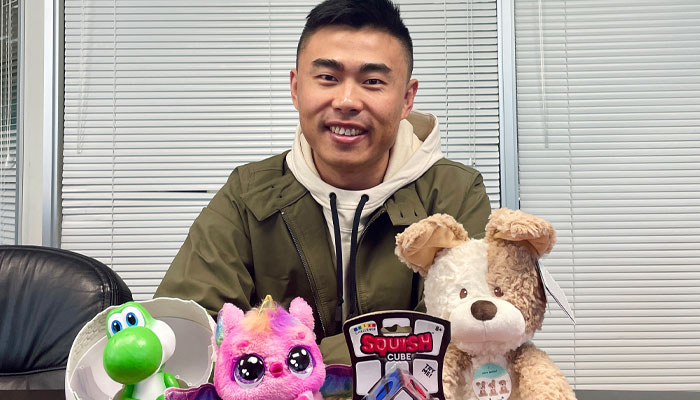
Raymond, it’s great to connect. To kick us off, talk me through your role at Spin Master?
I work as a Senior Staff Designer within the Bay Area Innovation Center (BAIC), the company’s centralised innovation and design group. BAIC supports multiple brands across Spin Master, so rather than being tied to a single IP, we collaborate with different internal teams to explore new product concepts, play patterns, and innovation opportunities.
My role sits at the intersection of concept development and mechanism design. Roughly 20% of my work is focused on early concept design, helping define what the play experience could be and how a product might emotionally connect with kids. The other 80% is spent on mechanism and system design, figuring out how to actually make those ideas work reliably, safely, and at scale.
I’m often involved from the earliest stages of a project, visualizing ideas and communicating intent before any physical prototyping begins. This helps teams react to a concept early, align on direction, and identify potential challenges long before engineering or tooling starts.
From there, I work closely with engineers, inventors and brand teams to translate those concepts into functional designs. That includes developing mechanisms, defining interactions, building prototypes, and iterating through testing. A big part of my job is bridging the gap between abstract ideas and something tangible, making sure the core play value survives the realities of engineering, cost and manufacturing.
BAIC sounds like a special place to work!
What makes BAIC unique is that we operate as both a creative partner and a technical problem-solving group. We’re often brought in when a brand team has a strong creative vision, but needs help turning that vision into a working product. Because we work across many brands and categories, we’re able to apply learnings from one project to another, which keeps the work fresh and constantly evolving.
On a day-to-day basis, that means a mix of concept exploration, visual storytelling, CAD, rapid prototyping and cross-functional collaboration. Ultimately, my focus is always on making sure the final product delivers a clear, intuitive, and repeatable play experience – while still being realistic to manufacture and scale globally.

What were some highlights from the past year for you?
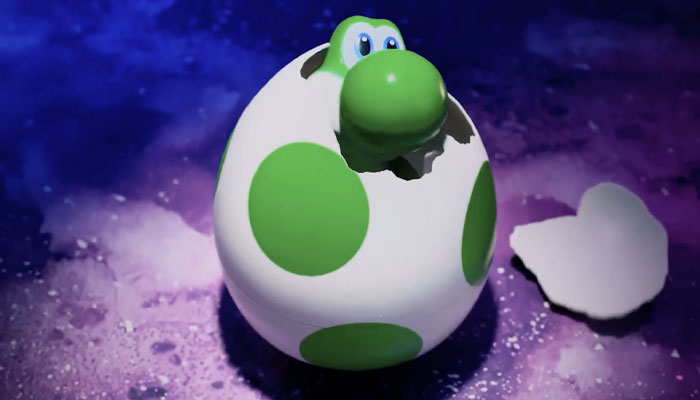
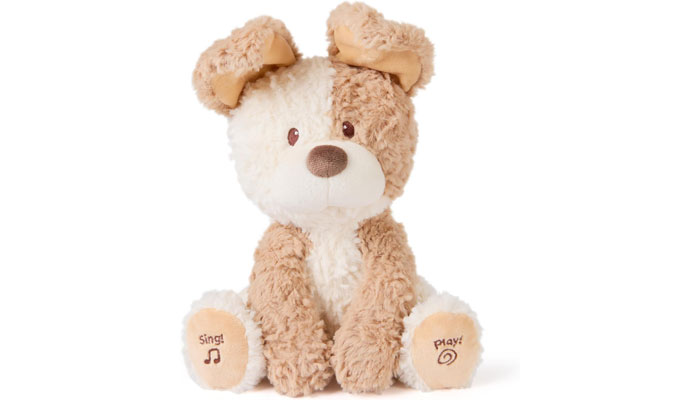
One highlight from the past year was seeing GUND’s Peeki the Puppy release. I was involved in the project, so it was really satisfying to see something I worked on reach the market and connect with consumers. I also worked on a major movie-related product for The Super Mario Galaxy Movie – the Hatchin’ Yoshi – which I was involved in the mechanism design process.
Yes that looked terrific!
Thanks! The timeline was extremely tight because we had to align with the film release while also accounting for manufacturing lead times. There wasn’t much margin for error, but through strong collaboration across different departments, especially with our Asia team, we were able to deliver the design on schedule.
When we later saw Yoshi appearing prominently in the trailer, the whole team felt incredibly proud and excited – it’s always special when you see something you helped create become part of a global entertainment moment.
How do you approach bringing innovation to established Spin brands? What helps keep things fresh?
It often comes from looking at the brands from different angles rather than trying to reinvent everything at once. These brands are just examples – the real goal is understanding the core experience and then exploring new ways to express it.
With Hatchimals, for instance, the essence of the brand isn’t actually the egg itself – it’s the nurturing and caring journey that leads to a character being ‘born’. Once you understand that, innovation can come from many directions. The hatching could happen through an egg, but it could also be a completely different form, as long as there’s a process where the child provides care and anticipation before the character comes to life.
Similarly, each generation can shift tone – one might lean more toward fantasy creatures, another toward real animals… One could emphasise a cute, nurturing personality, while another might explore a more mischievous or playful character. These directional changes help keep the brand fresh without losing its identity.
You mentioned the GUND item earlier – how do you tackle innovation there?
With GUND, innovation often comes from small but meaningful interactions. Because plush is fundamentally about emotional connection, even simple movements can create a strong impact. We might explore motions like ear movement, blinking eyes, mouth reactions, arm gestures, leg kicks or waist twisting – behaviours that mimic babies or pets and naturally attract attention. The challenge is finding movements that feel alive and emotionally engaging while still being manufacturable and reliable.
Another important part of keeping things fresh is recognising that not every good idea belongs to the brand you’re currently working on. Sometimes we develop concepts that don’t quite fit a particular line, but we still see strong potential in them. Those ideas often get saved and later become starting points for new product lines or entirely new brands. Innovation in a large company is often cumulative – ideas evolve over time and eventually find the right home.
Overall, freshness comes from continuously exploring new expressions, new behaviours and new emotional tones, while respecting what made the brand successful in the first place.
Spin has a long-standing reputation for innovation. How have you seen that manifest in the culture there?
What makes Spin Master exciting to work at is the combination of creative freedom and real-world impact. You’re encouraged to explore bold ideas, but you’re also designing products that will actually reach kids around the world, not just stay as concepts. Through teams like BAIC, we’re given the space to experiment with new play patterns, mechanisms and technologies, and to take ideas very early – sometimes from a sketch – all the way to production-ready designs.
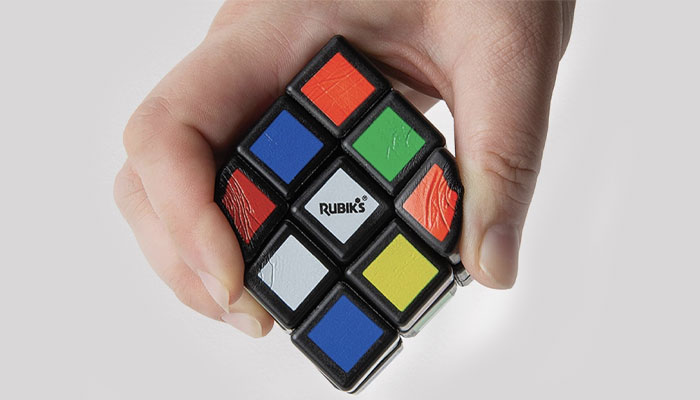
Another exciting part is the breadth of brands and categories. I might be working on something classic like Rubik’s Cube, something character-driven like Hatchimals, something plush and emotional like GUND, or some completely new movie-related concepts. That variety keeps the work fresh and constantly pushes me to think differently as a designer and engineer.
I bet – keeps you on your toes!
Yes – and there’s a strong respect for design and play, but also a clear understanding of manufacturing realities, safety and scalability. That tension forces you to become a better designer, because ideas have to survive the real world. And even though some of us hold the title of designer, we’re also encouraged to do a lot of toy engineering. Conversely, our engineers are encouraged to present their toy concepts in brainstorming meetings. We’re not limited by our titles or backgrounds, which fosters a very collaborative and creative environment.
Finally, the people make a huge difference. I work with designers, engineers, inventors and brand partners from many different backgrounds, and that mix of perspectives leads to better products. There’s a shared goal of making things that are joyful, intuitive, and meaningful for kids – and that sense of purpose is something I find very motivating.
What set you on the path into toy design? Was it always on the cards?
I wouldn’t say toy design was something I planned from the beginning, but creativity and building things were always part of my childhood. Growing up in China, I spent a lot of time taking toys apart, modifying them and figuring out how they worked, especially mechanical ones. Like many kids, I was surrounded by toys and animated shows, and I loved imagining new play scenarios, even though I never thought of it as a future career at the time.
I studied Industrial Design for my bachelor’s degree in Shanghai, where my focus was more on general product design rather than toys specifically. After graduating, I joined Hasbro China almost by coincidence. At first, I worked on importing animated content like Transformers and My Little Pony into the Chinese market, and later transitioned into a toy sales role supporting Toys“R”Us China. Through that experience, I realised that my product design background helped me better understand play patterns, product positioning, and why certain toy lines resonated with kids and parents.
That experience pushed me to pursue a master’s degree in Industrial Design in the US, where I began focusing more intentionally on children’s products. During that time, some of my student projects, including Sprout and Buggie – both kid-focused designs, with Buggie specifically developed as a toy concept – received design awards, which helped reinforce that I was moving in the right direction.
While studying, I interned at Hasbro headquarters and worked across teams including Playskool Hero and Marvel, as well as projects related to Star Wars and Jurassic Park. Seeing how global IPs were translated into real play experiences gave me a much deeper understanding of what toy design really involves.
So while toy design wasn’t always on the cards from day one, each step naturally led me closer to it. What started as a coincidence gradually turned into a clear passion and career direction.
Last question! What fuels your creativity?
Creativity for me comes from a mix of observation, curiosity and problem solving rather than sudden inspiration. I’m sometimes inspired by things outside the toy industry. Mechanical products, consumer electronics, social media trends, movies, animation and even small everyday interactions can trigger ideas. Sometimes a mechanism from a completely unrelated category can be adapted into a toy in a new way. That kind of cross-pollination is often where interesting concepts come from.
Another factor that fuels my creativity is my cultural background. I grew up in Shanghai, and the toys, cartoons and movies I experienced as a child were quite different from what many designers in North America grew up with. That gives me a slightly different library of references when brainstorming. Sometimes I’ll connect ideas across cultures in ways that aren’t obvious, and those perspectives can lead to fresh directions.
Ultimately, what motivates me most is turning an abstract idea into something tangible – when a mechanism works for the first time, or when someone interacts with a prototype and smiles. That moment of transformation from concept to real experience is incredibly rewarding.
Terrific. Raymond, thanks again for taking time out to chat.
–
To stay in the loop with the latest news, interviews and features from the world of toy and game design, sign up to our weekly newsletter here
More Recent Interview

Sidekick Games’ Asger Harding Granerud on Tembo, Hutan – and 10 years of Flamme Rouge
“We were looking at games we were pitching to other publishers and at some point said: ‘Maybe we can do this ourselves…’”: In conversation with Sidekick Games’ Asger Aleksandrov Granerud.
Open 2 Design’s founder, Matt Burtonwood, on creative partnerships – and the joy of collaboration
From Fisher-Price to AI: why award-winning inventor Matt Burtonwood feels sharing ideas beats going it alone.
Game designer Luca Borsa on the magnetic magic of Geistertanz
Designer Luca Borsa talks us through recent launches including Megableu’s Geistertanz and Blue Orange’s Ice Split.
Gurdeep Bains – Creative Director at YuMe Toys – on creating collectibles with staying power
“A good collectible used to be about likeness, now it’s more about interpretation”: In conversation with YuMe Toys’ Gurdeep Bains.
“I see faces everywhere!”: Zack Buchman – Creative Director at Furry Puppet Studio – on creating characters
“I look at a plug socket and my brain turns it into a character!”: In conversation with Furry Puppet Studio’s Zack Buchman.
“It’s the gift that goes on giving!” Artist Emily Abeydeera on biros, experiences… And Disney Lorcana
Illustrator Emily Abeydeera reveals the one thing she always does creating Disney Lorcana cards.
Popular Articles
Pablo Clark discusses the six-year development journey behind the game design – and art – of The Old King's Crown
Ravensburger details influencer initiatives for Disney Lorcana

The Happy Accident: Deej Johnson explores a dozen toys and games that came about by mistake
GALLERY: Play Creators Conference 2026
"Great play experiences are timeless": PlayMonster CEO Jonathan Berkowitz on the return of Hacky Sack
Upcoming Events
-
- 30th January 2026
- Spielwarenmesse, Nuremberg
International Game Inventors Convention
-

- 19th - 21st May 2026
- Mandalay Bay Convention Center, Las Vegas
Las Vegas Licensing Expo
-
- 23rd - 25th June 2026
- Stamford Bridge Stadium, Chelsea, London
Play Creators Festival
-

- Tuesday, June 23rd, 2026
- Stamford Bridge Stadium, Chelsea, London
Play Creators Awards
-
- Wednesday, June 24th, 2026
- Stamford Bridge Stadium, Chelsea, London
Play Creators Conference
-
- Thursday, June 25th, 2026
- Stamford Bridge Stadium, Chelsea, London
Mojo Pitch
-

- 6th - 8th October 2026
- Excel London
Brand Licensing Europe