Rebel Play Studio’s Laurie Peterson and Alvaro Gonzalez talk Sneaky Scallywags, Packing Panic and fuelling creativity
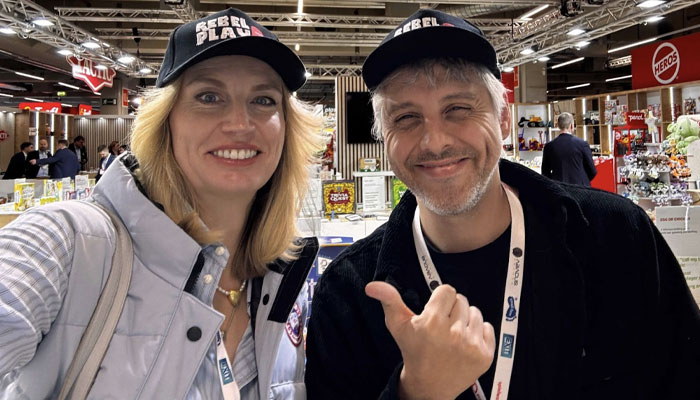
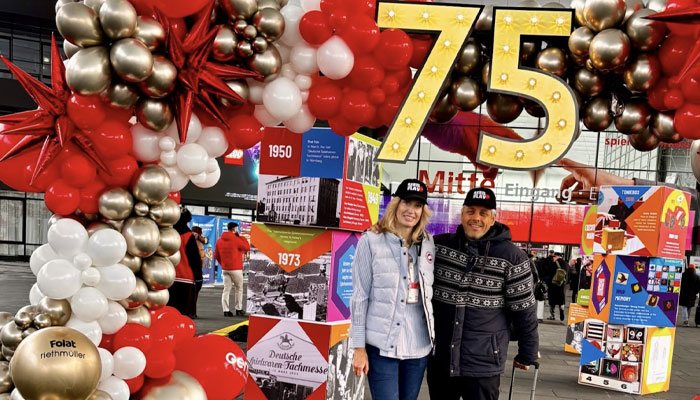
Guys, it’s great to catch up. We caught up back at Spielwarenmesse – and that was also your first time meeting in person! So what brought you together to launch Rebel Play Studio?
Laurie: Alvaro and I met working for a former Leapfrog colleague, Tim Martin, at FS Studio – a technology R&D firm that did work for Spin Master, Hasbro and many more. Alvaro was the Head of Product and I was an interim COO helping to shift the studio towards becoming an XR solution provider. We teamed up to put together an all company presentation announcing the shift, and from day one, collaborating was easy and our skills complimentary.
Meanwhile, it turned out that Alvaro was harbouring a secret desire to become a toy inventor. After selling my start up, Build & Imagine, I had needed a break – and didn’t have any intention of getting back in the industry as I felt there were stronger entrepreneurial opportunities elsewhere… But the pull of this industry, and Alvaro’s influence, was strong. After a year of casual phone calls we decided to give it a go as inventors.
And yes, we met for the first time properly at Spielwarenmesse – he is from Uruguay and I am US, so we hadn’t had the opportunity to meet up IRL before.
Alvaro, on your secret aim to invent toys, what helped that become a reality?
Alvaro: Well, while building my own creative studio – One Tango Studio – I started moving closer to the toy industry, attending pitch events like Mojo Pitch, prototyping and learning the rhythms of the category. But I felt something was missing… That creative back and forth that takes a concept from ‘good’ to ‘oh wow.’ There was also a geographic reality – as Laurie mentions I’m based in Uruguay, and the industry can be very North America and Europe centric. Then Laurie and I met at FS Studio, and it clicked immediately. And the best part is that our skills are genuinely complementary, so we move faster together than either of us could alone.
And just quickly on the market being North America and Europe centric – do you feel there’s potential for the industry to expand and properly thrive in Latin America?
Alvaro: Absolutely – I’d love to see that shift over the next decade, because there’s an incredible amount of creative talent in Latin America. It’s a real, under-tapped source of fresh ideas.
Now, for anyone new to Rebel Play Studio, how would you describe where your focus lies? What sorts of things are you drawn to invent?
Laurie: I would say we’re a big idea studio. We play in all toy and game categories, and we tend to follow our passion, as well as what we see as gaps in the marketplace. With a background as an entrepreneur and an MBA from UC Berkeley, when we pitch it’s rarely just pitching a mechanism. We pitch a market opportunity. This gets companies very excited, but the inventor relations people sometimes don’t know what to do with us!
Alvaro: It’s true! We constantly remind ourselves why we’re doing this, and we measure every decision against our passion and health meter.

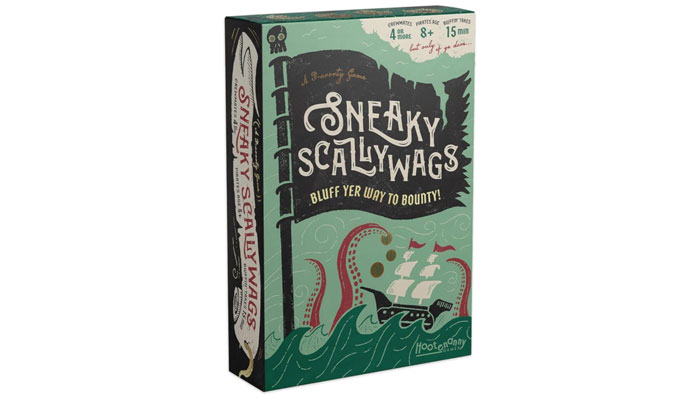
Let’s dive into a new launch from you guys – Sneaky Scallywags, published by Hootennany Games. For anyone new to this game, how would you pitch it?
Laurie: I think this game will feel pretty different from any you’ve played before! Imagine you are a pirate at a pub, and a rival crew has challenged you to compete for a pile of gold doubloons. To win the gold? Guess which rival’s hand hides the coin as they perform synchronized hand gestures like “Swab the Deck” and “Sails Up”. Beware, some coins are cursed.
Alvaro: And I have to give a huge shout-out to Hootennany. The art and presentation they delivered is gorgeous and elevates the whole experience.
Laurie: Yes, you couldn’t ask for kinder and more capable people to work with than Whitney and Alex Kimerling at Hootennany.
Absolutely – we’re big Hootenanny fans here too! And how did this idea come about?
Laurie: When we showed this game at POP in Chicago, there was strong interest. But it was Whitney and Alex who came by multiple times, so I sent them home with the prototype even though I had promised it to another company. It was a smart choice!
And deep in its core, Sneaky Scallywags holds a moment of my childhood. For a few summers, my extended family gathered at a lake house and after dinner we’d sit around a very long table. I was one of the youngest cousins, and my favorite game those summers was one in which I got to be part of a team, grouped with my older cousins and sister – I felt so cool! When it was our team’s turn, we’d huddle under the table and secretly pass a quarter into one of our hands. We’d then all slam our hands down on the table at the same time, and the opposing team would try to point to the hand with the quarter. Looking back, I bet it was the adults’ after dinner drinking game! But for me, it was a chance to be part of a team and feel connected to these family members that I only got to see once a year… I hope Sneaky Scallywags makes some young cousin or sibling out there feel very cool to be part of a team.
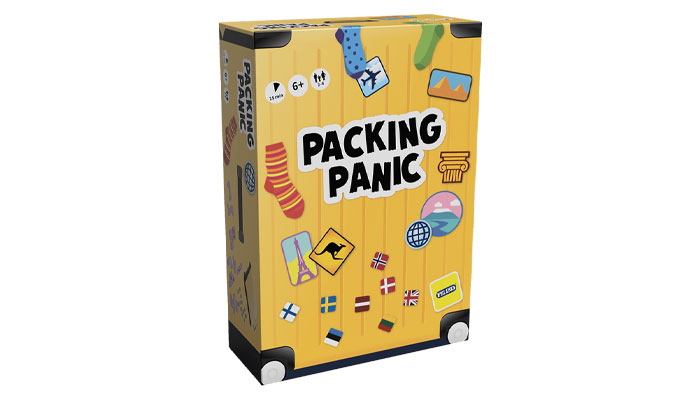
Terrific! Another new arrival is Packing Panic, published by Martinex. What was the spark of inspiration for this fun puzzling game?
Alvaro: I was packing for a trip to Buenos Aires for a Web3 conference and I hit that perfect suitcase close – no sitting on it, no second try. I felt like a genius for five seconds… Then I looked over and saw the socks and underwear still waiting and thought, of course! That was the whole epiphany.
Packing is basically a puzzle people do in real life, and it has this weird satisfaction to it. So we turned it into a game that makes you feel smart, but plays fast and casual – with speed, tight packing and the universal joy of squeezing in just one more sock. Actually, Jenni from Martinex was telling us the exact same story last month as Spielwarenmese!
Laurie: When Alvaro was sharing this game idea with me, the moment he got to: “And then you squeeze in as many socks as possible!” was the moment I knew we had something. I love that there is no one way to solve the puzzle, allowing for flexibility and creativity to shove in socks. It’s a cozy game, with head-to-head competition.
Both Packing Panic and Sneaky Scallywags have themes that make the gameplay feel incredibly intuitive. How important is theme during your creative process?
Laurie: Thank you! Interestingly enough, Sneaky Scallywags started as a totally different theme. I called it Hide Your Emojis. I pitched it a few times and it fell flat… When I teamed up with Alvaro, I told him how much I cared about the game and he suggested we rework the theme, tinker with the rules and try again. When we landed on the pirate theme, it felt like such a natural fit for the gameplay, that I was like “Duh!” Imagining the players as pirates in a pub competing for a pile of gold coins makes the play experience so much more immersive.
And you are right that theming can help the game feel intuitive – but in some cases, heavy theming can work against the game and bog it down. Just this week, we stripped the narrative from one of our games and now I think it is 10 times better. It’s really a case by case basis about letting the game be what it wants to be.
Alvaro: For us, theme is less decoration and more alignment. When a theme is truly compatible with the mechanic, it makes the rules feel obvious because the fiction gives the player permission. When we force a theme onto a mechanic that did not ask for it, people feel it instantly. Call it vibe, energy or ectoplasm, but it’s real. So we’re very willing to re-theme, strip back or rebuild until the theme and the core action click into one clear identity.
What does the collaborative design process look like between you guys?
Laurie: Tons of messages on Slack. Fast paced revisions. No idea is sacred. Find the fastest path to validate a concept. Only work on what we enjoy.
Alvaro: I would add that it’s all about trust, respect and profound admiration from one another.
And you’ve both done a lot of pitching. What qualities do you feel the best Inventor Relations execs have?
Laurie: My answer is really about who is a good fit for Rebel Play, rather than speaking generically. Because we are a big idea studio, we work best with inventor relations execs who are open minded to consider new brands, new technologies and even new categories – versus looking narrowly to fill a sku spot in an existing line. It’s always great when IR knows what they want and can articulate that clearly, but we also appreciate when they are willing to go offscript to explore new possibilities. The team at Educa Borras is a good example of this. We have a big initiative with them in the works. Despite being one of the oldest toy companies, Educa Borras doesn’t shy away from innovation.
Alvaro: Yes, they were genuinely curious and willing to build with us, not just evaluate our pitch. I like it when IR can recognize when an idea is not simply a mechanism, but a new play pattern or even a new brand opportunity. They communicate clearly, move decisions forward – and upward – and they are comfortable taking smart risks.
What fuels your creativity? What helps you have ideas?
Laurie: Alvaro fuels it! In my career I’ve always gone into a quiet corner to find creativity on my own. Now working with Alvaro, I find creativity through our back and forth, riffing on ideas over Slack. The ideas come from many places. Sometimes it starts with a product name, other times an insight about what’s lacking in a category. Most touching is when it comes from our experience as parents, as it does for a feature plush we’re developing now in collaboration with Troy Fischer at Fishco.
Alvaro: Becoming a parent changed my creative process in the best way. I have a two-year-old, Timoteo, and suddenly, time became the scarcest resource. Before, I could circle an idea for weeks, twisting it, polishing it and sometimes even getting bored of it before it ever became real. Now I move faster. I commit sooner, prototype sooner and test sooner. That constraint made me more decisive and more confident as a creator, because the goal is no longer perfection; it is momentum and clarity. So thanks, Timoteo!
To wrap up, was toy or game design always on the cards for you both? How did you enter this space?
Laurie: Soon after college, I moved to San Francisco and was trying to get a job in web design. One of my classmates from my “Computing in the Arts” major was working for the educational electronic toy company Leapfrog. At the time, they were a fast-growing start-up, on their way to becoming a top three toy company. After no fewer than 13 interviews, I got hired on as a Producer and helped to launch five new gaming systems and eight software titles, including the Leapster, Fly Pentop Computer, Quantum Pad and My Own Learning Leap.
I later founded my own toy start-up called Build & Imagine, which was an award-winning line of magnetic doll houses that was picked up by major retailers and was eventually acquired. I won a TAGIE for Build & Imagine and I was lucky to be a part of many TOTY nominees and winners at both Leapfrog and Build & Imagine.
Alvaro: I entered the industry through video games. I started as an artist at a casual game studio called Kef Sensei and quickly moved into game design, back in the pre-smartphone era. That period was an incredible training ground, fast iteration, tight constraints and a constant focus on what makes people want to come back and play again. I had the chance to work on well-known franchises like Diner Dash and Scrabble.
After several years, I founded my own studio, One Tango Studio, where I developed entertainment projects and sharpened the craft of pitching, not just ideas, but complete experiences. Along the way I designed gamified and immersive work for partners like Kaiser Permanente, Meta, and Sony Pictures’ Ghostbusters, and I also developed Web3 driven experiences with the renowned author Neal Stephenson. That mix of design, production, and teaching is what eventually pulled me toward toys and games, tangible play, shared moments, and products that live in people’s homes.
Guys, thanks again for taking time out to chat.
–
To stay in the loop with the latest news, interviews and features from the world of toy and game design, sign up to our weekly newsletter here
More Recent Interview


Inventor Mandela Fernández-Grandon on design, collaboration and the joy of playtesting
“Working with others offers a list of benefits…” In conversation with Mandela Fernández-Grandon.

Dina Al Rifai – Creative Director at The Loyal Subjects – on how being a collector shapes her approach to design
“I usually start with the emotional hook – what is this product supposed to make someone feel?” In conversation with The Loyal Subjects’ Dina Al Rifai.

“Play is evolving…”: Hasbro’s Tim Kilpin talks kids, Kidults and KPop Demon Hunters
Tim Kilpin, Hasbro’s President of Toys, Board Games, Licensing and Entertainment, on recent highlights – and things to get excited about.

Spin Master’s Angus Walker on bringing classic horror brands into TCGs with Hellbreak
“Faithfully representing these beloved characters was our design team’s top priority”: Angus Walker – VP, Marketing & GBU Lead, Games & Outdoor at Spin Master – talks Hellbreak.

As he retires, Make It Real’s Dominique Roy reflects on career highlights, mentors and lessons
“Even though you design something once, the injection machine will produce one unit every 30 seconds – that’s a serious responsibility”: In conversation with Dominique Roy.

Zatu Games’s Rory Kelly on Yubibo, demoing games and celebrating ten years in the industry
“If someone can explain a game in 30 seconds, I’ve done my job.” Catching up with Zatu’s Rory Kelly.


Popular Articles

Spirograph at 60: Meet Duncan Fisher, son of Denys Fisher – the inventor of Spirograph, Cyclex and Stickle Bricks!
Mini Brands Really Works Vinyl represents "major step forward for the brand", says Zuru

Zuru's Starbox collectibles brings together "elevated design, strong storytelling and trend-led play patterns"

Zuru readies NFL Ballers

Bop It’s Dan Klitsner on creative techniques, his favourite inventions and more

Upcoming Events
-

- 30th January 2026
- Spielwarenmesse, Nuremberg
International Game Inventors Convention
-

- 19th - 21st May 2026
- Mandalay Bay Convention Center, Las Vegas
Las Vegas Licensing Expo
-

- 23rd - 25th June 2026
- Stamford Bridge Stadium, Chelsea, London
Play Creators Festival
-

- Tuesday, June 23rd, 2026
- Stamford Bridge Stadium, Chelsea, London
Play Creators Awards
-
- Wednesday, June 24th, 2026
- Stamford Bridge Stadium, Chelsea, London
Play Creators Conference
-

- Thursday, June 25th, 2026
- Stamford Bridge Stadium, Chelsea, London
Mojo Pitch
-

- 6th - 8th October 2026
- Excel London
Brand Licensing Europe