Ben Krenz – Global General Manager, Games – on his approach to finding new products for Moose
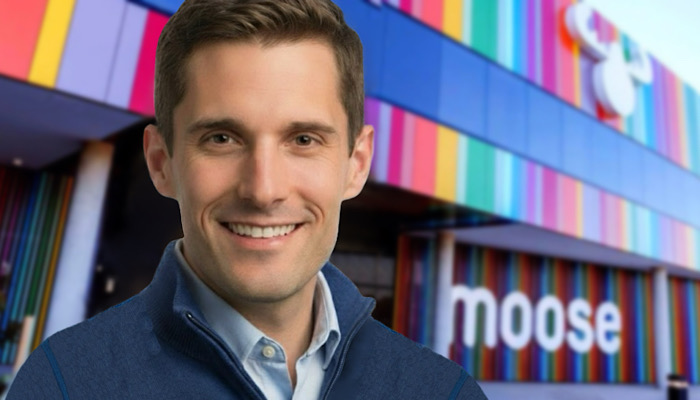
Thanks for joining me, Ben. You’re fresh off the back of New York – was that your first toy fair?
It was my first toy fair on the manufacturer’s side, yes. I think it was my fifth or sixth in total; the others were on the retail side of the equation. I was a buyer at Target, then I led their team of buyers at Boys Toys which included games, action figures, trading cards, vehicles, blasters and so on.
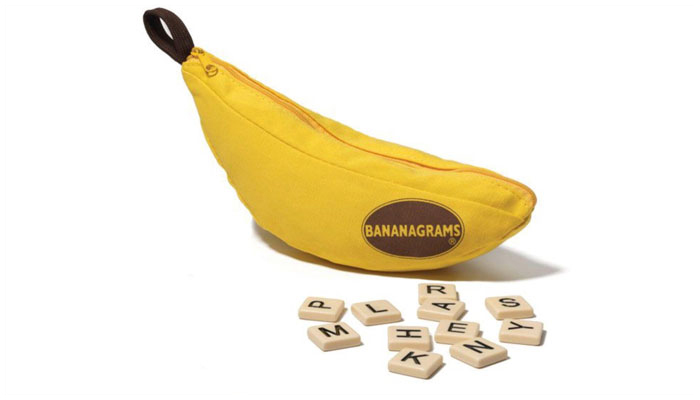
Well, we should come to that. Let’s start with Moose’s acquisition of Bananagrams back in July. What motivated it?
The evergreen nature of it! It’s an item that’s been out there for 20 years and, as I’m coming into Moose and look forward in our line planning, we’ve had a ton of success in licensed preschool… But like any good game company, we’re trying to find ways to get really strong foundational building blocks. That includes evergreen properties that can exist year after year; properties that people come back to play and recommend. We’re still a pretty new game company though… We stood up in business about three years ago – and you can’t be evergreen when you’ve only been in existence for three years. So we wanted to look at what was out there.
And how did you zero in on Bananagrams?
We’d been doing the Australian distribution with the co-inventor, Rena Nathanson, for years – so we had a good familiarity on how it resonated with customers. And obviously, people could see its performance in the US and other regions. Also, it was a really good fit and foundational building block to for what we’re moving towards in the future.
That’s great. Now Bananagrams has the main game, obviously, but it’s diversified a little here and there… There are variations and other games; it’s flirted with licensing out. Are you planning to retire certain IP?
Bananagrams did a great job owning what it was really good at and a lot of the product development… The Double set, My First, Jumbo and the seasonal products for example. They did a fantastic job with that, allowing them to unlock accounts that had been just listing the core item. Those other products allowed them to get into different regions as well, obviously, with the localisation of language. So they did a fantastic job over 20 years.
Now, some of those products are pretty small so we have to do some evaluation… Does it make economic sense to create something just based off the orders as they come in? But if there’s an order for it that hits our minimum quantities, we’re going to do it because it’s fired designs already out there and already has consumer love. The other items Bananagrams has owned – things like Gurms, Cobra Paw and Cheeky Butts – weren’t as commercially successful as Bananagrams and some of its variants, and my answer remains the same for those. If I can hit the numbers on it, I’ll produce it – but it’s not going to be the priority in the way that Bananagrams is.
Got it. And might you be looking for new properties?
As I think of future development, what I noticed is that the licensing was really the only marketing partnerships. When I put my brand-management hat on, I see so much untapped potential for Bananagrams – either through licensing or adjacent play types that can still make sure that we’re working towards the fun, frantic play that the game’s known for, but potentially in a slightly different way… They can be additive to the line as opposed to just building off the core item. So I do think that Bananagrams is going to get bigger based off some of those brand-management principles.
Wonderful answer – very thorough. You strike me as a very detail-orientated person… Would that be fair to say?
I might call myself thoughtful. Details are important, but I obviously can’t operate at the level of detail that’s needed to run a games business. When I think of my management philosophy, my goal is always to set a vision. I have to have the right people at the right desks; people that know their role and what’s needed from them. I’ve also got to be able to ask good questions. But there’re so many roles in my team, so I don’t know the detail of their day-to-day jobs – and it doesn’t make anybody happy if I’m only living in their details! But I do find that – if I can tie everything back to the vision for the line and ask good, thoughtful questions, and that those remain intellectually consistent to me – it makes sure we’re pointed in the right direction.
And then in terms of your having been a buyer, what – from that background – steers your approach to the other side of the table?
Well, I’ve only been at Moose for seven or eight months, but I suppose the two that I’ve observed most are – first – that I have a much higher commercial focus than others I’ve worked with… That’s in terms of what I believe end consumers want to buy; what’s going to sell – and how do we unpack what? Second, with that much deeper level of desire and focus, I ask a lot more questions about end consumer and product fit. I’m always asking: who’s actually buying this? How big is that audience? Why do we believe that this is the right fit for them?
As opposed to what?
As opposed to just designing the best possible game in a vacuum. So I end up bringing a lot more questions around who’s going to buy something… What’s motivating them? What are their concerns? What is it they’re working through? And then how does that lead to a commercially advantageous result? I’ve been told that at very different levels of dialogue as I’ve talked with others across the industry.
And when people told you that, Ben, were they smiling?! Ha! Or were they saying it through gritted teeth?
Ha! Depends, depends! Depends on the person.
Ha! Very good. You say you ask those questions… Would you ask them of an inventor? Do you expect inventors to have done that homework?
Yes – that’s been very eye-opening because I think it might be a misfit of a question… But when I was in buying, I’d see a ton of games – maybe a thousand finished games per cycle – and list a fraction of those. Inevitably, I’d see a lot of good products; I could see they were fun; I’d enjoy sitting down and playing them… Things that should make it to the table. So if I’m not going to move forward with it, I like to try to provide the reason as to why.
You’d give the seller, or the inventor, specific feedback?
Right. Because if I only say no, I think that probably has a tendency to then make people ask themselves, ’Well, why not?’ You might even hear, ’This is not good’ or ’This is not quality’ or whatever the insecurity is… You kind of run to that. So when providing passes, I like to give clear feedback. And a lot of times it’s commercial… Maybe there’s another game too similar, or the price point is going to be too high for what retail can support, or the subcategory is shrinking.
In those cases, I don’t actually need development because the inventor’s game is great and I can see how it’s fun and I’d play it with my kids or my friends and have fun with it… But it’s just not going to be a fit for the line; I’m not going to be able to get it commercially placed. It’s not worth anyone’s time, effort, and energy to work on something if I can already see it’s not going to work – let’s call it now…
Fascinating. I’m just trying to empathise with an inventor’s perspective… I’m supposing some inventors would find it problematic: knowing something feels like a great idea – but not knowing if you’d see it as commercially viable How would they begin to research that?
I think there’re probably two different ways on this. I think you prepare by paying attention to what else is on shelf – can you get access to any sort of subcategory where growth is happening? But you can just stand in front of a shelf right now and see that kids’ games are challenged and card games are productive. Even being able to look, pay attention and see what the consumer is looking at could get that type of base-level insight relatively quickly…
Hmmm.
Then there’s how I plan to approach it, and how I hope to be able to have Moose Games become a place where inventors have a preference to working with us… That comes from those first conversations; from me saying, ‘Here’s what I believe commercially!’ And because – hopefully – these conversations aren’t one and done; there are many multiple rounds where I provide feedback that inventors take and think on, then come around again. Then it becomes a long-lasting conversation as opposed to a one-shot game…
I think that’s the more effective way to find product fits. And the way I’m going to provide guidance is through my wish list. I need to get in front of people to tell them that the wish list is being driven by commercial insights and not just what I believe the line should look like, because the decisions I’ll be making on 80% of our line are going to be backed by commercial. The other 20% is going to be what Moose is known for in Toys – WOW innovation – because we’re always striving to find the next category re-defining product or idea. So the moment I communicate a wish list would be the spot where I could also provide help and guidance.
Makes sense. But then, sometimes I think people will sit in front of an Inventor Relations exec and think: ‘Well, I’ll just show them this one thing that doesn’t fit the wish list’ – You know? On the off chance they have one thing you can’t imagine…
Yes, and I don’t ever want to squelch that level of creativity because if you think of the biggest changes in the games category over the past two decades, there’ve been new subcategories that got introduced by things like Cards Against Humanity and We’re Not Really Strangers which brought in brand new subcategories. Many people would’ve said no to those in a pitch – these are not actual games. I always want to encourage the sharing of those ideas. It just then needs to be a conversation around what we’re trying to do. Does this actually fit? Is it a commercial idea or is this something that’s much more of a big swing to try to redefine.
That’s especially true if your item’s a tweener; if it falls between clearly defined categories… It goes back to what I was saying about the consumer at the end. How do you get those items off the ground? ‘Here’s why I believe this is something that’s going to have consumer demand and here’s how we’re going to get it to them…’ As opposed to saying ‘Here’s an item that’s similar to something else, and here’s why mine is better!’ It’s just a different way of selling in the idea.
Interesting. And I appreciate that you’ll have inventor relations people to whom inventors will be pitching, but in terms of tailoring a sizzle for you, or a pitch deck, how do you like to be pitched to? How do we impress you?
Talk about the end game player, then talk about how you’re going to help the idea be commercially successful. So with all the lines I look through, that inevitably is the key because how many people are going to enjoy the game is sometimes the thing that I think gets missed. And Moose’s line continues to be mass focused. That’s why when you hear me say I want to appeal to the most amount of people we can, it’s our mass-focused strategy coming to the surface.
This is similar to how I’d evaluate products when buying; immediately saying, ‘Okay – there’re 370-million Americans. The subcategory for this idea, at this price point, means this many people are going to be interested in it, and here’s what that looks like…’ The goal is always to keep it wide and to have as many people interested as possible – because then your conversion rate of the amount of those people that need to buy can be relatively low.
Which doesn’t preclude the possibility that you have a great idea for a smaller audience…
Right, but then it’s a different question. It’s how are you converting at an incredibly high rate on that really small audience, and how you then find ways to have that audience carry you through to evergreen status? From my perspective, things that are broad that you slowly chip away at gaining your adoption of the product are the ones that do become evergreen down the road. That’s the lens and filter that I both speak through and evaluate product through…
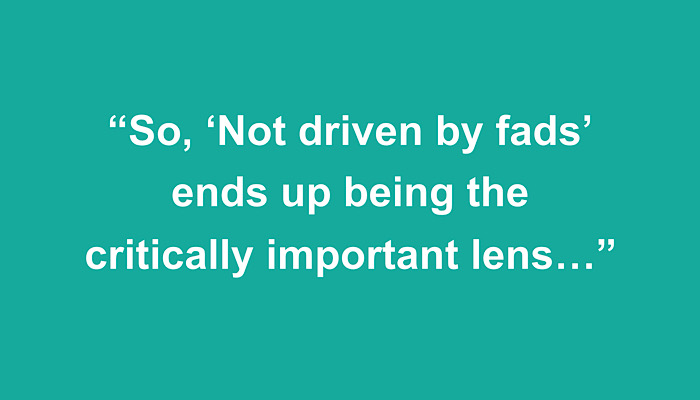
So to your earlier question: when working with my inventor relations team, it’s the ability to speak within that framework and for an inventor to say, ‘I’ve heard from your wish list that these are the product types you’re the most interested in based on your commercial insights. Here’s why this item is going to attract the most people; it’s going to market itself well; it’s going to be something every retail buyer looks at and say yes to.’ Then, when I look at it, there’s a chance it can be on the shelf for more than five years. So ‘not driven by fads’ ends up being the critically important lens.
“Not driven by fads” is a handy thing to keep in mind. Now, you won’t yet have met Fi Murray – a wonderful inventor… Fi comes to mind because she’s taken to putting an insight summary at the front of her sizzles. I’ll link to a short article on it here. In essence, the start of Fi’s sizzles shows the commercial reasoning for the product. Sounds like that would appeal to you… And what are your thoughts on sizzles?
I’ve not met Fi, but that is definitely an approach that would help me! That speaks my language because it shows the context of where the item fits. I try to be open to any way of pitching though… Just because I prefer to be pitched to in a particular way doesn’t mean it’s the only way. Now, I do think sizzles have a potential to immediately raise my skepticism of what’s been cut from the sizzle or what’s not being shown there… For that reason, I do find myself asking more questions about sizzles because – by their nature – they aren’t looking for my true evaluation. They’re playing to my emotion. So I’m not against sizzles, but I might ask why what I’m seeing is actually fun, or I might ask how something works, or where this idea might be broken.
Good to know! You mentioned – just before the interview started – that you used to be a lawyer. I can believe that; you’re very thoughtful when you give your answers; you also don’t use many filler words, and you pause a lot to collect your thoughts. I love that! What’s your background, Ben?
That’s kind of you to say that… I’m known for pausing at length! Maybe those missing verbal fillers are where I pause instead. So for my educational training, I was an attorney – so yes, a law background. In law school, we did moot courts and things like that…
That’s like a mock court case, right? It lets law students practice?
Right. And they would film us doing that and then talk about it. That’s where you start to notice verbal fillers! You’re on camera trying to be concise on a point and…
Um, er, erm…
Evidently, I replaced all that with pausing.
Makes absolute sense. So how did you come from law to games?
It’s all happenstance! That’s the short answer. The longer answer is I got my law degree in an MBA here in the States and an undergrad education in economics and philosophy. But what gives me energy is learning new things… So when it came to career, I was open to a lot of other things. As it happens, some of the early law-focused work I was doing didn’t give me the same energy as some of the work on the business side of the equation. So I went into retail relatively quickly.
When would that have been, roughly?
That would’ve been back in 2011. I did contract-negotiation support on behalf of merchandising at the time. Fascinating work, really interesting. But I found that I really liked the merchandising role – and then the rest is history! In terms of how I got to games – well, at retail, I was buying Apple watches, karaoke machines, headphones, AirPods – all sorts of things in different categories over different roles…
Anyway, I’ve had a personal passion for games my whole life so I worked my way towards that buying desk. As I spent more time in that role, I gained additional responsibilities and went a little further up the ladder. My last role at retail was leading teams of buyers for Target’s Boys Toys. Effectively, it was the highest games-focused position I could get at retail, which is then what led me out of retail – because of my desire to stay in the category but see it from a different lens and continue to learn.
Great! To start wrapping things up, Ben, how important are external inventors to the future of Moose Games?
Critical. The best part about the category is that it has a lower barrier to entry – even though it’s hard to create games. That means you end up having a lot of folks that come up with great ideas from all over the place! I’m brand new to this side of the industry, but you can’t – in my opinion – do everything in-house on your own… Your outcome is going to be far less than when when working with folks that have ideas of what you’re looking for from a line management standpoint… Because when those things come together and work well, I think you build a strong, growing games line.
You mentioned being brand new… What’s been the biggest surprise to you from that side of the table?
Actually, the amount of inventor presence is something I never had visibility of before. So I would see games come in and my original assessment was that these were all being created in-house by Company X. As I’ve moved over, I’m learning that lots of the ideas are from inventors. That’s been the biggest paradigm shift – and that informs my last answer as to why it’s so important to work that way and have a good reputation as a company that works with great inventors.
Wonderful! And that takes us full circle back to my lovely friend Rena. I’ll link to an interview that I did with her about the origins of Bananagrams here. Obviously, she co-invented the game with her now-passed father, Abe… An extraordinary human being by all accounts. Rena’s staying with you in an advisory capacity?
Yes, she’s staying on as a consultant. Rena’s an incredible resource on all things Bananagrams. It’s actually kind of humbling because there’ve been multiple things that I’ve sent her thinking I have like a new idea, and she walks me through it… ‘We thought about doing that. Here’s what we learned about it.’
But you know Rena: she does it in a way that’s kind and gentle. She’s also been very thoughtful in her time; just asking me great questions. It’s never going to be possible to take the 20 years of that company’s history and experience so having her available has made that learning curve less steep.
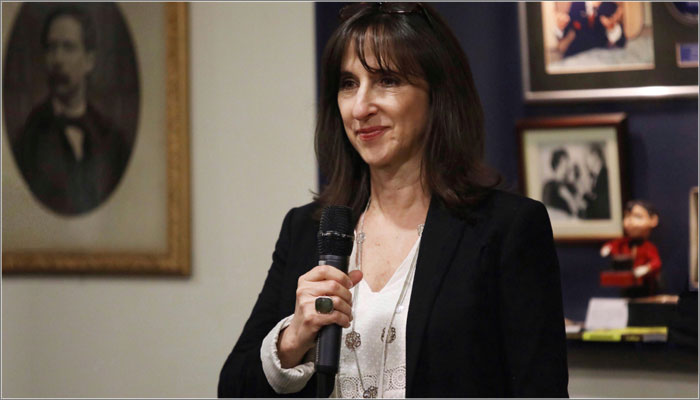
And you’re treating her like a national treasure?!
Rena IS a national treasure! Yes! She’s the only Top Banana out there. I’ve told her that in no way, shape or form will there ever be another Top Banana.
Amen to that! Fabulous. Finally, then, Ben, what’s the one question I could’ve asked you today that I didn’t?
Hmmm. Probably: what’s been the hardest thing since starting in this role?
To our conversation earlier, worth noting that you paused to think about that question for a full 10 seconds.
Ha! I do that while presenting at times. I have to own it and say I’m a practitioner of the awkward pause. I tell people I’m comfortable with the silence because it allows them to come along on the journey as opposed to saying – like, ‘Are you blanking out?’
Ha! ‘Is Ben broken?’ Actually, I love that you gave it so much thought; I didn’t find that pause awkward at all. And what’s the answer? What has been the hardest thing since starting in this role?
The level of learning how to do product design and development, global marketing, US marketing and inventor relations without ever actually having worked in those roles. It’s a testament to having a great team in place; to be able to trust in the work they do and ask questions. But yes, it’s tricky to step into something where I clearly have a vision and idea of where I want to go but knowing how to get there is the part that I need to learn while being brand-spanking new at some of those things… So – in the right way – it’s been a good and appropriately hard challenge to try to do that while also running the business.
Wow. Great question, great answer. Thank you, Ben.
–
To stay in the loop with the latest news, interviews and features from the world of toy and game design, sign up to our weekly newsletter here
More Recent Interview

Anomia inventor Andrew Innes tells the story of his game’s long journey to market
“It was a Frankenstein’s monster…” Andrew Innes on the past, present and future of Anomia!
Designers Adrien Pédron and Thomas Favrelière on the origins of Archeo – and why Gigamic proved the perfect publisher
“We’d wanted to work with Gigamic for a long time…”: In conversation with designers Thomas Favrelière and Adrien Pédron.
BOTI’s Nico Blauw talks Pembe the Pink Cat, innovation – and the International Toy Board
“The look, the design, the audience, the messaging… It all appealed”: Nico Blauw reveals what made Pembe the Pink Cat a winner for BOTI.
“This was the missing piece…”: Rubber Road’s Jack Fox on TUBBZ’s move into blind collectibles with Mystery Eggs
Jack Fox, Sales & Marketing Director at Rubber Road, talks TUBBZ Mystery Eggs – and why Minions were a perfect fit.

Educational Insights’ Lisa Guili on TikTok, 20 years of Kanoodle – and ten million units sold
Lisa Guili reveals how one addictive brain teaser found its audience and became a phenomenon.
“I want people to bet on themselves”: Spin Master Co-Founder Ronnen Harary discusses his new book, No Experience Necessary
Spin Master Co-Founder Ronnen Harary talks to us about his exciting new book, working with inventors – and Spin’s most underrated launch.
Popular Articles
DSTLRY launches card game based on its award-winning Somna comic
Educational Insights’ Lisa Guili on TikTok, 20 years of Kanoodle – and ten million units sold
A Game Studio launches Proof-of-Play model to help 'exceptional games reach the market faster'
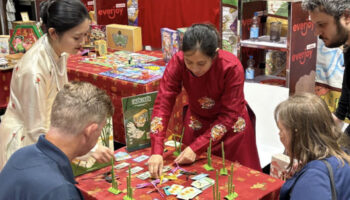
Vietnamese game design contest – Road to Essen – returns for its second edition

Hasbro's Angus Walker on creativity, pitching and the key to successful inventor relations
Upcoming Events
-
- 30th January 2026
- Spielwarenmesse, Nuremberg
International Game Inventors Convention
-

- 19th - 21st May 2026
- Mandalay Bay Convention Center, Las Vegas
Las Vegas Licensing Expo
-
- 23rd - 25th June 2026
- Stamford Bridge Stadium, Chelsea, London
Play Creators Festival
-
- Tuesday, June 23rd, 2026
- Stamford Bridge Stadium, Chelsea, London
Play Creators Awards
-
- Wednesday, June 24th, 2026
- Stamford Bridge Stadium, Chelsea, London
Play Creators Conference
-
- Thursday, June 25th, 2026
- Stamford Bridge Stadium, Chelsea, London
Mojo Pitch
-

- 6th - 8th October 2026
- Excel London
Brand Licensing Europe