EightyTwo’s Dougal Grimes on his collaborative approach to bringing creators and brands into board games
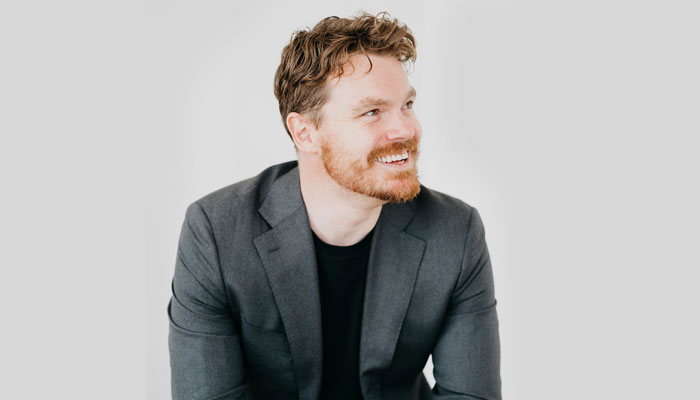
Dougal, for anyone new to EightyTwo, how would you pitch what you do?
EightyTwo is a game IP production studio. We partner with creators and brands to build tabletop games as long-term franchises, not one-off product drops.
The closest analogy is a music producer. We partner with exciting talent, help shape the vision, and bring in the right songwriters, session musicians and partners. We take projects through to manufacturing and launch readiness, across crowdfunding, D2C and retail, so the distribution system is built in from day one. Creator games aren’t new, but very few are being built as long-term IP. That’s where we think the real opportunity lies.
What makes content creators such a natural fit for board games?
The term ‘content creator’ usually conjures up the classic ‘influencer’ or someone like MrBeast, but it has actually evolved far more than that – from science educators and animation studios to true crime podcasters, golf communities and lifestyle brands.
The two things that connect them all are what make them a natural fit for tabletop games: a story and an audience. We’re now seeing a real shift: creators are no longer just channels for content; they’re becoming modern studios, producing new stories every day. Tabletop games are the perfect bridge between those stories and their audiences, letting players interact with a world through its theme, its rules and what the game draws out of the people playing it.
And when it comes to audiences, creators have something most brands spend years trying to build: a direct, personal relationship with the people who follow them. It’s not transactional; there’s real trust there. That’s exactly what games do best: they turn that trust into a shared experience. Even solo games or puzzles always lead players back to a community, to conversations, to connection.
From a commercial point of view, tabletop games provide a real-world way for audiences to live their stories when the screens are put down. In an increasingly complex landscape, where algorithms shift, platform rules change and monetization windows open and close, games offer something more durable. It’s a natural next step beyond merchandise. A well-designed game is a true product with lasting value, and it opens a revenue stream that no platform can switch off.
Are creator/fan relationships different from traditional media? Does that open new doors?
Yes, completely. In traditional media, the relationship is mostly one-way. With creators, it’s direct and two-way. Audiences are not just consuming; they are interacting, responding and helping shape the brand in real time. That shift changes how products are developed and brought to market. Creators can go straight to their audience through D2C, crowdfunding, and social commerce and see immediate response and traction. The path to market has fundamentally changed, and creator-led brands are built for it.
What makes a brand right for a game? How do you identify potential?
There’s no golden formula and, honestly, that’s what I find most exciting about it. Every creator and every brand is different. To identify opportunities, we look at signals like audience engagement, membership, merchandise performance, whether the brand naturally lends itself to gameplay, how it could integrate into a broader marketing ecosystem and whether the concept has life beyond the core audience – both in the game itself and at retail. This gives us a clear read on potential.
That said, it’s not purely mechanical. We were recently approached by a creator’s manager whose project, on paper, sat a bit outside our usual parameters… But the level of cultural relevance, the strength of the community and the kind of influence they had built across everything they touched made it impossible not to collaborate. It was one of those moments when you just have to go with your gut instinct, which is one of the things I’ve always loved about the toy and game industry.
From there, our process is simple: Consume, create, complete… We immerse ourselves in the creator’s world, develop the right game concept and strategy, and then take it all the way through to a finished physical product, ready for launch. And when the opportunity is there, we extend beyond the game itself – helping shape how that IP can live in retail and across broader channels in a way that feels true to the brand and is built to scale.
Can you give us a case study?
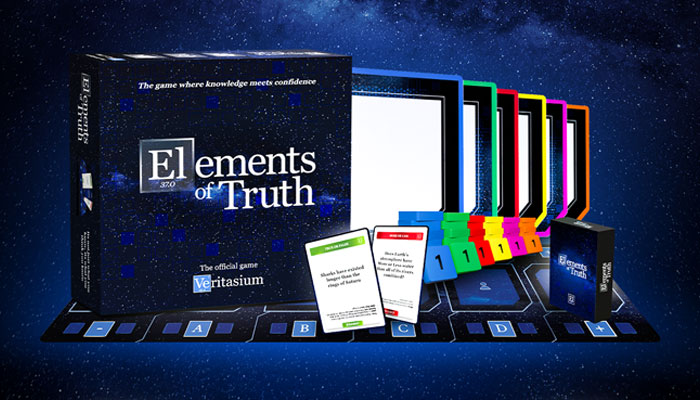
There are two that stand out. The first is Elements of Truth, the official game of the Veritasium YouTube channel. Veritasium is one of the leading science-entertainment channels on YouTube, with over 20 million subscribers. The game launched on Kickstarter in December 2025 and raised $1.4M from over 13,000 backers. Developed in close collaboration with the design team at Indy Toy Lab, the gameplay directly mirrored the channel’s core tension: testing what people think they know.
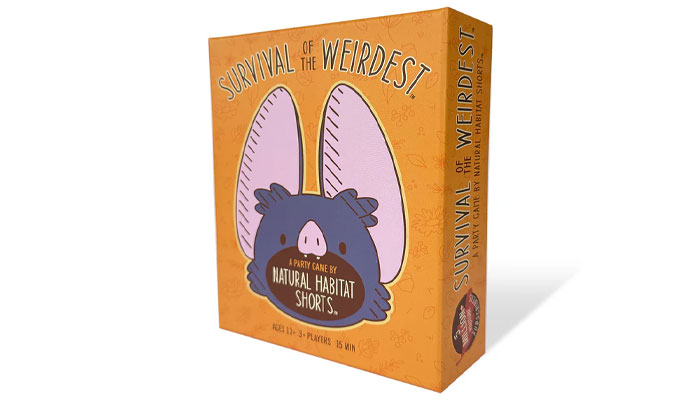
The second is Survival of the Weirdest for Natural Habitat Shorts, a YouTube animation studio with a highly engaged audience. They launched on their D2C channel in March this year and sold out in 36 hours. We worked with the Inventor Jeremy Posner and his team, and they translated the absurd humour and characters into fast, replayable social mechanics. They are both very different projects, with very different audiences, but the same model produced both.
That collaborative approach sounds very intentional.
Absolutely. That’s exactly how EightyTwo operates. I’ve spent the last 17 years building relationships across the games industry, from inventors and designers to factories, publishers and retailers. That network is our biggest asset, enabling us to bring genuine specialist depth to every project rather than forcing a project into a fixed formula.
What does the rest of the year look like for you and EightyTwo?
An industry friend gave me great advice early on: “You’re in your Day 0 right now; you’ll know when you get to Day 1.” 2026 is our Day 1. This year is about building real momentum in the creator games space, supporting our existing projects through to retail launch, and delivering on our current pipeline.
In 2027, the goal isn’t just more projects; it’s applying the model across new creator categories and brands. We have also just launched a games-driven networking concept called Night Shift, but that’s a whole other interview!
Ha! I’ll be back for that! And the name, EightyTwo?
It comes from 1982, the year I was born. But it goes a wee bit deeper than that… I grew up as one of six boys, and games were how we connected, and still do. Pre-internet, pre-phones. Entertainment was tangible, real-world social, and shared face-to-face. That shaped how I think about what games actually do.
The ‘80s were also a major moment for entertainment IP: Transformers, TMNT, MB Games, the Nintendo Game Boy… The list is endless. Those formative years led me into the industry, which has now become a 17-year career. EightyTwo is a nod to that era, reinterpreted for today.
The closest word is probably “newstalgia.” I’ve always admired artists and brands who get that balance right. Daft Punk is a great example: rooted in the past, delivered in a way that feels completely current, and even futuristic. That tension between what shaped us and what comes next is really what the studio is about.
Amazing. Huge thanks Dougal – let’s tie-in again soon!
–
To stay in the loop with the latest news, interviews and features from the world of toy and game design, sign up to our weekly newsletter here
More Recent Interview


Gregory Benassar on Khadou, kidults – and why Pop Mart and B&M have more in common than you might think
“We are not here to push a lot of volume into the market and move onto the next thing”: In conversation with Gregory Benassar – CEO at Heathside and Co-Founder of Saga Alliance.

Inventor Mandela Fernández-Grandon on design, collaboration and the joy of playtesting
“Working with others offers a list of benefits…” In conversation with Mandela Fernández-Grandon.

Dina Al Rifai – Creative Director at The Loyal Subjects – on how being a collector shapes her approach to design
“I usually start with the emotional hook – what is this product supposed to make someone feel?” In conversation with The Loyal Subjects’ Dina Al Rifai.

“Play is evolving…”: Hasbro’s Tim Kilpin talks kids, Kidults and KPop Demon Hunters
Tim Kilpin, Hasbro’s President of Toys, Board Games, Licensing and Entertainment, on recent highlights – and things to get excited about.
Spin Master’s Angus Walker on bringing classic horror brands into TCGs with Hellbreak
“Faithfully representing these beloved characters was our design team’s top priority”: Angus Walker – VP, Marketing & GBU Lead, Games & Outdoor at Spin Master – talks Hellbreak.

As he retires, Make It Real’s Dominique Roy reflects on career highlights, mentors and lessons
“Even though you design something once, the injection machine will produce one unit every 30 seconds – that’s a serious responsibility”: In conversation with Dominique Roy.
Popular Articles
PhatMojo to launch Steal a Brainrot toys later this year
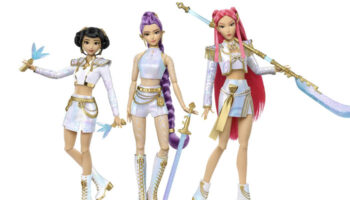
Mattel debuts KPop Demon Hunters dolls

Ravensburger details 12th and 13th Disney Lorcana sets, Wilds Unknown and Attack of the Vine!
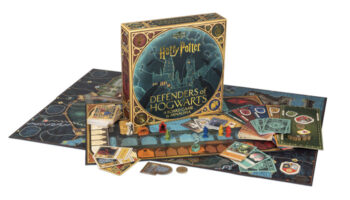
MinaLima readies Harry Potter board game, Defenders of Hogwarts
Bop It’s Dan Klitsner on creative techniques, his favourite inventions and more
Upcoming Events
-
- 30th January 2026
- Spielwarenmesse, Nuremberg
International Game Inventors Convention
-

- 19th - 21st May 2026
- Mandalay Bay Convention Center, Las Vegas
Las Vegas Licensing Expo
-

- 23rd - 25th June 2026
- Stamford Bridge Stadium, Chelsea, London
Play Creators Festival
-

- Tuesday, June 23rd, 2026
- Stamford Bridge Stadium, Chelsea, London
Play Creators Awards
-
- Wednesday, June 24th, 2026
- Stamford Bridge Stadium, Chelsea, London
Play Creators Conference
-

- Thursday, June 25th, 2026
- Stamford Bridge Stadium, Chelsea, London
Mojo Pitch
-

- 6th - 8th October 2026
- Excel London
Brand Licensing Europe